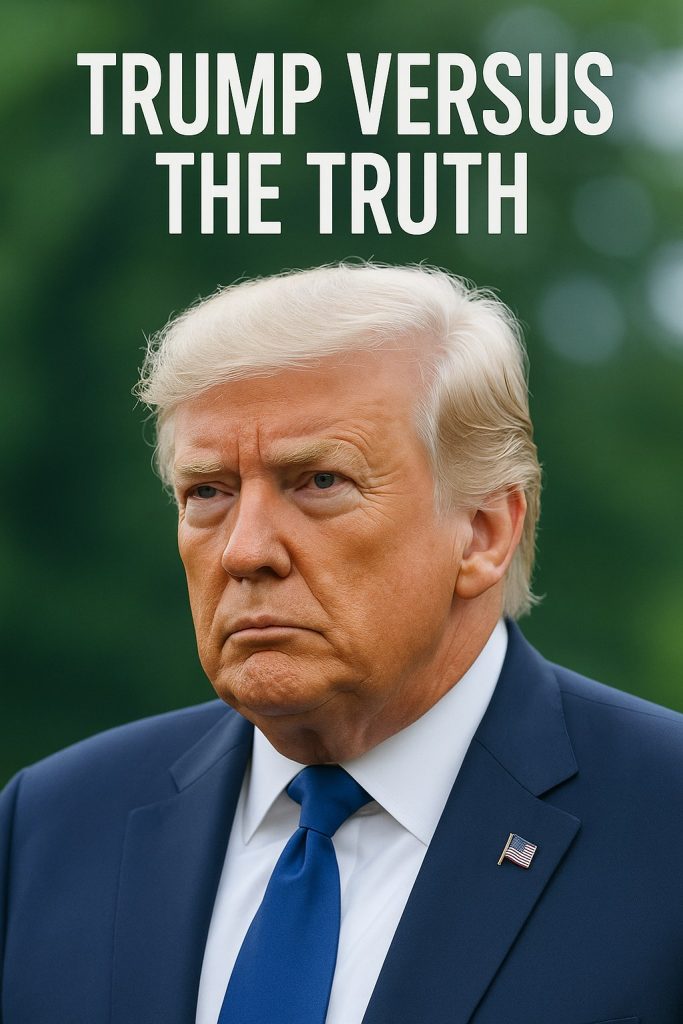
The release of the documentary titled Trump v. the Truth has reignited a crucial conversation about the quality of fact-checking in American media during Donald Trump’s presidency. This film scrutinizes the former president’s repeated bending of reality and underscores the alarming trend of insufficient journalistic accountability in reporting.
The documentary, produced by Frontline, compiles a swath of statements made by Trump that have been deemed misleading or outright false. It raises pertinent questions about the role of mainstream media in holding powerful figures accountable, especially during a time when misinformation was rampant on social platforms. Critics argue that the media often failed to confront Trump’s numerous claims with the rigor and accountability they warranted, potentially influencing public perception and trust.
Throughout Trump’s administration, factual integrity was frequently compromised. With countless tweets, press briefings, and speeches, the former president pushed narratives that clashed with established facts—ranging from immigration, healthcare, and the economy to the COVID-19 pandemic. Despite the availability of verification tools and fact-checking resources, many media outlets were criticized for their failure to disconnect the rhetoric from reality systematically.
The documentary’s producers aim to dissect this phenomenon, emphasizing how the normalization of falsehoods can lead to societal consequences that extend beyond politics. The film presents interviews with political analysts, journalists, and experts in media ethics who discuss the declining standards of truth in public discourse. They assert that the phenomenon is not merely about one individual but reflects broader systemic issues in media reporting.
According to the film, traditional news outlets focused on covering political events as a “horse race,” prioritizing sensationalism over accuracy, ultimately failing to engage in deeper investigative reporting. This approach garnered eye-catching headlines but often sacrificed the nuances of truth, which can lead to a significantly misinformed electorate.
Moreover, the documentary shines a light on the rapid dissemination of misinformation via social media platforms that amplified Trump’s messages, often without proper context or scrutiny. In this sense, Trump v. the Truth is more than just a critique of one administration; it’s a wake-up call for journalism as a whole. In a time when misinformation can spread unchecked, the robustness of fact-checking by media is essential to safeguard democracy.
As we reflect on the past, filmmakers and critics alike hope that lessons from the Trump era will prompt a revitalization of journalistic integrity moving forward. With an imminent presidential election cycle approaching, the stakes for rigorous fact-checking are higher than ever. The potential influence of misinformation on voter behavior could reshape the political landscape and test the very foundations of truth in public policy.
In a democratic society, the notion that the public has access to accurate information is fundamental. The challenge now rests with media outlets and journalists to reposition the truth at the forefront of their reporting. Only through relentless dedication to fact-checking can they hope to regain trust among an increasingly skeptical public.
Where to Learn More
- Trump v. the Truth – PBS Frontline
- The Case for More Fact-Checking – The New York Times
- How Trump Beat the Fact-Checkers – The Atlantic
- The Trump Era and the Media’s Fact-Checking Dilemma – Columbia Journalism Review