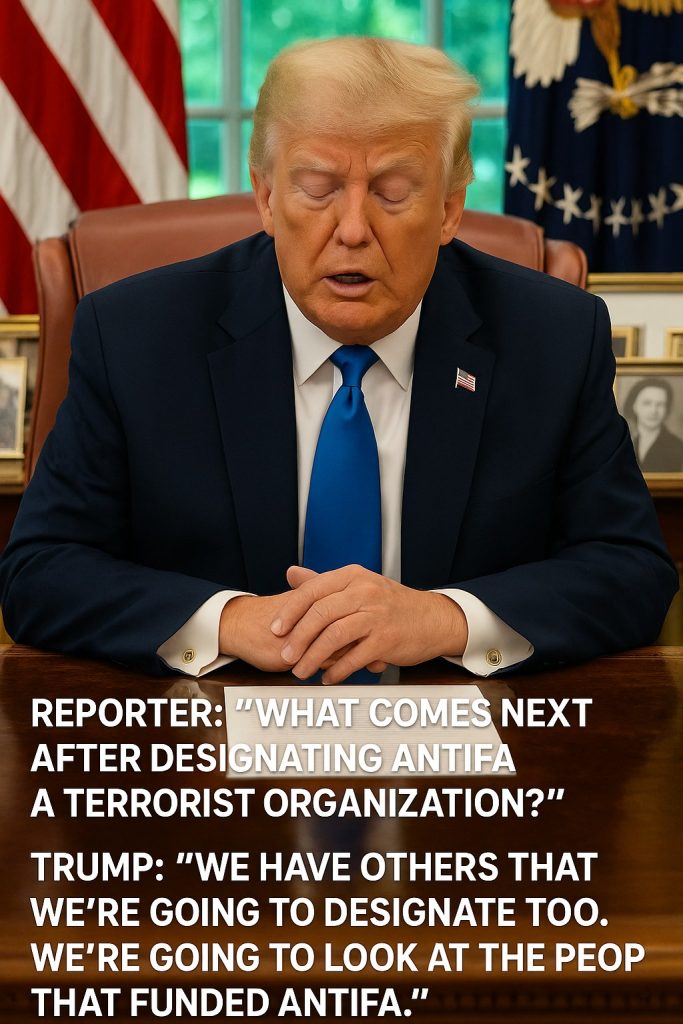
In a recent press conference, former President Donald Trump ignited a firestorm of speculation regarding future designations of domestic groups as terrorist organizations. When pressed by a reporter about the implications of designating Antifa in this manner, Trump confidently stated, “We have others that we’re going to designate too. We’re going to look at the people that funded Antifa.” This declaration raises significant questions about the potential ramifications for both political discourse and civil liberties in the United States.
Trump’s comments come on the heels of escalating tensions surrounding Antifa, a loosely affiliated group known for its anti-fascist stance. Critics argue that the group’s methods can veer into violence, particularly during protests and counter-protests. By classifying Antifa as a terrorist organization, Trump’s administration aims to formalize their opposition, but the former president’s latest remarks suggest that the scope of such designations may expand even further.
While the former president did not specify which groups or individuals could be in line for a similar designation, speculation is rampant. Some conservative commentators suggest that organizations that have funded or supported Antifa during protests could be targeted next. This could include both grassroots funding initiatives and larger organizations advocating for social justice issues. However, designating such groups raises critical questions about freedom of speech and the right to peaceful assembly, prompting fears that it may lead to increased surveillance and repression against dissenting voices.
Critics of the administration’s approach warn that these actions may set a dangerous precedent. Natalie Johnson, a civil liberties advocate, stated, “Labeling groups as terrorist organizations based on their ideology rather than concrete actions poses a serious threat to free speech in America. It blurs the lines between advocacy and terrorism.” The potential for overreach and misinterpretation of who constitutes a “terrorist” is a matter of concern for many legal experts and citizens alike.
The conversation surrounding Antifa is not solely centered on the group itself but has become emblematic of a broader cultural war, pitting sides of the political spectrum against each other. Social media platforms have been flooded with opinions, memes, and counter-narratives. The former president’s remarks have only added fuel to the already fiery discourse, with supporters and detractors alike weighing in on the implications of his proposed actions.
In light of Trump’s comments, some lawmakers have called for clarity on what these designations entail and what evidence supports the labeling of groups or individuals as terrorists. Transparency in this process is essential to maintain public trust and uphold democratic principles. As the nation heads into a contentious election cycle, how Trump’s proposed actions are received could have lasting consequences for political discourse and how different ideologies are treated under the law.
As more information emerges on this topic, the implications of Trump’s remarks promise to reverberate across the political landscape. Whether this will lead to actual designations, further political division, or a renewed dialogue about civil liberties remains to be seen.
Where to Learn More
- Washington Post – Insights on Antifa and Its Implications
- New York Times – Analyzing Trump’s Most Recent Press Conference
- CNN – Understanding the Domestic Terrorism Designation Debate