
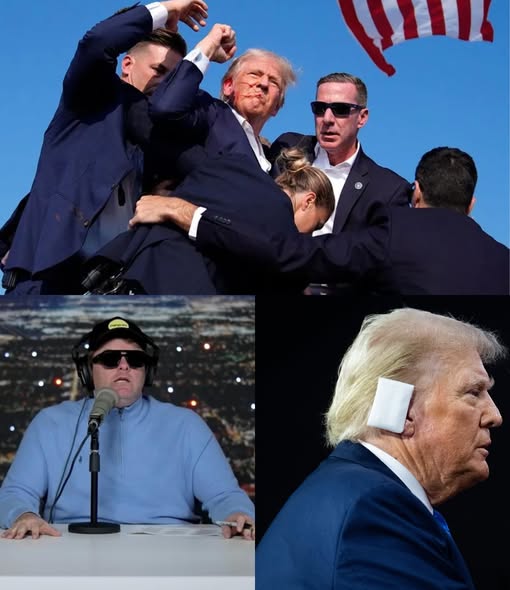
The once solid foundation of Donald Trump’s most ardent supporters is beginning to fracture under the weight of their own conspiracy theories. What started as skepticism about the official account of the Butler, Pennsylvania shooting has rapidly evolved into widespread claims that the entire incident was *staged* — and now, some supporters are openly demanding that Trump himself admit it. This phenomenon signals a shocking shift: *MAGA’s belief system is now eating itself alive.*
The shooting, which resulted in the tragic death of retired fire chief Corey Comperatore and critically injured two others, was investigated by the FBI as a legitimate assassination attempt. The attack was witnessed by many and captured on numerous cameras, yet an alarming number of Trump supporters are dismissing the event as a “false flag” designed to manipulate public opinion.
The turning point came last weekend when prominent conservative podcaster Tim Dillon, a known Trump supporter, publicly questioned the incident, saying, “I think that maybe it was staged.” Dillon didn’t stop there — he went on to suggest that Trump should come out and officially “admit” that the attack was fabricated. “We staged the assassination attempt in Butler to show people how important it was to vote for me and how far I was willing to go for them,” Dillon declared, echoing a dangerous attitude of distrust in official accounts.
Within hours, the conspiracy ripple spread further. On social media platform X (formerly Twitter), conservative commentator Emerald Robinson claimed that the FBI “did it,” insinuating government involvement without presenting evidence. Meanwhile, on Telegram, QAnon promoters like MJ Truth polled followers—almost all Trump supporters—who expressed skepticism that the truth would ever be uncovered, with one saying: “The truth will come out 60+ years from now when we’re all dead and nobody really cares anymore,” drawing uncanny parallels to the JFK conspiracy theories.
Attack on the FBI and the deep state isn’t new in these circles. Figures like Tucker Carlson have long floated the idea that the FBI lied or covered up parts of the Butler case. Former National Counterterrorism Center director Joe Kent went even further, claiming the investigation was “prematurely shut down”—notably without providing any evidence, knowing that perhaps no evidence was needed to stoke suspicion and paranoia.
This conspiracy spiral has extended beyond mere skepticism. Some of the same voices are now explicitly calling Trump *the antichrist*, citing his posts comparing himself to Jesus, and even sharing AI-generated images of Trump healing a man in biblical attire. These claims aren’t jokes—they’re woven into a narrative that frames Trump as a divine or apocalyptic figure.
This grave transformation underscores a fundamental truth: Trump’s strategy of fueling distrust—of the media, government, and “the deep state”—has succeeded brilliantly, but in a way he may not have foreseen. His own base has turned the lens inward, no longer trusting him either. As gas prices soar, international conflicts drag on, and allies distance themselves, his supporters are applying the same paranoid logic they use against institutions to Trump himself.
The tragic irony is stark. Corey Comperatore’s death was real. His heroism, real. But in a movement conditioned to reject evidence, reality has become malleable, and trust is eroding—ultimately, even in the man they once revered. The result? A political and social environment where conspiracy theories thrive and facts are increasingly optional.