
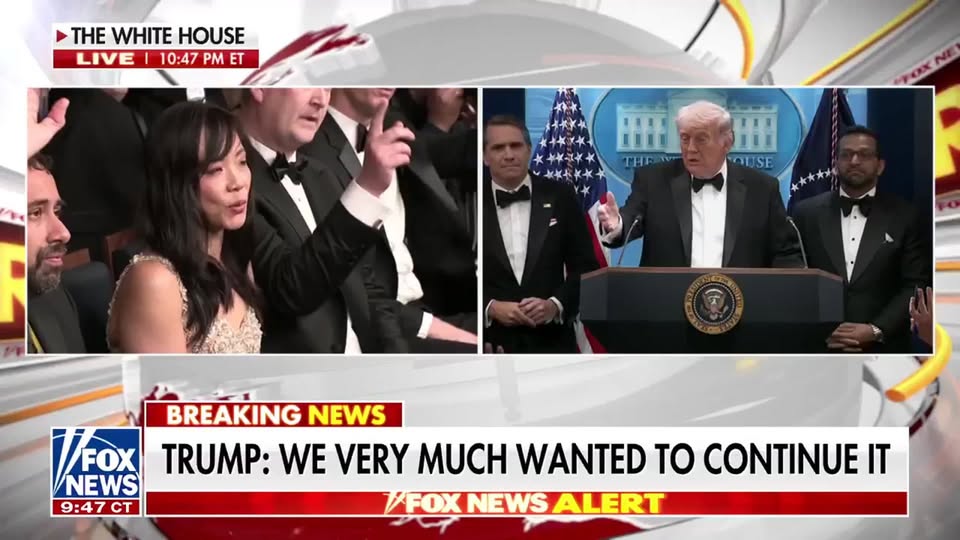
In a recent social media clip that has quickly gone viral, former President Donald Trump offered a provocative perspective on why some influential figures seem to consistently face threats and challenges. During an interview with Fox News’ Peter Doocy, Trump was asked a pointed question: “Respectfully, why do you think this keeps happening to you?”
Trump responded by taking a startling turn, drawing on his background and perceived experiences with threats. “I’ve studied assassinations, and I must tell you, the most impactful people, the people that do the most… the people that make the biggest impact, they’re the ones that they go after,” he said, hinting at a possible connection between leadership and targeted violence or opposition.
The remark immediately sparked widespread discussion across social media platforms, with many debating what Trump might mean by “studied assassinations” and the implications of his statement. Critics and supporters alike are analyzing whether he was referencing a personal experience, historical patterns, or a theory about political influence and danger.
Experts in political history and security analysis say Trump’s statement touches on a long-standing and often uncomfortable reality: that impactful leaders, activists, and public figures frequently face heightened risks. Throughout history, figures like Martin Luther King Jr., John F. Kennedy, and Mahatma Gandhi have been targets of violence precisely because of their influence and ability to mobilize change. However, critics argue that Trump’s framing could be viewed as controversial, with some interpreting it as an attempt to justify or rationalize threats against political opponents or critics.
Meanwhile, supporters interpret Trump’s comments as a reflection of his personal experiences and a candid acknowledgment of the dangers faced by those in powerful positions. They argue that understanding the risks associated with leadership is essential in a world where influence can override safety, and that Trump’s comments highlight a reality often hidden behind political narratives.
This social media exchange has reignited conversations about political violence, the responsibilities of leaders, and the importance of security for public figures. While some interpret Trump’s words as a warning about the perils faced by influential individuals, others see it as a provocative statement that warrants further scrutiny.
As conversations continue online, it remains clear that Trump’s comment has struck a nerve and added fuel to ongoing debates about power, danger, and the political landscape in America today.
Where to Learn More
- Analysis of Trump’s Recent Viral Interview – The New York Times
- Experts Break Down Trump’s Comments on Assassinations – CNN
- Historical Perspective on Leaders and Political Violence – BBC News
- Political Impact and Threats Facing Influential Figures – Politico