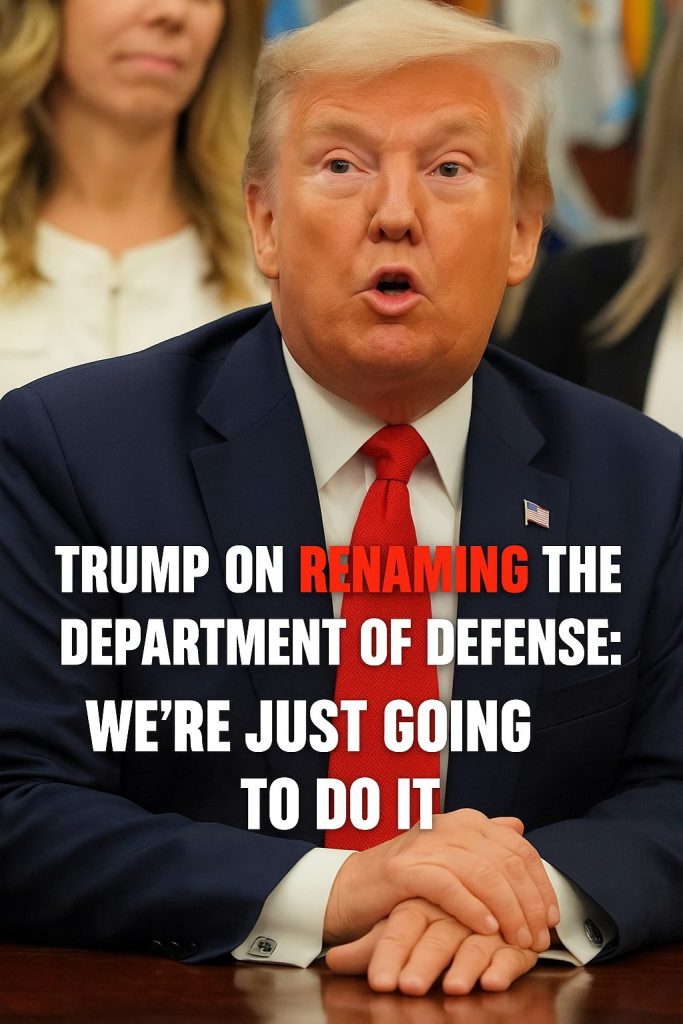
In a bold and controversial move, former President Donald Trump has announced plans to rename the Department of Defense to the Department of War, signaling a sharp shift in the framing of the United States’ military apparatus. During a recent statement, Trump declared, “We’re just going to do it. I’m sure Congress will go along if we need that.” This comment has sparked immediate discussions about the implications of such a change on both domestic and international fronts.
The Department of Defense, established in 1947, was designed to unify the country’s military branches under a single civilian-led department, replacing the former Department of War, which had existed since the early years of the republic. The renaming at that time represented a post-World War II shift away from an overtly war-focused identity toward a broader concept of defense and security.
Trump’s proposal revives the historical title, which conjures stronger associations with military engagement and conflict. The former president’s remarks came during a rally, where he emphasized the importance of a more assertive military posture and suggested that the name change would align with a vision of national strength and resolve.
Political and Public Reaction
Reactions to Trump’s statement have been mixed. Supporters argue the rebranding would reflect a more straightforward and unapologetic stance on American military strength, reflecting the realities of global power dynamics. They see it as a commitment to ensuring the U.S. remains prepared to engage decisively in conflicts when necessary.
Conversely, critics warn that such a change could fuel unnecessary aggression and escalate tensions worldwide by reviving a Cold War-era mentality. Many defense experts and some lawmakers view the existing Department of Defense name as a symbol of stewardship and strategic defense rather than an endorsement of perpetual war.
Congressional insiders suggest that any formal proposal to rename the department would face intense debate. While Trump’s confidence in Congressional support highlights his influence within certain factions of the legislature, practical hurdles remain. Renaming a major federal agency involves complex legislative procedures, budget considerations, and extensive bureaucratic reorganization.
Historical Context and Broader Implications
Historically, the Department of War was renamed to reflect a transition toward peacetime priorities and a holistic approach to national security. Trump’s push reverses that trajectory, implying a pivot back to a more militaristic image. Some analysts interpret this as part of a broader campaign strategy to rally the former president’s base around themes of American strength and preparedness amidst ongoing geopolitical tensions.
Additionally, the symbolic power of a name change extends beyond semantics. It would signal a shift in U.S. military doctrine, possibly altering how the American armed forces engage globally, prepare for conflicts, and manage international alliances. The move also raises questions about messaging to international partners and adversaries alike.
Looking Ahead
Although no formal legislation has been introduced yet, Trump’s comments have set the stage for a potential legislative push either by himself or by lawmakers aligned with his views. It remains uncertain how mainstream Congress is on this issue, but debates surrounding the Department of Defense’s identity and role will likely intensify as the 2024 election cycle advances.
For now, the proposal to relabel the Department of Defense as the Department of War stands as a provocative symbol of a shifting American military narrative, reflective of the deep political and ideological divides defining today’s national security discourse.