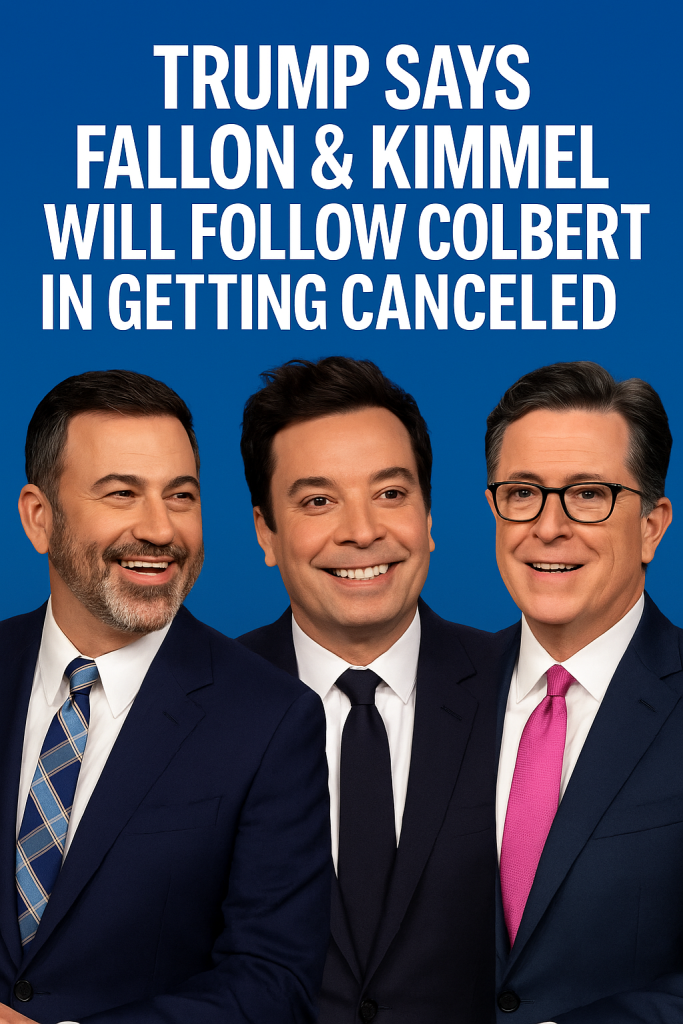
Former President Donald Trump recently doubled down on his controversial claim that late-night hosts Jimmy Fallon and Jimmy Kimmel are destined to have their shows canceled, just as he suggested happened with Stephen Colbert. Speaking publicly, Trump reiterated this forecast amid ongoing tensions with late-night comedy shows that frequently critique his political career and public persona.
Trump’s Assertions on Late-Night TV
Trump’s comments come as part of his broader pattern of challenging mainstream media personalities and outlets. He specifically pointed to Stephen Colbert, suggesting his show faced cancellation due to its critical stance toward him and his administration. Building on this assertion, Trump named Jimmy Fallon and Jimmy Kimmel as the next likely casualties in what he framed as a backlash against hosts perceived to be disloyal or excessively critical.
“Stephen Colbert’s show got canceled, or it’s going to be,” Trump said during a recent statement. “Now you watch, Jimmy Fallon and Jimmy Kimmel will be next — their time is coming. They’ve been unfair. It’s all unfair.”
However, it is important to note that Stephen Colbert’s show has not been officially canceled. In fact, the show continues to air, maintaining strong ratings and a loyal audience base.
Reality Check: The Status of These Shows
Despite Trump’s claims, there is no public confirmation from networks or production entities that Fallon’s or Kimmel’s shows are facing cancellation. Both hosts continue to produce their programs with regular broadcasts in their usual time slots. While there have been occasional rumors and speculation among entertainment circles, no official announcements have suggested an imminent shutdown.
Stephen Colbert’s The Late Show remains on air and is one of the flagship late-night programs on television. Similarly, Jimmy Fallon’s The Tonight Show and Jimmy Kimmel’s Jimmy Kimmel Live! persist in their roles within the late-night television landscape, even as political comedy continues to stir debate and polarization.
The Political and Media Context
Late-night hosts have long occupied a unique space in American media, blending entertainment with political commentary. During and after Trump’s presidency, several hosts notably increased their political satire and criticism, which some have argued escalated tensions between the media and Trump supporters.
Trump’s references to potential cancellations appear to be part of his continued effort to confront and challenge figures he perceives as adversaries. This dynamic reflects broader cultural and political divisions surrounding freedom of expression, press criticism, and the role of entertainment in political discourse.
Industry Perspectives and Reactions
Entertainment insiders emphasize that decisions about television show renewals or cancellations are primarily driven by ratings, contract negotiations, and network strategies rather than individual political conflict. Both Fallon and Kimmel enjoy substantial audiences, and their continued success is more likely tied to these practical considerations than any ideological disputes.
Moreover, past instances of political figures calling out late-night entertainers have not resulted in immediate cancellations, suggesting that the entertainment industry maintains a degree of independence from partisan pressures.
Conclusion
While Donald Trump’s claims about the cancellation of late-night shows make headlines and spark conversation, the facts portray a different reality. Stephen Colbert, Jimmy Fallon, and Jimmy Kimmel remain active in their roles, and there is no current evidence pointing to the impending end of their programs. As political and cultural debates evolve, the intersection between politics and popular media will undoubtedly remain a hot topic — but the fate of these late-night shows, for now, remains unchanged.