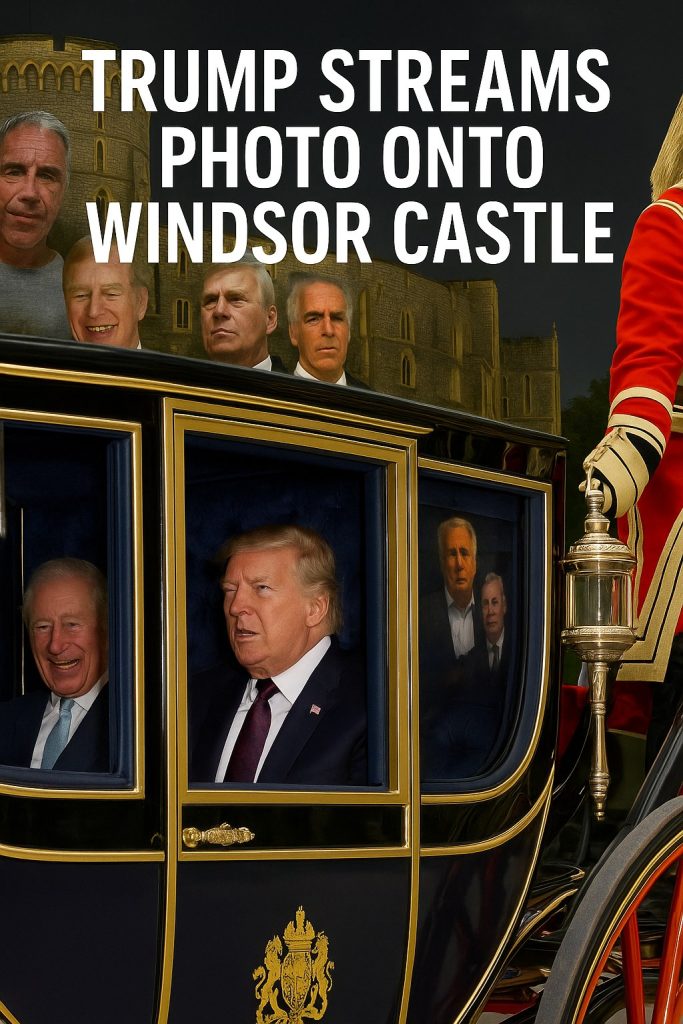
In a curious turn of events, former U.S. President Donald Trump has been described as being “locked in” at Windsor Castle during his recent visit to the UK, prompting a wave of speculation across social media platforms. According to viral posts, the British public has found an innovative way to catch a glimpse of Trump, who is reportedly being kept away from the public eye, by streaming photos of him alongside controversial figures like Jeffrey Epstein and Prince Andrew onto the historic castle itself.
The reports suggest that during Trump’s visit, security measures have been drastically heightened following the heightened scrutiny surrounding high-profile individuals and their associations with Epstein, a convicted sex offender who has been linked to numerous celebrities and royals. As a result, Trump’s usual public engagements were minimized, creating an environment ripe for conspiracy theories and public intrigue.
What made this situation particularly peculiar is the artistic twist that British citizens have taken to voice their skepticism and freedoms. In an act of digital protest, large-scale images of Trump, Epstein, and Prince Andrew have allegedly been projected onto the walls of Windsor Castle, a symbol of British heritage. These projections serve as a reminder of the complex narrative interlacing high-profile figures within the societal and political spheres.
The digital artwork highlights significant relationships, encapsulating the complexities of power dynamics and misdeeds that often accompany fame. In a world rapidly driven by social media and viral content, this phenomenon has sparked debates about transparency, privilege, and societal accountability. Many are raising eyebrows not only about Trump’s physical presence being kept under wraps but also about why these associations remain publicly controversial.
“If lockdowns were meant to keep the public from seeing Trump, streaming these images is a clever way to flip the narrative,” said one social media commentator. “It shines a spotlight on the interconnectedness of power and scandal that we need to discuss openly.”
Amidst this unfolding story, the question remains: what is the broader implication of projecting such images onto a revered historical site? Supporters of the projections argue that they are a form of artistic expression that encapsulates current events and encourages public discourse. However, critics caution against trivializing serious matters involving Epstein, emphasizing the importance of handling such topics with care.
The projections additionally raise a fascinating intersection between history, politics, and art. As Windsor Castle serves as one of the UK’s most beloved landmarks, once a royal residence and now a popular tourist destination, the projections serve as neither an outright endorsement nor complete condemnation of its subjects but rather a commentary on their intertwined legacies.
This incident has triggered discussions about the role of public space in shaping narratives about accountability and transparency. As nations grapple with the consequences of past actions of leaders and public figures, it appears that society is becoming increasingly innovative in its means of advocating for change and transparency.
Whether this digital expression results in real discussions around these complex issues remains to be seen. But amid uncertainty and speculation, it’s clear that when it comes to media and technology, the public’s voice is louder than ever, even from afar.
Where to Learn More
- Donald Trump’s Controversial Visit to Windsor Castle – The Independent
- Trump’s Security at Royal Residences Under Scrutiny – BBC News
- Why is Trump Avoiding Public Scrutiny During UK Visit? – The Guardian