
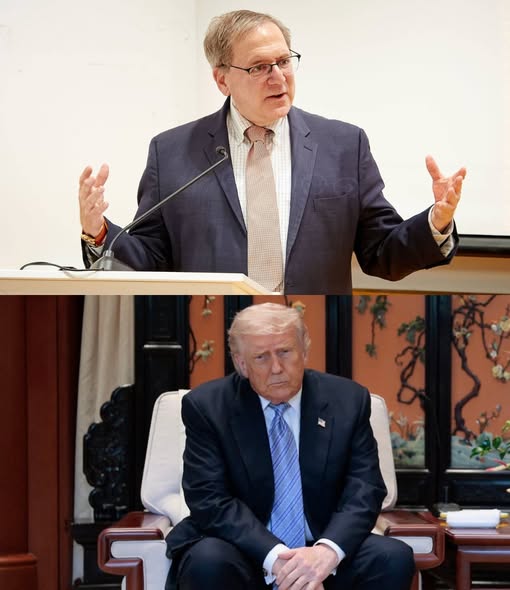
In a startling display of Presidential tension, President Donald Trump erupted at New York Times correspondent David Sanger aboard Air Force One, branding him a “fake guy” and accusing him of betraying his country for simply asking about the ongoing conflict with Iran. The incident highlights growing concerns about press freedom and the open hostility towards journalism in the current political climate.
According to Sanger, who spoke to CNN Friday night, Trump resorted to intimidation tactics after posing critical questions about the administration’s strategy in Iran. The president reportedly told Sanger that reporting on the war amounted to betrayal, even going so far as to publicly brand him with the loaded term “treason” in front of reporters present on the plane. Trump’s comments came amid a delicate and tense situation involving Iranian retaliation and U.S. military actions.
What triggered the confrontation was Sanger’s inquiry into the effectiveness of the nearly 38 days of U.S. strikes on Iran. Despite claims of military progress, Iran continues to maintain its nuclear stockpile and exerts control over the vital Strait of Hormuz, a critical global shipping route. U.S. intelligence assessments reveal that more than half of Iran’s missile launchers and ballistic missiles survived the strikes, maintaining Iran’s military capability amidst ongoing conflict. The war has now entered its twelfth week, with no strategic resolution in sight.
Yet, instead of addressing these complex issues, Trump chose to attack the credibility of the press, asserting that reporting on Iran makes journalists “traitors.” The use of the word “treason” — which in the U.S. carries the death penalty — underscores a dangerously authoritarian tone that many observers say signals an alarming shift away from democratic norms.
This is far from an isolated incident. In March, Trump’s Federal Communications Commission (FCC) chair Brendan Carr threatened to revoke broadcast licenses from networks that aired what he called “hoaxes,” further eroding protections for the press. Senator Elizabeth Warren condemned these actions, comparing them to tactics found in authoritarian regimes and warning that branding journalists as treasonous reflects an intent to silence dissent and control the narrative.
Experts argue that such rhetoric from the nation’s highest officials sets a troubling precedent, effectively turning the press into enemies of the state for disseminating factual information. The ramifications are profound: When a president publicly denounces journalists as traitors for doing their job, it undermines the fundamental pillars of press freedom and democracy.
As the U.S.-Iran conflict persists and political discourse becomes increasingly polarized, the threat to journalistic independence remains a critical concern. The incident aboard Air Force One exemplifies how authoritative rhetoric can erode the critical role that a free press plays in informing the public and holding power to account — essential components of a healthy democracy.
Where to Learn More
- CNN: Sanger Details Trump Confrontation on Air Force One
- New York Times: Trump’s Rising Tensions with Journalists and Iran Policy
- Washington Post: The Increasing Attacks on Press Freedom in Trump Era
- BBC News: US Politics and Press Freedom Concerns
- Human Rights Watch: Rising Threats to Journalists in the US