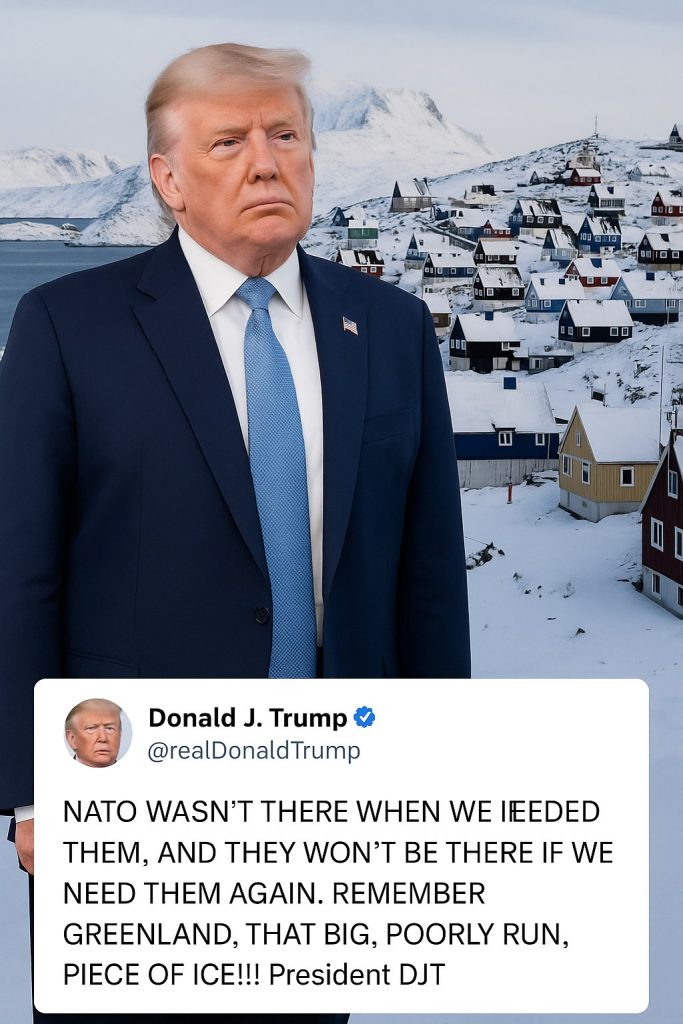
In a recent and striking social media post, former President Donald J. Trump sharply criticized the North Atlantic Treaty Organization (NATO), asserting that the military alliance has failed the United States during critical times and will not come to its aid in future crises. The message, which quickly went viral, fuels long-standing debates about the role and reliability of NATO amid shifting global security dynamics.
“NATO WASN’T THERE WHEN WE NEEDED THEM, AND THEY WON’T BE THERE IF WE NEED THEM AGAIN,” Trump declared on his official Twitter account, igniting widespread discussion among policymakers, analysts, and international observers.
The Cold Shoulder: Trump’s blunt assessment reflects growing frustration with NATO members’ burden-sharing and collective defense commitments under Article 5 of the alliance’s founding treaty. Trump, throughout his presidency, repeatedly challenged European countries over their defense spending and contributions to the alliance’s operations.
His latest comments come amid heightened tensions around global security issues, including Russia’s ongoing aggression in Ukraine and increasing pressure on NATO states to maintain military readiness. Critics of Trump’s statement argue it undermines transatlantic unity precisely when cohesion is most needed.
Historical Context and Trump’s NATO Skepticism
Trump’s criticism is not new. Since his 2016 campaign and throughout his tenure in the White House, he consistently questioned the value of NATO and demanded that member nations increase their defense budgets to at least 2% of GDP. This financial insistence aimed to reduce what he characterized as an unfair burden on the US taxpayer.
However, many defense experts note that despite tensions, NATO has remained a critical pillar of international security since its foundation in 1949, successfully deterring aggression and fostering cooperation among member states.
Consequences for Alliance Unity and US Foreign Policy
Trump’s warning could deepen divisions at a time when the alliance is called to confront evolving threats, from cyberattacks to hybrid warfare. European NATO members are caught between managing their own strategic interests and responding to US skepticism.
Moreover, the strong language raises questions about the future of US leadership in global security — an area traditionally anchored by NATO as a collective defense mechanism.
Supporters of Trump contend his remarks are a realistic appraisal of Europe’s reliance on American military capabilities and a prompt for reform. Critics, meanwhile, fear the rhetoric risks alienating allies and emboldening adversaries.
What Comes Next for NATO?
In response to growing external threats and internal skepticism, NATO has recently reaffirmed its commitment to collective defense and is pursuing modernization efforts, including cyber defense enhancement and rapid deployment capabilities. The alliance continues to emphasize cooperation with the US and other partners to ensure security in an increasingly complex geopolitical environment.
As Donald Trump’s comments resonate online and across political spheres, the ongoing discourse underscores the delicate balance between national interests and alliance solidarity. Whether NATO adapts to these critiques or faces further challenges remains a key question for policymakers worldwide.
Where to Learn More
- NATO’s Role and Missions – NATO Official Website
- Trump’s NATO Criticism Stirs Debate Over Alliance’s Future – Reuters
- Trump and NATO: What Are the Complaints? – BBC News
- The Future of NATO – Foreign Affairs