
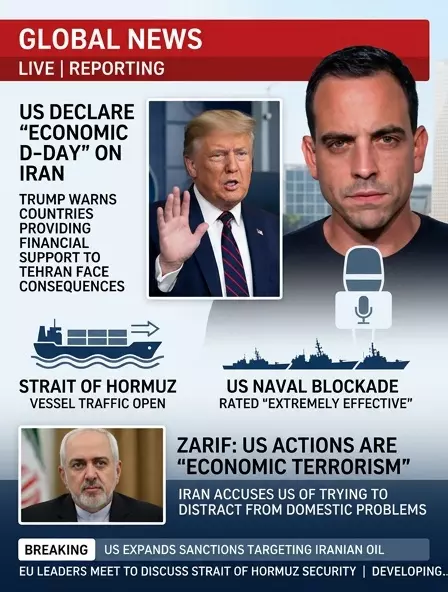
In a bold and unwelcome escalation, President Donald Trump announced what he calls an “economic D-Day” targeting Iran, signaling a renewed and aggressive stance against Tehran’s financial networks. The President issued a stark warning to nations and entities that provide Iran with financial support, emphasizing that they could face serious consequences if they continue their backing.
During a televised address from the White House, Trump underscored the United States’ commitment to pressure Iran’s regime, asserting that the current U.S. naval strategy in the Persian Gulf remains highly effective. He highlighted that the Strait of Hormuz, a vital choke point for global oil shipments, remains open for significant vessel traffic, despite increased tensions in the region.
“This is our economic D-Day,” Trump proclaimed, referencing the historic World War II invasion that marked a turning point in global conflict. “We are taking decisive steps to cut off Iran’s access to funds that fuel their destabilizing activities across the Middle East and beyond.” The President indicated plans to impose tighter financial sanctions and enhance maritime patrols to disrupt Tehran’s ability to sustain its operations.
The announcement comes amid spiraling tensions in the region, with Iran’s foreign minister swiftly condemning Trump’s remarks as “economic terrorism.” Mohammad Javad Zarif accused the U.S. of trying to distract from its own mounting economic challenges, which have been exacerbated by domestic inflation, political turmoil, and international sanctions.
Iran’s leadership has vowed to resist Washington’s new measures, with whispers of possible retaliatory steps, including disrupting maritime traffic or accelerating nuclear ambitions. Iran has long maintained that its nuclear program is for peaceful purposes, but recent rhetoric suggests increased defiance towards U.S. efforts to curb its influence.
Analysts warn that these heightened tensions could further destabilize a region already rife with conflict, risking broader repercussions for global markets and security. However, some experts suggest that Trump’s aggressive stance aims to weaken Iran’s economy sufficiently to force policy changes without direct military confrontation.
Despite the rhetoric and warnings, maritime experts note that the Strait of Hormuz remains a critical conduit for global oil supply. The U.S. military reports that its naval blockade is running smoothly and is designed to prevent Iran from gaining a strategic advantage through maritime interference.
As international diplomacy remains tense, the world watches anxiously. The potential consequences of these sweeping economic measures could ripple across international markets, influence ongoing negotiations, and shape the future landscape of Middle Eastern geopolitics.
Where to Learn More
- U.S.-Iran Tensions Escalate as Trump Declares Economic War – Reuters
- Iran Condemns U.S. “Economic Terrorism” Amid Escalating Tensions – BBC News
- Analysis: Can Trump’s “Economic D-Day” Shift the Balance in the Middle East? – CNN
- Wall Street Journal: U.S. Sanctions Push Iran Toward a Critical Turning Point