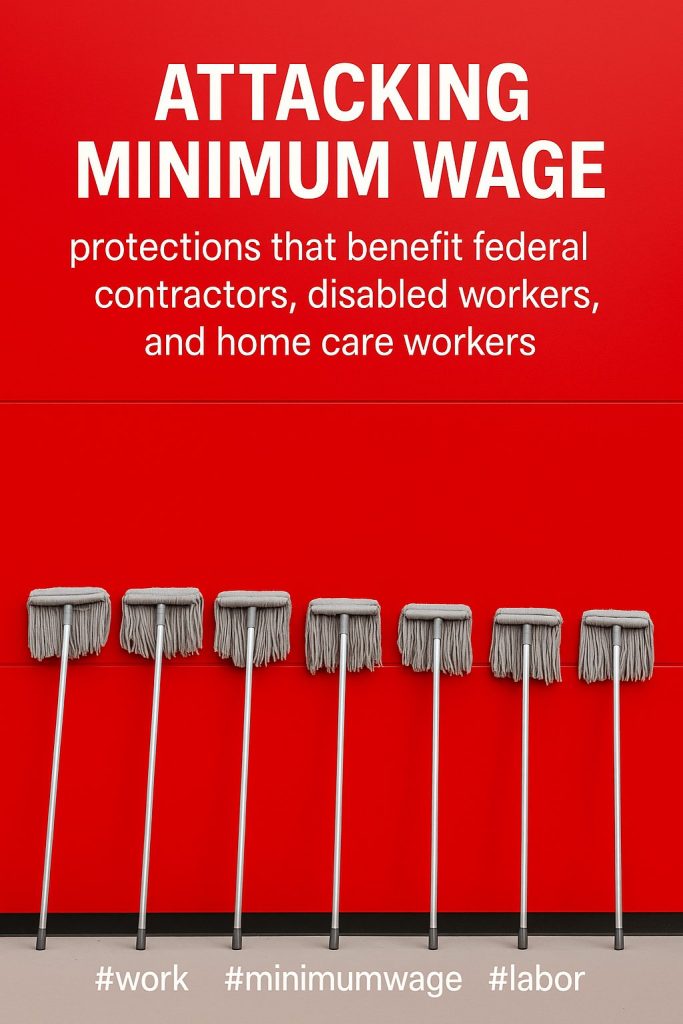
In a move that has sparked widespread debate and criticism, the Trump administration is taking steps to undermine minimum wage protections that support federal contractors, disabled workers, and home care workers. This initiative signals a potentially transformative shift in labor policy, with far-reaching implications for millions of Americans who rely on these protections for their livelihoods.
As discussions about economic recovery continue in the wake of the COVID-19 pandemic, the proposed changes to minimum wage regulations have come at a contentious time. Advocates argue that these protections are vital for ensuring fair pay and dignity for some of the most vulnerable members of the workforce. “These changes will hurt the workers who need help the most,” states Lee Anderson, a spokesperson for the National Disability Rights Network. “By eliminating minimum wage protections, the administration is effectively telling those workers that their contributions to society aren’t valued.”
The administration aims to loosen restrictions that require federal contractors to pay a minimum wage, a standard that currently ensures better income for thousands of workers in the fields of home care and disability services. Critics worry that removing these safeguards could lead to increased exploitation and poverty among professional caregivers and others employed in similar sectors.
“This is not merely about dollars and cents—it’s about human dignity and the acknowledgment of hard work,” emphasizes Sarah Rodriguez, a home care worker in California. “When we don’t protect these wages, we put families at risk and undermine the care industry as a whole.”
The minimum wage policy changes are viewed by some as part of a larger trend within the administration that prioritizes business interests over worker rights. Proponents of the changes argue that lifting wage requirements could incentivize federal contractors to create more jobs and reduce overall labor costs, which they claim would benefit the economy. However, experts are divided on whether such a strategy would yield the intended results without compounding existing inequalities.
Labor groups are mobilizing, calling for rallies and protests to raise awareness of the implications of these proposed changes. Social media campaigns are gaining traction as organizations advocate for protecting the rights of workers, using hashtags like #WorkAndWageJustice to spread their message. The narrative is clear: many believe that economic recovery must not come at the expense of the most vulnerable workers.
As public scrutiny mounts, the administration remains firm in its stance. Yet the ripple effects of these potential policy shifts are likely to be felt across the country. The ongoing discourse surrounding minimum wage protections reflects a critical crossroads in American labor policy, and one that could redefine employment standards for generations to come.