
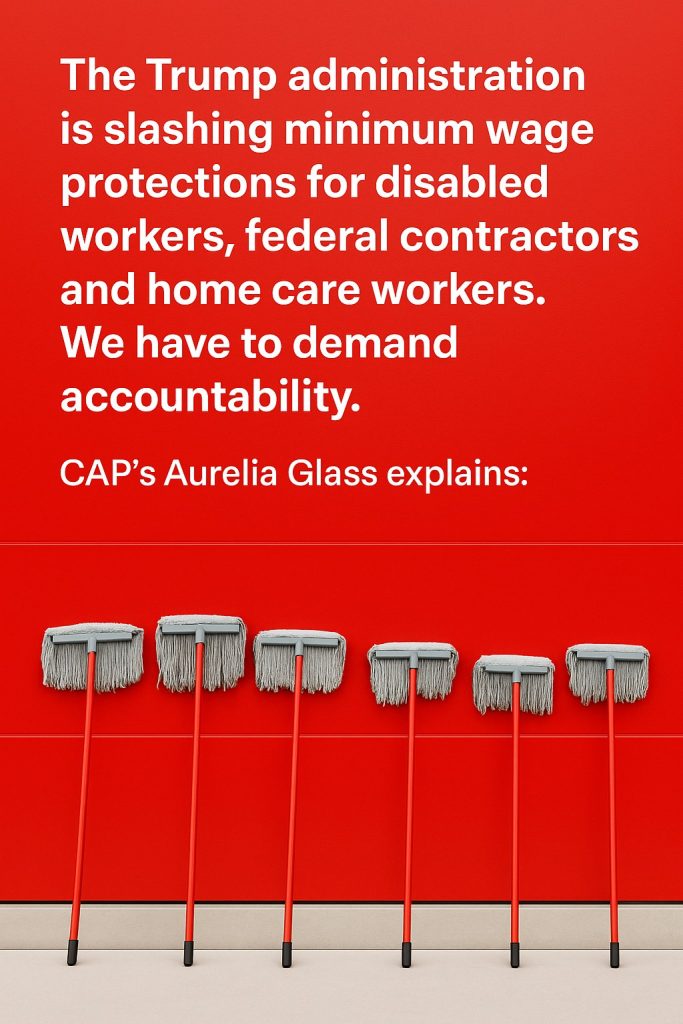
The Trump administration is at the center of a controversial decision that could significantly impact some of the nation’s most vulnerable workers. Recent moves indicate slashing minimum wage protections for disabled workers, federal contractors, and home care workers. As the ramifications of this policy shift ripple through communities, advocacy groups and concerned citizens are calling for immediate accountability.
According to Aurelia Glass from the Center for American Progress (CAP), this change undermines the hard-fought protections for millions of Americans who rely on minimum wage laws to make a living. “These protections were put in place to ensure that every worker, regardless of their situation, receives fair compensation,” said Glass. “By scaling these back, the administration is sending a message that the lives of disabled individuals and low-wage care workers don’t matter.”
The proposed changes could disproportionately affect over 200,000 workers with disabilities who have historically received sub-minimum wage under section 14(c) of the Fair Labor Standards Act. These workers, who often face barriers in the job market, depend on these wage protections not only for their financial stability but also for their dignity in the workforce.
In addition to disabled workers, federal contractors and home care workers—many of whom provide critical support during the ongoing COVID-19 pandemic—are at risk. With the rising cost of living and inflation, lawmakers and advocates argue that cutting wage protections could leave these essential workers unable to support themselves and their families.
Concerns over these changes are compounded by ongoing budget cuts to various programs intended to support disabled individuals. Critics argue that the Trump administration’s actions reflect a larger trend of devaluing the work and rights of those who are often marginalized in society.
Advocacy groups are mobilizing, urging citizens to speak out against these adjustments. Many are using social media platforms to spread awareness, encouraging followers to contact their representatives and demand that these cuts be reversed. “This is a crucial moment for accountability,” Glass remarked. “If we stay silent, we are complicit in allowing these injustices to continue.”
The importance of solidarity in fighting for just wages cannot be understated. Advocacy coalitions stress that public pressure could play a critical role in influencing policymakers and keeping the discourse alive in the halls of power. The Time to Act campaign—a grassroots initiative aimed at raising awareness about the economic challenges faced by disabled and low-wage workers—is gaining increase traction, gathering support across social platforms and community organizations.
As the discussion progresses, many are left to ponder what these changes could mean for the future of labor rights and social justice in America. Without protective measures in place, the potential for regression in worker rights looms large. Advocates are therefore rallying for a unified front to ensure that the needs of the most vulnerable continue to be heard and prioritized.
Where to Learn More
- Trump Administration Ends Minimum Wage Protections for Disabled Workers – Center for American Progress – Center for American Progress
- Trump Asks States to Remove Minimum Wage Protections for Disabled Workers – NBC News – NBC News
- Trump Administration Proposes Minimum Wage Cuts for Disabled Workers – Huffington Post – Huffington Post
- Minimum Wage and Disabled Workers – American Psychological Association – American Psychological Association