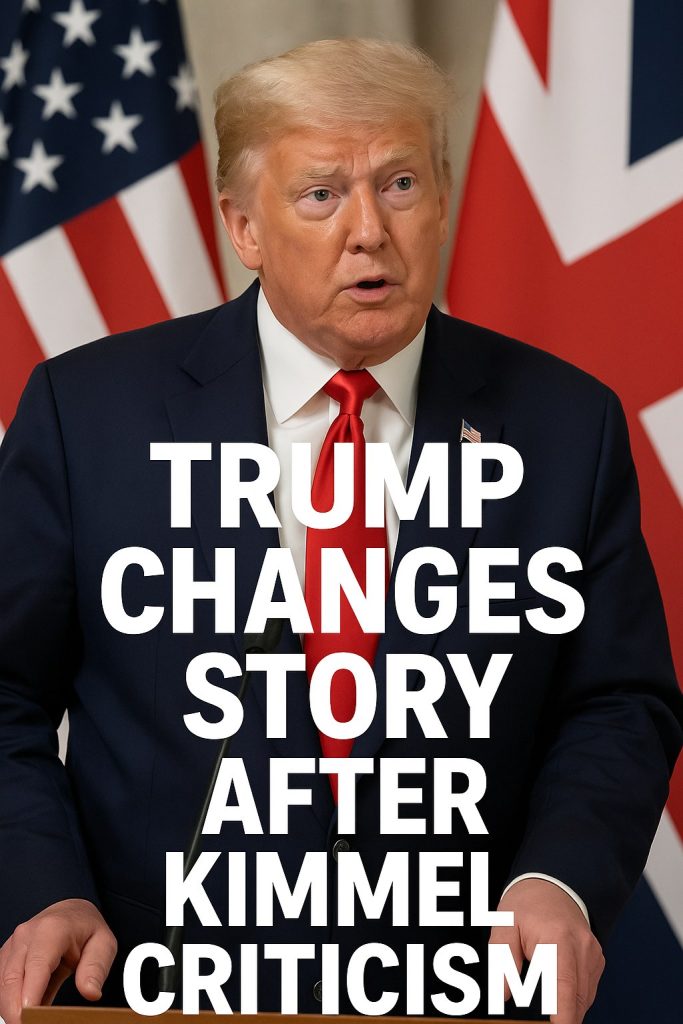
The ongoing saga surrounding late-night host Jimmy Kimmel has reached a boiling point as critiques toward the Donald Trump administration mount. Reports emerging from multiple outlets indicate that the administration is revising its narrative following widespread backlash over actions perceived as attempts to silence the comedic voice of Kimmel, a vocal critic of Trump.
Social media exploded with reactions after allegations surfaced that the Trump administration pressured ABC executives to take Kimmel off the air amid fears his comedic jabs and political commentary could damage the administration’s public perception. The issue sparked a heated debate about censorship, freedom of speech, and the influence of political power on media outlets.
Initially, a spokesperson for the administration stated that the decision was purely a business one, influenced by declining viewership numbers and changes in the television landscape. However, following a wave of public dissent and support for Kimmel from his fans and fellow comedians, the administration is reportedly reassessing its earlier remarks.
Critics of the administration were quick to label the actions as a blatant attempt to stifle dissenting voices. Kimmel himself took to social media, posting a series of tongue-in-cheek tweets addressing the criticism, stating that he would “offer a full apology” the next time he was pushed to host “Donald Trump Live.” His followers rallied behind him, using hashtags such as #StandWithKimmel and #FreeKimmel to express their solidarity.
As outrage peaked, White House aides began to soften their stance, claiming that any suggestion of illegitimate pressure on ABC was unfounded. They emphasized the administration’s respect for entertainment and the press but maintained that media personalities have a responsibility to present “balanced” viewpoints.
This incident stands as a stark reminder of the growing intersection between entertainment and politics in America, particularly in a climate where late-night hosts have emerged as critical voices of dissent. The changing narrative from the Trump administration reflects an acknowledgment of the power of social media and public opinion, as their attempts at damage control appear to rapidly fail under the scrutiny of a fervent audience.
Experts suggest that the situation could have broader implications for late-night television and political humor moving forward. “Kimmel serves as a bellwether for many comedians. If making bold satire against the administration leads to actual repercussions like being removed from the network, it could signal a chilling effect on late-night comedy,” stated Dr. Helen Carter, a media analyst.
As Trump’s presidency continues to polarize the nation, the Kimmel controversy highlights the ongoing struggle between free expression and political power – a battle that appears far from over.