
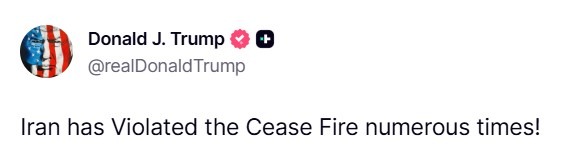
In a development that has heightened tensions in the Middle East, former President Donald Trump has publicly accused Iran of violating the longstanding ceasefire agreement “numerous times,” casting new doubt on prospects for de-escalation in the region. The claim comes amid high-stakes diplomatic efforts as a U.S. delegation prepares to travel to Pakistan for yet another round of negotiations with Iranian officials.
The controversy ignited after a viral social media post featuring an image of a text exchange appeared overnight, clearly stating: “Donald J. Trump @realDonaldTrump + Iran has Violated the Cease Fire numerous times!” This statement underscores ongoing frustrations among U.S. policymakers and supporters of a tougher stance on Iran. While the exact details of alleged violations remain unconfirmed publicly, the assertion signals a shift in rhetoric that could influence future diplomatic strategies.
Historically, the ceasefire agreement has been a fragile pact, with both sides accusing each other of violations. The United States has maintained a stance emphasizing the need for Iran to adhere to international commitments, especially concerning nuclear proliferation and regional security. Iran, on the other hand, denies any deliberate breaches, asserting that U.S. sanctions and aggressive posturing undermine hope for diplomatic resolution.
The upcoming visit to Pakistan marks the latest in a series of intensified diplomatic efforts. Pakistan, known for its role as a mediator, is hosting a crucial round of negotiations intended to broker a pathway towards stability. U.S. officials have expressed optimism that direct talks could pave the way for renewed agreements, but recent accusations from Trump suggest that trust remains elusive amid persistent allegations of violations.
Analysts warn that such public accusations by a former leader can complicate ongoing negotiations and may serve to rally political support for a more aggressive U.S. posture toward Iran. Conversely, critics argue that escalating rhetoric risks further destabilization in an already volatile region. Meanwhile, diplomatic sources indicate that talks in Pakistan are focusing on de-escalation measures and ways to verify compliance with existing agreements.
As the diplomatic negotiations unfold, the international community watches closely. The stakes are high, with regional stability, global security, and economic interests all intertwined in the outcome. Whether this latest accusation sparks a new cycle of tension or leads to meaningful progress remains to be seen. Experts emphasize the importance of restraint and constructive dialogue, especially with negotiations underway on multiple fronts.