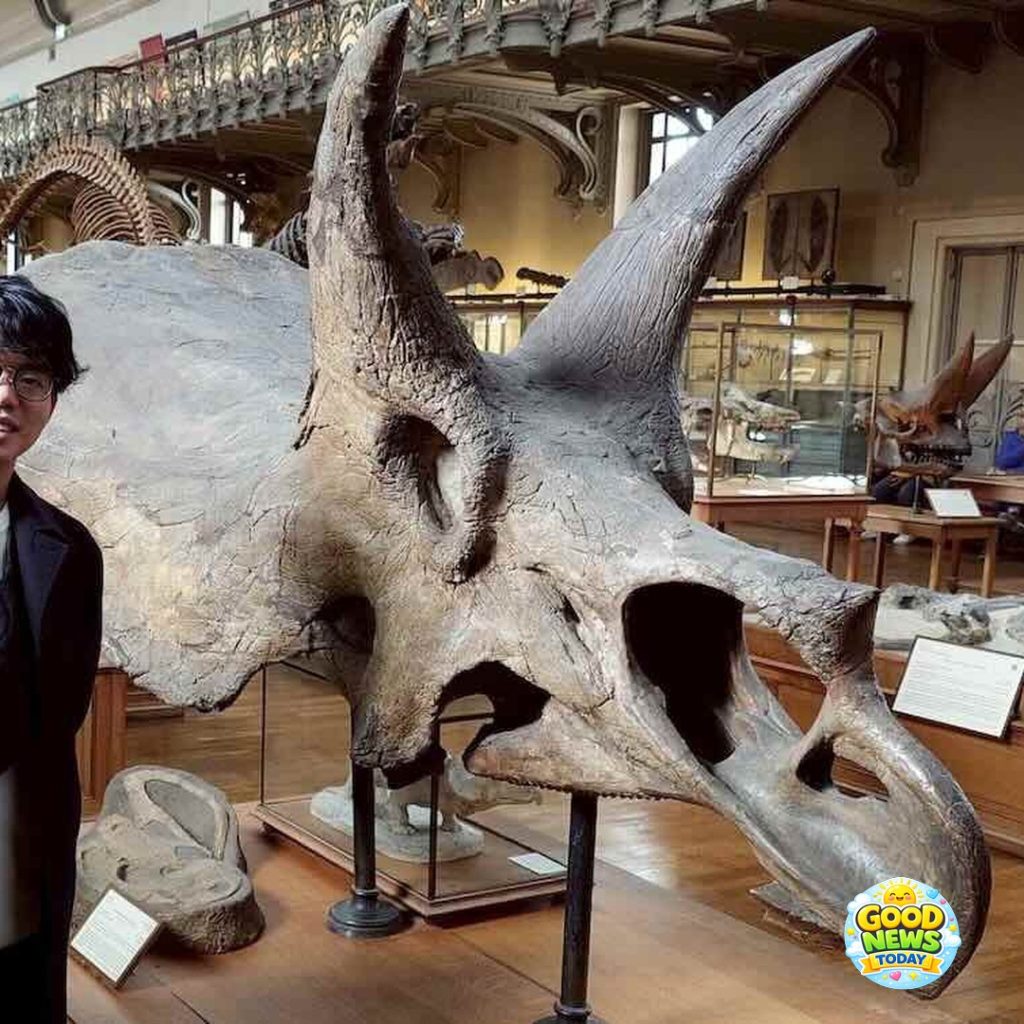
Researchers have embarked on an exciting journey to unravel the mystery behind the impressive size of the triceratops’ nose, a feature that sets this magnificent dinosaur apart from both ancient and modern species.
A recent study has revealed that the remarkable nose of the triceratops played a crucial role in regulating its body temperature. By utilizing CT scans of fossilized triceratops skulls, the team compared their findings with the anatomical structures of contemporary animals like birds and crocodiles.
Through careful observation and analysis, the researchers reconstructed the arrangement of nerves, blood vessels, and airflow pathways within the skulls. Their findings suggest that these horned dinosaurs likely employed their large noses not only for olfactory purposes but also for managing temperature and moisture levels. Dr. Seishiro Tada, a project research associate at the University of Tokyo Museum, was inspired to study the moisture control mechanisms of the triceratops after examining a fossilized specimen.
“My fascination with the evolution of reptilian heads and noses began during my master’s studies,” Dr. Tada shared. “The triceratops, in particular, has such a unique and oversized nose, and I was puzzled about how the internal structures fit within it, despite my understanding of reptilian anatomy.”
Horned dinosaurs, or Ceratopsia, are known for their intricate skull designs, with the triceratops being the most iconic among them. However, due to its distinctive features, the internal anatomy of triceratops skulls has remained a mystery until Dr. Tada utilized modern technology to explore the internal soft tissues.
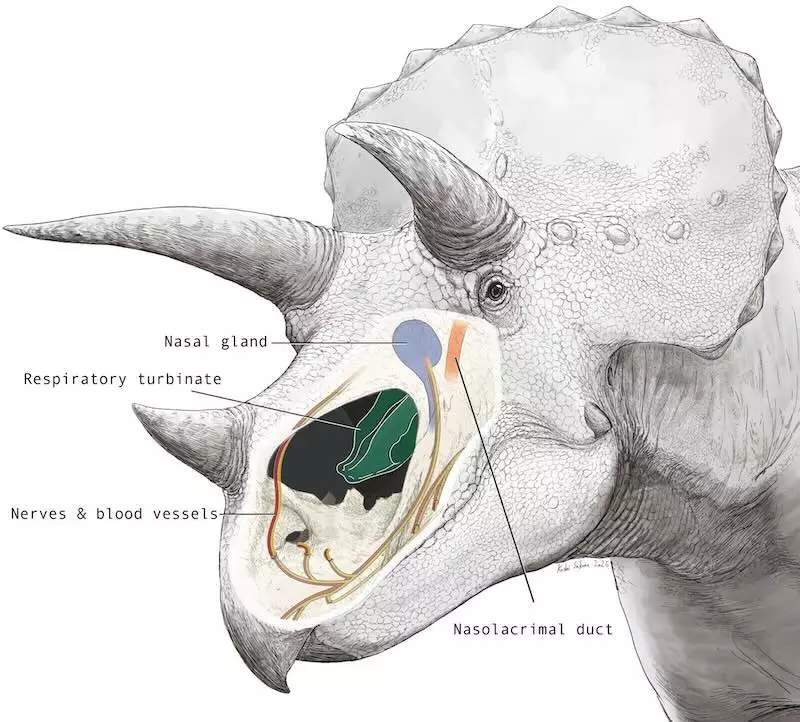
“By employing X-ray-based CT scan data of a triceratops and combining it with knowledge of modern reptilian snout structure, we discovered unique characteristics in its nose, leading us to propose the first comprehensive hypothesis regarding the soft-tissue anatomy of horned dinosaurs,” Dr. Tada explained. “Triceratops had a unique arrangement of nerves and blood vessels in its nose.”
In contrast to most reptiles, where nerves and blood vessels reach the nostrils from the jaw, the triceratops had its skull shape block this route, causing these pathways to take a nasal branch instead. This adaptation allowed the triceratops to support its large nose effectively. “I realized this as I pieced together 3D-printed models of triceratops skull fragments, much like a puzzle,” he added.
Published in the journal The Anatomical Record, the study also identified a remarkable structure within the triceratops’ nose known as a respiratory turbinate. This feature, which is rarely found in other dinosaurs, is present in modern birds and mammals. These thin, curled surfaces enhance the surface area for the exchange of heat between blood and air.
While Dr. Tada indicates that triceratops may not have been fully warm-blooded, the researchers believe that these structures played a vital role in regulating temperature and moisture, showcasing yet another fascinating aspect of this extraordinary dinosaur.