
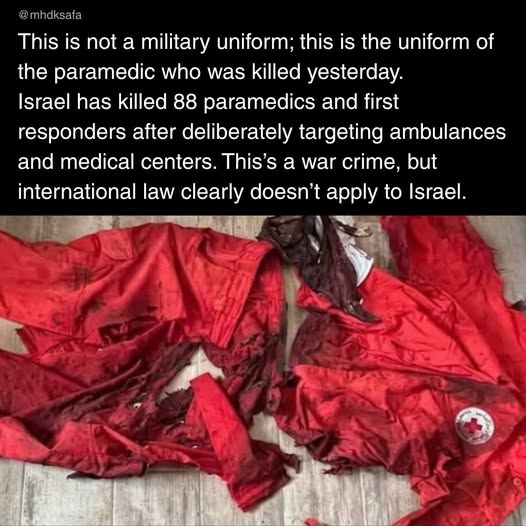
The ongoing conflict in Gaza has taken a devastating toll on emergency responders, highlighting the brutal realities faced by those trying to save lives amid escalating violence. A recent social media post has brought this tragedy into sharp focus, claiming that Israel has killed **88 paramedics and first responders** since the recent outbreak of hostilities.
The viral image, which prominently displays a uniform with a message, reads: “@mhdksafa This is not a military uniform; this is the uniform of the paramedic who was killed yesterday.” It underscores the grim reality that first responders, often considered neutral parties in humanitarian crises, are increasingly targeted or caught in the crossfire. The post has resonated widely, sparking outrage and concern across social media platforms worldwide.
This surge in casualties among healthcare workers and emergency personnel underscores a disturbing trend. Human rights organizations and local officials have reported the loss of dozens of medics in recent weeks, with many killed amidst direct attacks or during their efforts to provide aid in conflict zones.
Palestinian authorities and medical organizations have condemned what they describe as “unacceptable targeting” of essential responders. The figures—88 paramedics killed—reflect a harrowing reality that those risking their lives to save others are increasingly becoming victims of a violent cycle that shows no signs of abating.
International observers and humanitarian agencies have expressed deep concern. They emphasize that attacking emergency responders violates international humanitarian law, which mandates the protection of medical personnel and facilities. The targeting of civilians, including those on the frontlines of rescue efforts, complicates ongoing efforts to provide necessary medical aid and exacerbates a dire humanitarian crisis.
Over the past few days, calls for a ceasefire and respect for medical neutrality have intensified. However, with reports of continuous violence, the situation remains precarious, leaving countless families mourning their loved ones and emergency teams overwhelmed.
As the conflict continues, stories like these serve as a stark reminder of the human toll behind the headlines. The loss of 88 paramedics signifies not just the tragedy of individual lives lost but also the broader impact on the community’s capacity to respond to emergencies in such a volatile environment.
Support from international communities remains crucial. Humanitarian organizations are urging all parties to adhere strictly to international laws protecting medical personnel and infrastructure, ensuring aid can reach those in desperate need without fear of violence.
In moments like these, the world must remember that beneath the numbers are personal stories — lives dedicated to saving others, now tragically cut short amid ongoing conflict. Continued awareness, advocacy, and diplomatic efforts are essential to protect those who risk everything on the frontlines of crisis.