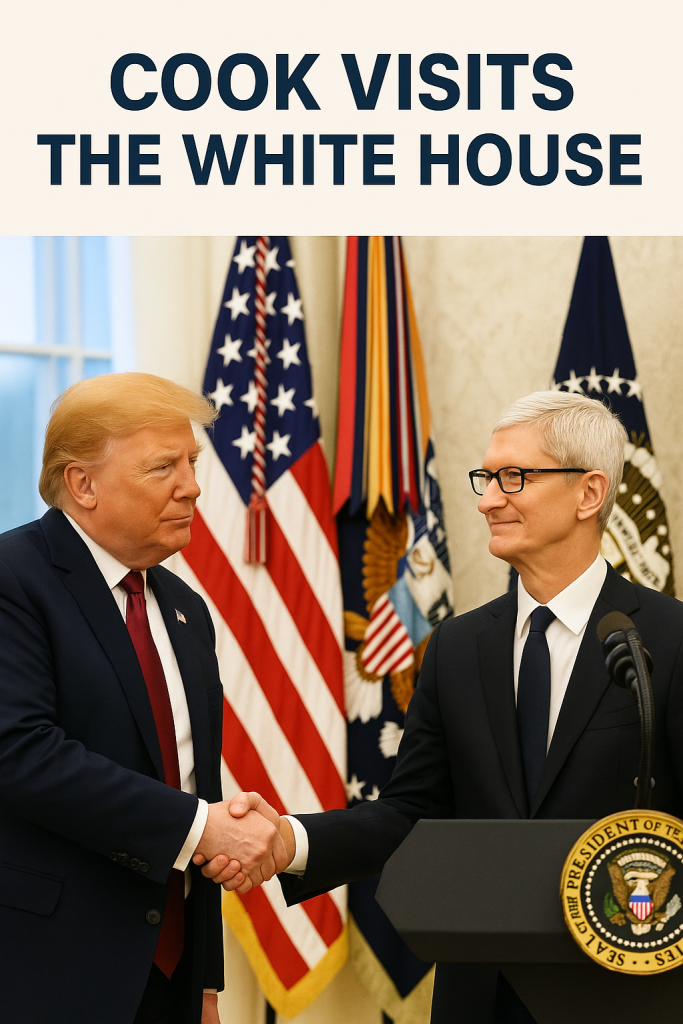
Apple CEO Tim Cook’s recent visit to the White House in April 2024 has stirred controversy and a wave of criticism across social media and political circles, marking an unexpectedly fraught intersection of tech leadership and politics.
Cook met with President Joe Biden to discuss key issues surrounding the tech industry’s role in the U.S. economy, including innovation, manufacturing, and national security concerns. Traditionally viewed as a figure who transcends partisan politics, Cook’s appearance at the White House this week has instead ignited debate about corporate influence, economic priorities, and the broader relationship between big tech and government.
At the heart of the backlash is a growing skepticism over the tech industry’s involvement in policymaking, especially as the 2024 election season intensifies. Critics argue that Cook’s meeting signals an overreliance on tech giants in shaping national agendas, potentially sidelining smaller businesses, labor interests, and consumer advocates. Social media platforms lit up with accusations that Apple’s enormous market power and perceived corporate self-interest are being prioritized over pressing issues like labor rights, tax policy, and digital privacy.
Several progressive voices have specifically targeted Cook’s stance on Apple’s recent labor controversies, including allegations related to working conditions in overseas supplier factories, arguing that the White House meeting glosses over these persistent concerns. Additionally, some political commentators noted the timing of the visit as problematic, suggesting it undermines calls for greater regulation of big tech companies that have polarized the tech policy debate.
Supporters of Cook, however, emphasize the importance of collaboration between government and industry leaders to navigate complex challenges such as climate change, cybersecurity threats, and supply chain resilience. They point out that Apple has committed billions of dollars toward U.S. manufacturing and green energy investments, and advocate for continued engagement between the administration and major tech firms to drive innovation.
The White House described the meeting as a productive dialogue focused on fostering innovation, securing technology supply chains, and promoting American jobs. Yet, that official optimism has failed to quell the widespread criticism online, where opponents argue that the perceived cozy relationship between the White House and Silicon Valley could lead to a concentration of power that harms consumers and smaller competitors.
Interestingly, this latest controversy around Cook’s visit also highlights broader cultural and political rifts that are defining the 2024 election cycle. As voters scrutinize corporate influence and economic inequality, tech leaders like Cook are increasingly viewed not just as business figures but as political actors whose decisions have profound societal impacts.
In the coming weeks, this episode may spark further debate about how government officials should engage with powerful corporations, especially those with sprawling global influence. For Apple and Tim Cook, the challenge will be to manage public perception while balancing their role as innovators and economic drivers with the growing demand for accountability and transparency.
Tim Cook’s White House visit was intended as a strategic move to align Apple with national priorities, but the negative reactions underscore the fine line tech leaders must walk amidst America’s complex political landscape in 2024.