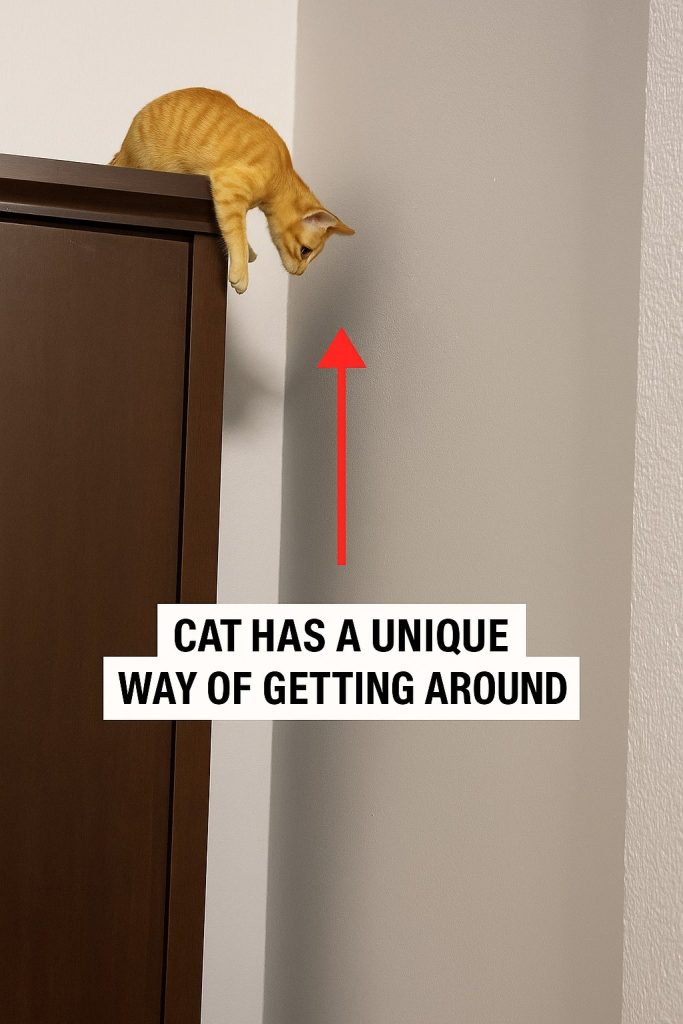
In a surprising twist to the animal kingdom’s viral moments, a curious creature nicknamed the “spider-cat” has set social media abuzz in April 2024. Videos and photos depicting a small, furry animal with unusually long, spider-like legs have sparked widespread fascination, bewilderment, and a flurry of online speculation. But what exactly is this mysterious “spider-cat,” and why is it capturing the internet’s imagination?
It all began when a short video clip surfaced showing a nimble, cat-sized animal moving in a way that resembles the eight-legged gait of a spider. The creature’s elongated limbs contrasted starkly with its domesticated feline-like body, giving it an almost otherworldly appearance. Users on platforms ranging from TikTok to Twitter quickly dubbed it the “spider-cat,” drawing comparisons to popular fictional hybrids and prompting a wave of memes and reaction videos.
What’s real, and what’s myth? Early analysis by wildlife experts and veterinarians confirms that no credible evidence exists of a genuine hybrid between a spider and a cat—organisms from completely different biological classes. Instead, the explanation appears to be a combination of optical illusions, camera angles, and a rare deformity or genetic mutation in a domestic cat or a similar small animal.
Several animal behavior specialists suggest that the creature might have a condition called dactylomegaly, a rare anomaly characterized by abnormally long toes or limbs, which in this case exaggerates the legs’ length. Additionally, the footage was often flipped and shot under unusual lighting conditions, further distorting the creature’s appearance.
Despite scientific clarifications, the “spider-cat” has sparked more than just curiosity. It has become a symbol of how quickly unusual animal content can become viral, inspiring creative storytelling, digital art, and even merchandise. Some social media influencers have capitalized on the trend by uploading humorous videos placing their own cats in spider-like scenarios, fueling the viral cycle with imaginative edits.
Interestingly, cryptozoologists and enthusiasts in fringe science communities have seized upon the “spider-cat” to speculate about unknown species or genetic experiments. While these theories lack empirical support, they contribute to the lore surrounding the viral phenomenon, showcasing the power of internet mystique in shaping public perception.
Experts also warn about the potential downside of such viral sensations. In some regions, animals showcased in viral videos can suffer from inappropriate handling or exploitation, especially if curiosity about the unusual anatomy leads to a spike in demand for similar pets or attempts to replicate the phenomenon.
In sum, the “spider-cat” is less a new species and more a fascinating example of how viral content can blend curiosity, science, and a dash of mystery. It reminds us of the endless surprises nature can present—even when amplified through the lens of social media and human imagination.
As the phenomenon continues to spread, one thing is clear: the internet’s appetite for quirky and bizarre animal stories is as strong as ever. Whether a genuine biological oddity or an optical trick, the “spider-cat” has secured its place as one of 2024’s most memorable viral animal sensations—and a reminder that sometimes reality’s quirks are stranger than fiction.