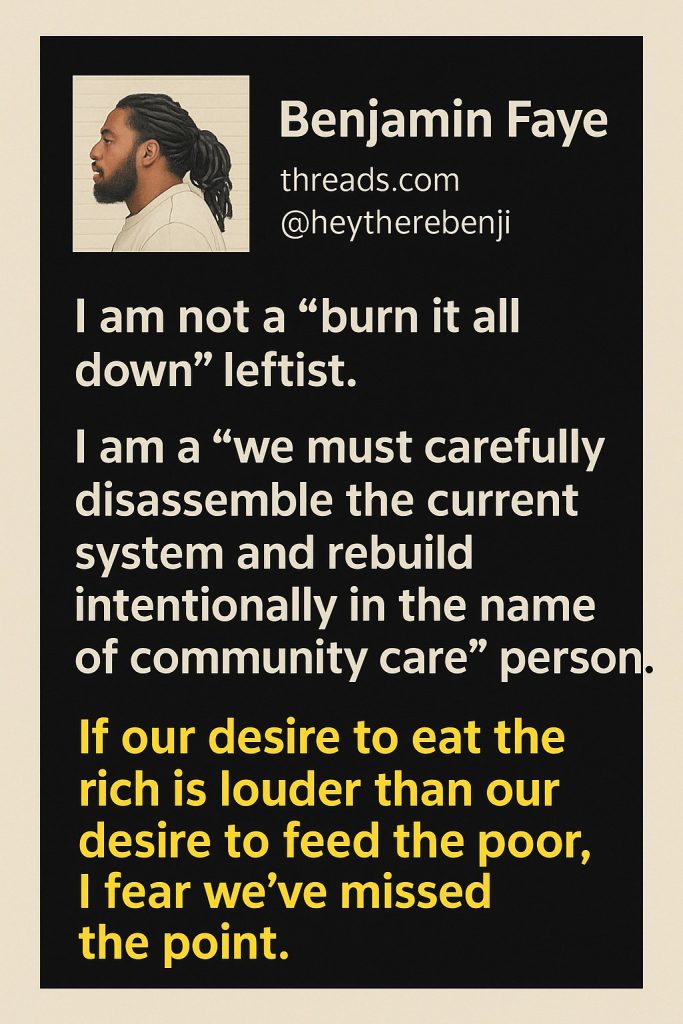
In a digital landscape often flooded with calls for radical upheaval, a viral post by Benjamin Faye on Threads.com is resonating with a broad audience eager for thoughtful reform. The message is clear, succinct, and striking: “I am not a ‘burn it all down’ leftist. I am a ‘we must carefully disassemble the current system and rebuild intentionally’”. This statement encapsulates a growing mindset among activists, thinkers, and everyday citizens who yearn for progressive change without the chaos often associated with revolution.
Benjamin Faye’s post, shared widely on Threads and other social platforms, challenges the common stereotype of systemic change advocates as radicals seeking to obliterate existing institutions in one sweeping motion. Instead, it advocates for a more deliberate and strategic process—one focused on careful dismantling of outdated structures and a thoughtful rebuilding process centered on inclusivity, sustainability, and justice.
Why is this perspective gaining traction? Many people are wary of abrupt disruptions that often lead to instability or unintended consequences. The idea of “burning it all down,” while emotionally compelling, can alienate moderates and those anxious about the fallout from radical change. Faye’s approach offers a middle ground—acknowledging systemic flaws that require fundamental change, yet prioritizing a methodical, intentional transition.
This mindset resonates especially well in today’s context, where complex challenges like climate change, economic inequality, racial injustice, and political polarization demand nuanced solutions. Rather than dismantling entire systems overnight, the “careful disassembler” aims to identify specific components that need reform, replacing or reconstructing them with better alternatives that reflect core values.
Social media users engaging with Faye’s message have sparked robust conversations about what rebuilding might look like in practice. Proposals span from redesigning democratic processes to embedding equity into educational institutions, revamping healthcare systems to prioritize access and affordability, and developing economic frameworks that incentivize sustainable growth rather than unchecked consumption.
Moreover, this approach echoes theories in organizational leadership and social innovation that emphasize iterative change, stakeholder inclusion, and data-driven decisions. It foregrounds patience and collaboration as powerful tools for durable transformation.
As this philosophy spreads, it could shape not only activism but policymaking, corporate responsibility, and community organizing. Benjamin Faye’s viral words serve as a rallying cry for those committed to meaningful progress founded on reflection, responsibility, and resilience—qualities indispensable in the complex world of systemic reform.
Whether this thoughtful approach can bridge divides and inspire tangible action remains to be seen, but its rapid embrace on social media signals a shift toward more considered discourse about how we change the systems that govern our lives.
Where to Learn More
- Dare to Disagree – TED Talks
- How to Rebuild Society to be More Just and Sustainable – Brookings Institution
- How Leaders Can Drive Organizational Change – Harvard Business Review
- Why Radical Change Isn’t Always the Answer – The New York Times
- The Case for Careful, Systemic Change – The Atlantic