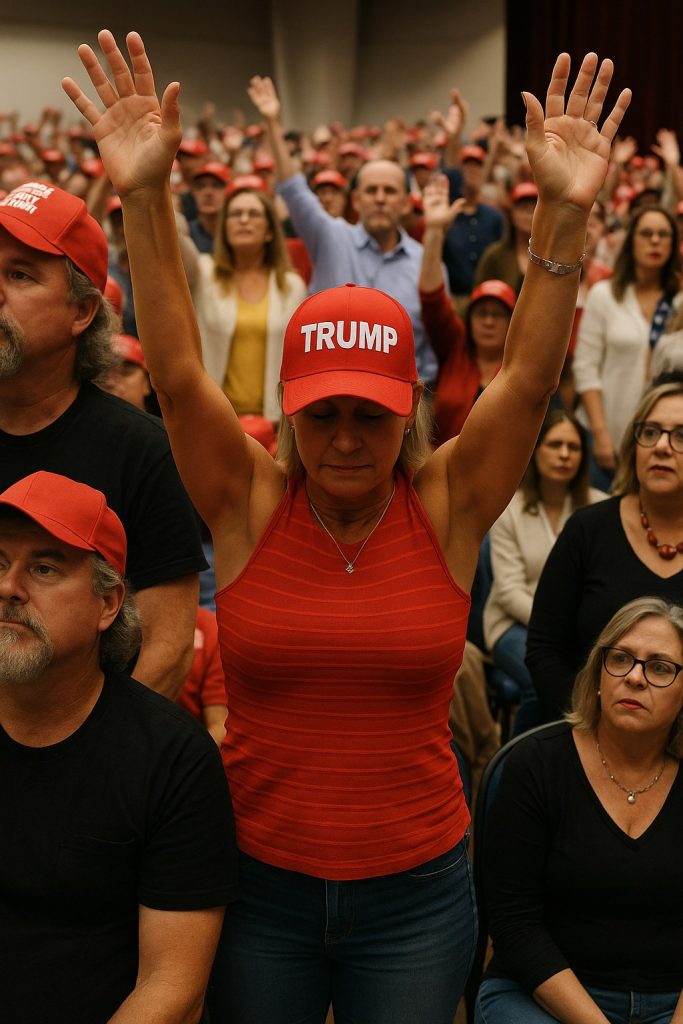
In a world grappling with the complexities of geopolitics, the profound observation that “when movements convince their followers that every act of war, every border drawn, every vote cast is sanctified, fundamentalism is no longer a fringe—it is the system itself” echoes with urgency. As increasingly polarized sentiments emerge globally, this assertion sheds light on the alarming normalization of extremist ideologies within mainstream politics.
Fundamentalism, long perceived as a fringe element in society, has infiltrated various systems, creating a new paradigm wherein every action taken in the name of ideology is legitimized and, in some cases, even celebrated. This shift marks a pivotal moment in political discourse and social norms, where religious and ideological extremism is woven into the fabric of statecraft and civil engagement.
Across the globe, we see a striking increase in leaders who exploit these ideologies to galvanize support among their followers. Movements that blend nationalism with religious fervor are not just loud minority voices anymore; they have become the architects of policy and direction for entire nations. This trend suggests a troubling transformation wherein previously fringe beliefs are not merely tolerated but institutionalized, reshaping laws, policies, and national identities.
Take, for instance, the current landscape in numerous Western democracies, where rhetoric surrounding immigration, national security, and cultural identity has shifted towards a more exclusionary approach, framed through a lens of ideological purity. Politicians have harnessed fears and anxieties arising from globalization, ultimately redirecting them towards ‘othering’ entire communities. As a result, fundamentalist ideologies gain traction, promoted as a necessary defense against perceived threats. This phenomenon is not isolated; similar patterns are observable across various regions of the world, including parts of Eastern Europe, Asia, and the Americas.
Moreover, such movements can rapidly destabilize societal consensus. When communities are led to believe that all political processes—be they votes or policy decisions—are acts of divine mandate, skepticism toward the political system evaporates. This polarization can create a toxic environment where dissent is viewed not merely as opposition but as an affront to the ideological and spiritual fabric of the nation.
The resulting isolation of those who dissent from the prevailing ideology is troubling. As public discourse becomes centrally controlled and manipulated by zealots, the plurality of perspectives—a cornerstone of democratic societies—risks vanishing. With every act of aggression, whether military or rhetorical, framed as a righteous cause, the chances for dialogue and compromise diminish significantly.
In an age defined by social media, the rapid dissemination of information propels these ideologies into the mainstream, further entrenching fundamentalist views within societal systems. The virality of ideas shared on platforms from TikTok to Twitter enables groups to mobilize quickly and effectively, generating a kind of echo chamber that reinforces their narratives and beliefs.
As citizens, we must remain vigilant. Recognizing the signs of fundamentalism’s encroachment upon governance and society is key to preserving dialogue and promoting tolerance. By fostering open conversations and encouraging critical thinking, we can combat the normalization of extremist ideologies that threaten the very foundation of democratic values.
Where to Learn More
- How Fundamentalism Spreads – The Atlantic
- The Politics of Fundamentalism – Foreign Affairs
- How Extremism is Reshaping Global Politics – BBC News
- The Rise of Fundamentalism: A Global Threat – Chatham House