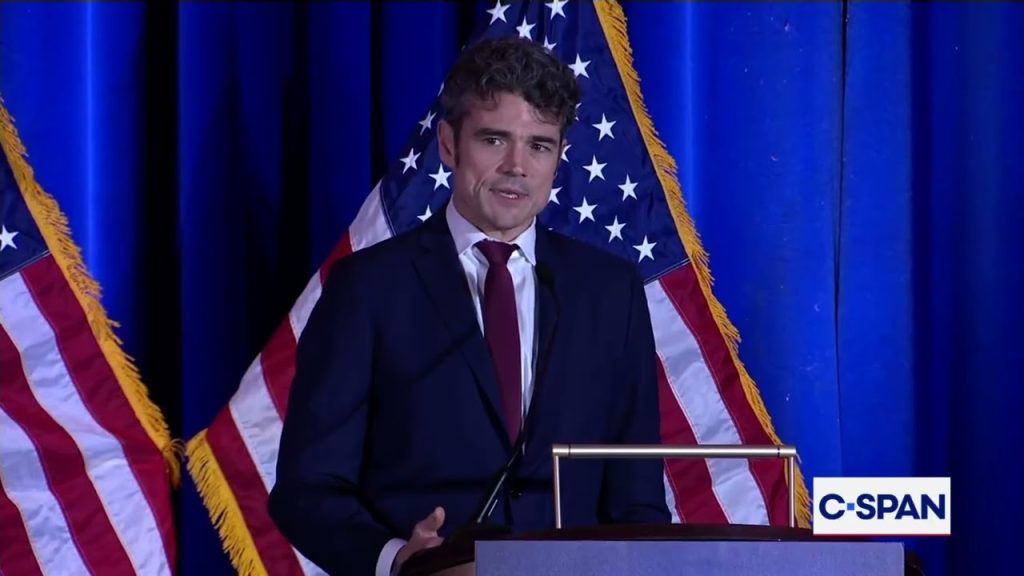
In a politically charged climate, the tactics employed by former President Donald Trump to command media attention have sparked significant debate. A recent political video titled “Exhausting!” delves deep into the implications of Trump’s strategy often termed “flooding the zone with information.” This approach involves bombarding the public and the media with a deluge of statements, policy pronouncements, and controversies aimed at capturing headlines and maintaining a constant presence in public discourse.

The core argument presented challenges the effectiveness of this method. While flooding the zone may serve to overwhelm opposition and critics by creating an environment of chaos, it also has the potential side effect of exhausting the average voter, as highlighted in the video. The speaker posits that Americans, feeling inundated by the incessant stream of news and information, tend to long for stability amidst the chaos. They suggest that many voters are not seeking the drama and turbulence that comes with Trump’s leadership style but rather a predictable and stable political environment. This yearning for stability could lead citizens to compromise on personal liberties in favor of what they perceive as greater geopolitical and economic security.
The video further emphasizes that while some voters might initially relish the chaotic nature of Trump’s presidency—viewing it as bold and decisive—there is a larger segment of the American public that finds such tumult disorienting and tiring. The psychological toll of continuously engaging with a high-volume news cycle is significant, and many citizens simply desire an electorate that focuses on steady economic growth rather than constant upheaval and spectacle.
This discourse reflects broader themes within political science and history where populations have sometimes traded off aspects of their freedoms in exchange for security. Historically, during times of uncertainty, there is a pattern wherein citizens may lean towards leadership that promises stability, even at the cost of individual rights. However, the video argues that Trump’s presidency fails to deliver on that promise of stability despite the outward appearances of a strongman leader.
Moreover, the concerns articulated in the video resonate with ongoing conversations about media consumption and political engagement in the digital age. The rabid pace at which news is reported—driven by the immediacy of social media and 24-hour news cycles—exacerbates feelings of fatigue among citizens. These pressures not only affect individual voters but can also have broader implications for democratic engagement, as apathy may set in when people feel overwhelmed by political events.
Ultimately, the question remains whether Trump’s strategy will galvanize long-term loyalty among his base or if it will lead to a backlash among a public that craves a return to normalcy. As the political landscape continues to evolve, understanding these dynamics will be crucial for analysts, policymakers, and the electorate alike.
Where to Learn More
- The New York Times – Comprehensive coverage of U.S. politics and in-depth analysis of political strategies.
- The Washington Post – Offers insight into political happenings and critical examinations of leadership styles.
- Politico – Provides expert commentary and analysis on the political landscape and voter behavior.
- Brookings Institution – A think tank that offers research on governance and public policy trends.
- C-SPAN – Presents live coverage and replays of major political events, giving access to raw, unfiltered political discourse.