
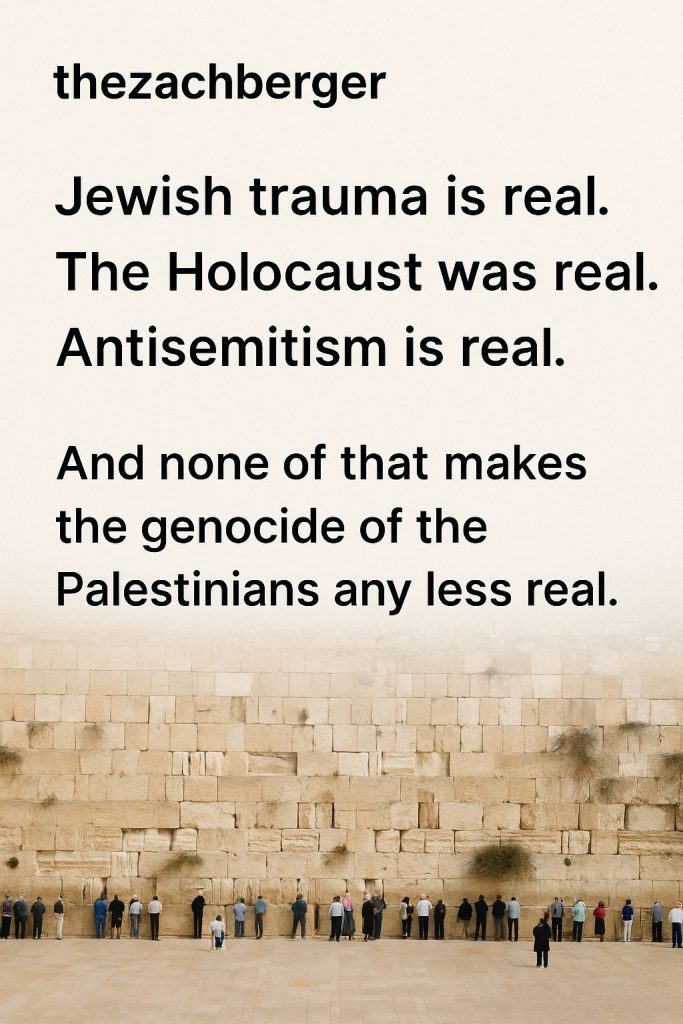
In recent days, a powerful image circulating on social media has sparked renewed conversations about the deeply intertwined histories and ongoing suffering in the Israeli-Palestinian conflict. The image shows a stirring view of the Western Wall—one of Judaism’s holiest and most symbolic sites—with an accompanying message that reads: “Jewish trauma is real. The Holocaust was real. Antisemitism is real. And none of that makes the genocide of the Palestinians any less real.”
This succinct but impactful statement encapsulates a growing recognition that two painful narratives—Jewish historical trauma and Palestinian suffering—can coexist without diminishing each other. As discussions about this conflict intensify, it is crucial to approach these narratives with nuance, compassion, and truth.
Jewish Trauma and its Historical Foundations
The Jewish people have endured centuries of persecution culminating in the Holocaust, one of history’s most horrific genocides. The trauma inflicted during Nazi Germany’s systematic annihilation of six million Jews is well-documented and acknowledged globally. It has left a lasting impact on Jewish identity, culture, and politics worldwide.
The reality of antisemitism today remains a painful reminder that prejudice and hatred toward Jewish communities persist. Acts of violence, discrimination, and denial continue to affect Jews in many parts of the world. Recognizing this trauma is essential in combating antisemitism and fostering a world of respect and understanding.
Palestinian Suffering: An Overlooked Tragedy
At the same time, Palestinian communities have faced decades of displacement, military occupation, and economic hardship. Many Palestinians, activists, and human rights organizations describe conditions in Gaza, the West Bank, and East Jerusalem as constituting elements of a humanitarian crisis—and even allegations of ethnic cleansing and genocide have been cited by experts and advocates seeking international intervention.
These allegations are rooted in documented incidents of forced displacement, restrictions on movement, civilian casualties in military operations, and deprivation of basic rights. The debate around terminology like “genocide” is deeply contested in international law and diplomacy, but what remains unquestionable is the very real suffering experienced by many Palestinians today.
Why Acknowledging Both Sides Matters
The viral social media message powerfully calls for an acknowledgment that recognizing Jewish suffering and antisemitism does not invalidate the hardships faced by Palestinians. Yet, in public discourse, these narratives are often framed in zero-sum terms—implying that affirming one negates or diminishes the other.
Such a dichotomous framing obscures the realities of millions of people and hampers efforts toward peace, justice, and reconciliation. Honest engagement with the histories, traumas, and grievances on both sides is a necessary foundation for dialogue. It opens the door to empathy, accountability, and ultimately, a more just resolution of the conflict.
The Role of Social Media and Public Discourse
Social media has become a powerful platform for voices from all sides of the conflict. It allows individuals to share personal stories, historical perspectives, and urgent appeals to global audiences, often challenging mainstream narratives or official accounts. However, it can also amplify misinformation and deepen polarization.
Messages like the one accompanying the Western Wall image help bridge divides by acknowledging the validity of multiple experiences of trauma and suffering. They invite reflection rather than division, highlighting the importance of humanizing all involved.
As global citizens, approaching the Israeli-Palestinian conflict with informed empathy and respect for historical truths—and contemporary realities—can foster a deeper understanding and support for efforts aimed at peace and justice for all.
Where to Learn More
- Holocaust History and Impact – United States Holocaust Memorial Museum
- Reports on Human Rights in Palestine and Israel – Human Rights Watch
- Understanding the Israeli-Palestinian Conflict – BBC News
- Contemporary Antisemitism: Facts and Figures – Anti-Defamation League
- Analysis and Updates on Israeli-Palestinian Relations – International Crisis Group