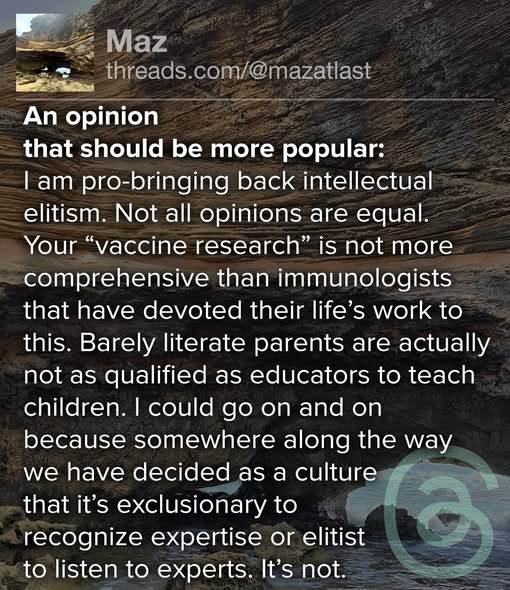
In an era dominated by social media echo chambers and misinformation, a growing movement is advocating for a transformative shift: the reintroduction of *intellectual elitism*. This perspective challenges the popular notion that all opinions carry equal weight, especially in complex debates such as public health, science, and policy-making.
At the heart of this argument lies a fundamental question: Should all voices be treated equally, regardless of expertise and critical thinking? Critics of the prevailing “anything goes” approach argue that it undermines the integrity of public discourse. They suggest that, much like in academic or scientific communities, society could benefit from a hierarchy of knowledge — where well-informed, rigorous opinions are distinguished from uninformed or misinformed ones.
A viral social media post gained significant attention by asserting, “Not all opinions are equal.” It pointed out that dismissing expertise—be it in vaccine research, climate science, or economics—can have dangerous consequences. For instance, the post highlighted how misinformation surrounding COVID-19 vaccines has cost lives, advocating for a framework where credible scientific data is prioritized over anecdotal or conspiracy-driven narratives.
Proponents of reintroducing intellectual elitism argue that embracing this concept doesn’t mean silencing dissent or discouraging independent thinking. Instead, it encourages society to cultivate critical thinking skills and elevate voices rooted in evidence and rigorous analysis. This approach, they believe, could lead to more informed policymaking and a more resilient public discourse.
However, opponents warn against elitism turning into dogma or exclusion. They emphasize the importance of accessibility to knowledge and caution against creating an intellectual hierarchy that marginalizes those less educated or from different backgrounds. Striking a balance—where expertise is respected but open to public engagement—is seen as essential for democratic health.
This debate becomes even more urgent in an age where misinformation spreads rapidly online, and trust in institutions is waning. As the viral post suggests, rebuilding trust in scientific expertise and encouraging public appreciation for well-founded opinions could be crucial steps in addressing global challenges, from pandemics to climate change.
Ultimately, the call for a revival of *intellectual elitism* invites society to reflect on the value of expertise and the importance of defending truth. While the concept may be controversial, acknowledging that not all opinions are created equal could be key to navigating the complex information landscape of the 21st century.