
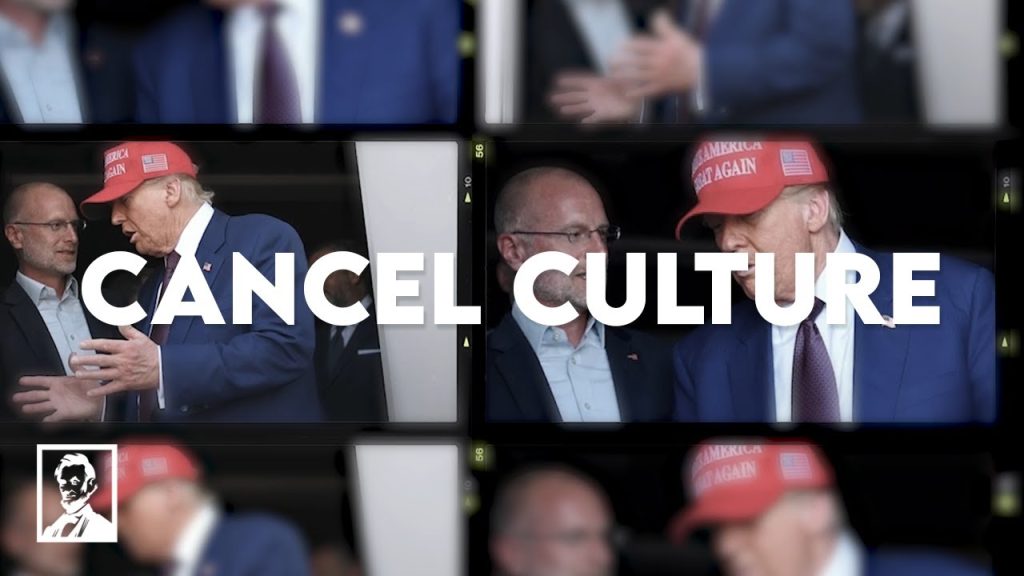
A recent political video titled “Cancel Culture” has ignited a fierce debate about free speech and censorship in the United States. Featuring clips and statements from prominent figures including former President Donald Trump and comedian Jimmy Kimmel, the video encapsulates the current tensions surrounding the concept of cancel culture and its implications for media and public discourse.

At the core of the video is a proposal from Trump to sign an executive order aimed at halting government censorship and promoting free speech. His assertion that the government has increasingly acted as a mob to silence dissent echoes concerns raised by various commentators about the fragility of creative expression under political pressure. As he proclaims, “We will bring back free speech to America,” the stakes for comic expression and media criticism become all the more evident.
The discussion takes a sharp turn when it references ABC’s controversial decision to pull “Jimmy Kimmel Live” from air indefinitely. This decision, instigated by pressure from the Federal Communications Commission (FCC) under its Trump-appointed chair, has been framed as indicative of a larger movement toward censorship. The FCC chair’s remarks on a popular podcast amplify these claims, insinuating that media companies face consequences for broadcasting content perceived as critical of political leadership.
Interestingly, rather than placing the blame for cancel culture solely on the political left, the narrative presented in the video highlights a troubling reversal. Observers note that it is increasingly the political right that appears to engage in canceling prominent figures across entertainment and media landscapes. This shifting dynamic raises important questions about the preservation of comedic freedom and the essential role of satire as a societal commentary, especially during times of political strife.
The implications of these developments go beyond mere entertainment. The tension reflected in this video serves as a bellwether for a society grappling with the boundaries of acceptable criticism and the operations of power through media. As discussions around cancel culture persist, it’s vital to understand the nuances that govern free expression, noting how comedians and public figures act as early indicators of broader societal shifts.
Ultimately, the video concludes with a stark warning: This isn’t merely about Jimmy Kimmel; it’s about the precarious state of free speech itself. With calls for the FCC to revoke licenses from broadcasters that exhibit critical coverage, a chilling atmosphere of censorship looms larger than ever. As these narratives unfold, the stakes are raised for everyone engaged in the public discourse.
Where to Learn More
- The New York Times – In-depth articles on media censorship and cancel culture debates.
- The Wall Street Journal – Insights and opinion pieces on the implications of recent political actions regarding free speech.
- Rolling Stone – Coverage of the entertainment industry’s responses to cancel culture and censorship.
- Politico – Reports and analyses of the political ramifications of censorship acts and media regulation.
- The Guardian – Articles discussing artists, the media landscape, and free expression in the current political climate.