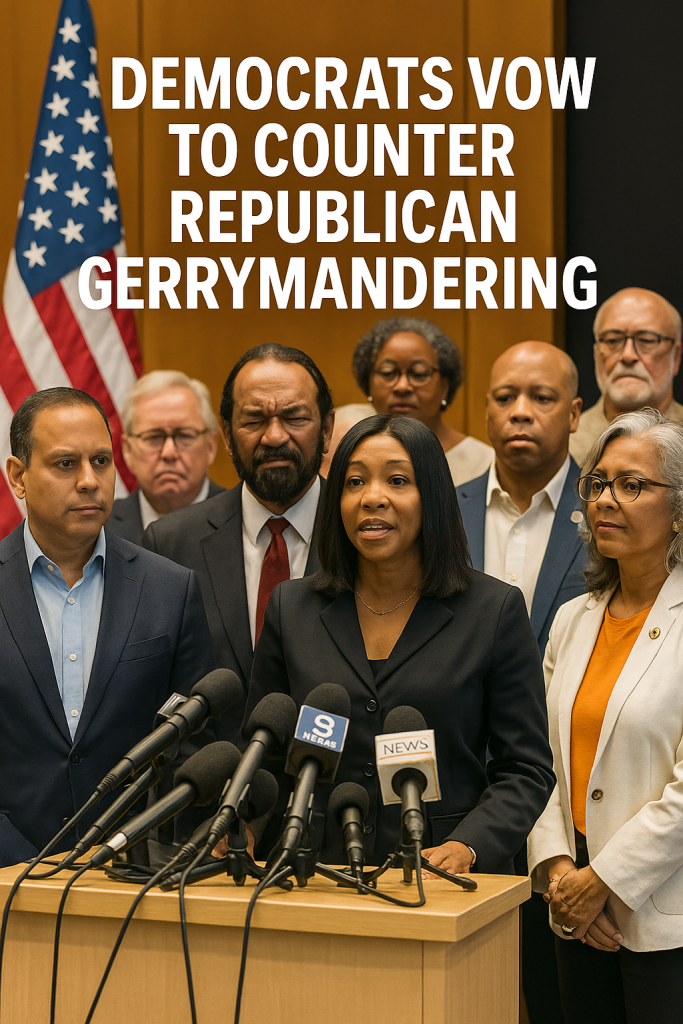
In a dramatic escalation of the ongoing battle over redistricting, a group of Texas Democrats have fled the state and taken refuge in Illinois to prevent a critical redistricting vote. Their strategic move aims to deny the Texas legislature the quorum needed to advance the contentious electoral map, which Democrats argue is engineered to solidify Republican control through partisan gerrymandering.
The Texas Exodus
With the Texas legislature poised to vote on a highly controversial redistricting plan this legislative session, Democrats opted for a rare but potent tactic: leaving the state altogether. By relocating to Illinois, they have physically removed themselves from the Texas Capitol, effectively blocking the vote. This maneuver is part of a growing trend among Texas Democrats who have previously employed similar walkouts to stymie legislation they oppose.
Supporters of the Democratic lawmakers view this as a necessary action to fight what they see as extreme partisan gerrymandering that threatens fair representation for Texas voters — particularly communities of color and urban constituencies that tend to vote Democrat but would be diminished under the new maps.
California’s Counterpunch
Meanwhile, on the opposite side of the country, Governor Gavin Newsom of California has vowed to take proactive steps to counter Republican gerrymandering efforts. In a statement earlier this week, Newsom articulated a commitment to preserving fair electoral maps through legislative measures and potential ballot initiatives designed to curb partisan manipulation of district boundaries.
Newsom’s stance is informed by the rise of aggressive redistricting tactics across the nation, particularly in battleground states where control over district lines can determine political dominance for a decade. California has traditionally relied on an independent redistricting commission, but Newsom’s proposed strategies include strengthening transparency requirements, increasing public participation, and exploring new legal safeguards against politically motivated map drawing.
“We will not stand by while attempts to undermine democracy through gerrymandering threaten the voice of Californians,” Newsom declared, signaling a vigorous defense of equitable representation.
The National Significance of Redistricting Battles
The Texas Democrats’ flight to Illinois and California’s legislative countermeasures highlight a broader national crisis surrounding redistricting, especially as the 2024 election cycle approaches. Redistricting has always been a fiercely contested process, but recent years have seen unprecedented levels of state-level political brinkmanship.
These conflicts have significant implications not only for state politics but also for the balance of power in Congress. Gerrymandered maps can predetermine electoral outcomes, effectively silencing large portions of the electorate and undermining the principle of “one person, one vote.”
Experts warn that as more states adopt aggressive redistricting strategies, federal intervention or reforms may become necessary to uphold electoral fairness. In the meantime, activists, lawmakers, and governors like Newsom continue to push for solutions that ensure transparency and fairness in map drawing, even as legislators in states like Texas employ extraordinary measures to block what they perceive as unjust outcomes.
What’s Next?
The Texas standoff shows no immediate signs of resolution, with Democrats remaining in Illinois as the legislative clock ticks down. Meanwhile, Newsom’s proposed counter-initiatives in California signal that the fight against partisan gerrymandering is far from waning and may intensify ahead of the pivotal 2024 elections.
As redistricting battles unfold across the country, voters and political observers alike are closely watching how these maneuvers will shape the future of American democracy.