
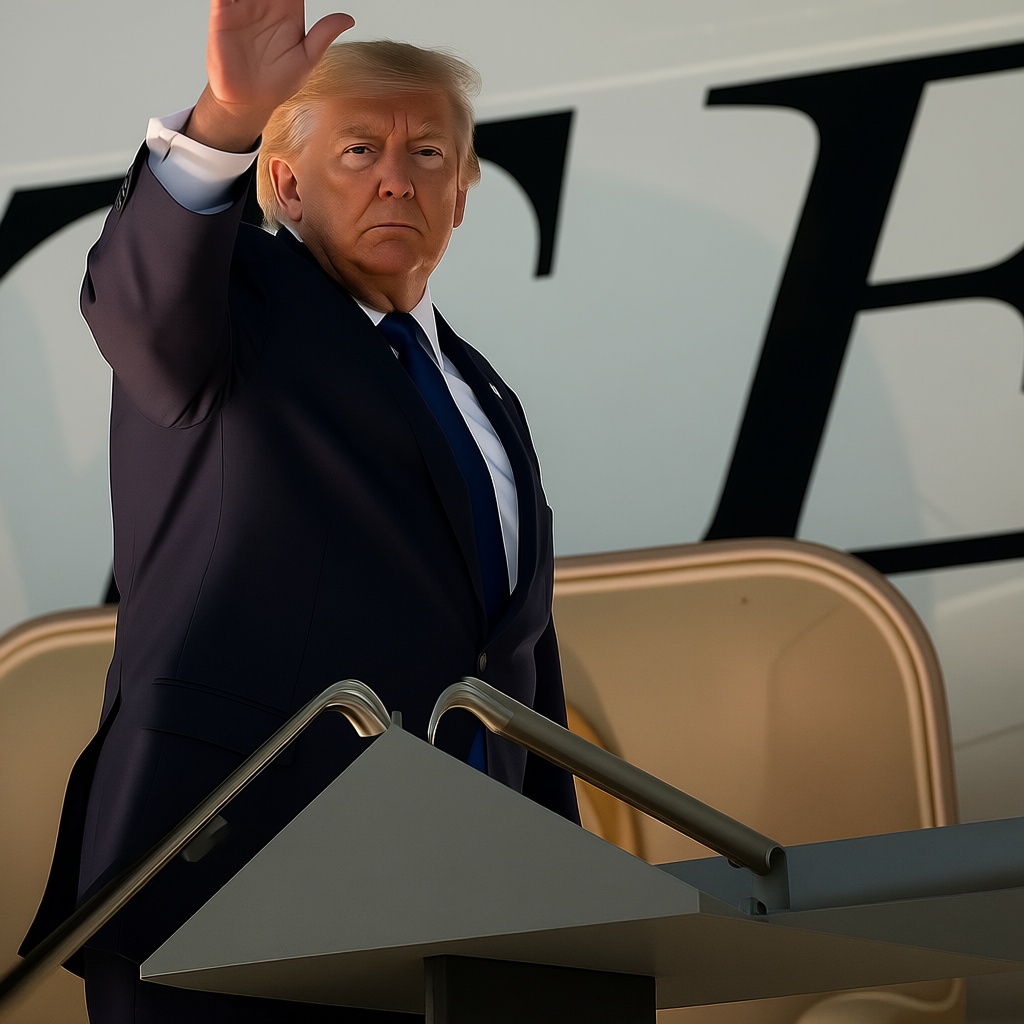
As President Donald Trump arrives in Turkey for a critical two-day NATO summit, the alliance faces looming internal divisions sparked by recent U.S. military strikes on Iran and sharp public criticism from the American leader. The summit comes at a pivotal moment for NATO, with deep disagreements simmering over defense spending, strategic priorities regarding Russia and Ukraine, and the alliance’s overall cohesion.
In the days leading up to the gathering, President Trump publicly chastised several of NATO’s European members for what he described as their insufficient support and contributions to collective defense. His comments, amplified on social media and in interviews, have stoked fresh tensions ahead of high-stakes discussions on the alliance’s future. Trump has repeatedly urged NATO allies to increase their defense budgets to meet the alliance’s 2% GDP target, emphasizing the need for fairer burden-sharing.
Adding fuel to the fire, recent U.S. military actions against Iran—part of the Trump administration’s broader Middle East strategy—have cast a shadow over NATO talks. While primarily aimed at deterring Iranian aggression, the strikes have also complicated diplomatic relations within the alliance, with some European capitals expressing concern over escalation and calls for de-escalation. The tension underscores the complex geopolitical landscape NATO must navigate, especially with Iran’s ever-present threat and Russia’s strategic maneuvers in Eastern Europe.
The upcoming summit in Turkey is expected to focus heavily on three key issues: increasing defense spending among member nations, strategic support for Ukraine amidst ongoing conflict with Russia, and long-term NATO policies toward Russia’s expanding influence. However, Trump’s pronounced stance on burden-sharing and his criticism of European allies have already heightened anxiety among diplomats over whether the alliance can present a united front.
Observers believe that the president’s push could make negotiations more contentious, potentially undermining efforts to present a cohesive strategy on critical issues like collective defense and deterrence. Meanwhile, concerns persist that the erupted rift might weaken NATO’s ability to respond swiftly and effectively to new crises, including threats from Iran and Russia.
Despite these divisions, many NATO officials emphasize the importance of multilateral cooperation, especially in the face of mounting global security challenges. The summit will be watched closely for signs of how the alliance intends to navigate internal disagreements while maintaining a unified stance against shared threats.
As the summit unfolds, global attention remains fixed on whether NATO can bridge its internal fissures and confront the complex geopolitical realities shaping the 21st century. President Trump’s assertions and the recent Iran tensions have added an unpredictable element, making this summit one of the most consequential in recent memory.
Where to Learn More
- NATO Summit Sparks Tensions as Trump Criticizes Allies Over Defense Spending — New York Times
- NATO Summit: How US-Iran Tensions and Trump’s Criticism Are Shaping the Talks — BBC News
- Trump Arrives at NATO Summit as Iran Tensions Loom — CNN
- NATO’s Future at Risk as Trump’s Criticisms Heighten Divisions — Reuters