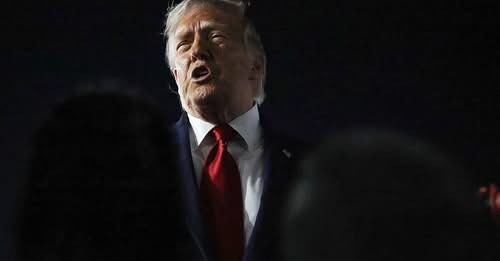
In a development that has alarmed international observers, former President Donald Trump has publicly stated that the United States must “respond” to Iran after Tehran claimed responsibility for shooting down a U.S. Apache helicopter operating in the Persian Gulf region. This declaration has ignited fears of a potential escalation in a tense and volatile geopolitical landscape.
The incident, which took place amid ongoing regional tensions, has prompted swift reactions from both U.S. officials and Iran. The U.S. military acknowledged the loss of a helicopter but has yet to confirm the specifics of the incident or any immediate retaliatory plans. Nevertheless, Trump’s warnings to take decisive action have raised concerns about an impending cycle of retaliation that could spiral into broader conflict.
In a statement on social media, Trump emphasized that “the United States cannot let Iran continue to threaten our forces in the region without consequences,” adding that any further provocative acts by Iran will be met with a firm response. While some military officials have called for restraint, others warn that provocative rhetoric could push the fragile situation toward escalation.
The Iranian government, represented by the National Iranian American Committee, expressed deep concern over the possibility of retaliatory strikes. “We worry deeply that US retaliatory strikes will trigger another destabilizing military exchange that has no winners,” their statement read. The committee underscored the importance of diplomatic dialogue and urged all parties to exercise restraint to prevent further escalation.
Analysts warn that escalating rhetoric increases the risk of a dangerous cycle of violence in a region already fraught with conflict. Historically, military exchanges involving Iran and the U.S. have led to broader regional instability, affecting countries across the Middle East and impacting global oil markets. The prospect of increased hostilities raises fears of broader geopolitical consequences, including potential involvement by allied nations.
Meanwhile, both Washington and Tehran are engaging in behind-the-scenes diplomacy, with some experts suggesting that de-escalation is still possible if both sides prioritize negotiations over military action. However, the current climate, marked by provocative statements and military build-ups, suggests that the situation remains precariously fragile.
As the world watches with bated breath, leaders on all sides are urged to exercise caution. While the desire for justice and deterrence is understandable, many believe that a measured approach—including diplomatic engagement—is essential to prevent a major conflict that could have devastating consequences globally.