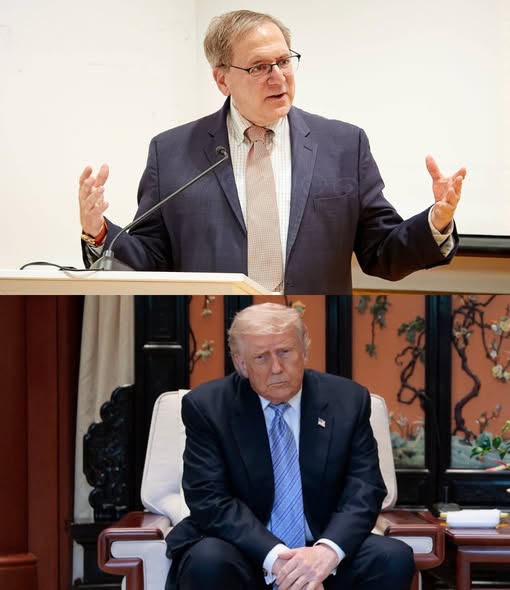
In a shocking escalation of tensions between the White House and the press, President Donald Trump directly confronted New York Times correspondent David Sanger aboard Air Force One, branding him a “fake guy” and accusing him of betraying his country for simply asking questions about ongoing U.S. military actions in Iran. This episode highlights Trump’s alarming attempt to silence critical reporting on a conflict that has now entered its twelfth week.
During the encounter, Trump reportedly told Sanger that reporting on the war was “treason,” a word that carries heavy legal and historical connotations, including the potential for the death penalty. The president then publicly dismissed Sanger in front of other journalists, asserting that asking about the effectiveness and consequences of U.S. strikes in Iran was unpatriotic.
The issue at hand? Despite over a month of relentless bombings, the U.S. has seen little political or strategic gain. Iran continues to hold its enriched nuclear stockpile, maintains control over the vital Strait of Hormuz—one of the world’s most crucial shipping lanes—and, according to U.S. intelligence assessments, has preserved the majority of its missile launchers and capabilities. As a result, the conflict’s goals remain unfulfilled, fueling questions about the true purpose and effectiveness of America’s military strategy.
What makes this incident even more troubling is its broader context. Trump’s accusations mirror a growing pattern of hostility toward the press. In March, FCC Chair Brendan Carr threatened to revoke broadcast licenses from outlets he accused of spreading “hoaxes”—a move critics say echoes authoritarian tactics to suppress dissent and control narratives. Senator Elizabeth Warren condemned such behavior, calling it “straight out of the authoritarian playbook.”
If a sitting president dismisses factual reporting as treason, experts warn it signals a dangerous shift away from democratic norms toward potential authoritarianism. For many, the use of the word “treason” in this context is an attempt to intimidate journalists into silence, undermining the fundamental press freedoms protected in the United States.
Journalists across the country and around the world are watching these events closely. As media organizations refuse to be cowed, questions swirl about the future of press freedom under an administration increasingly willing to equate honest reporting with betrayal. Critics argue that such rhetoric sets a dangerous precedent—one where truth-telling becomes a punishable offense and dissent is silenced through intimidation.
This incident is a stark reminder of the vital role journalism plays in a healthy democracy: holding power to account, asking difficult questions, and delivering facts to the public. When those facts are branded as treason, it signals that the country is at a crossroads—whether it remains a democracy or veers toward authoritarianism.