In a tweet that has since gone viral, Senator Ted Cruz (R-TX) expressed deep concern over the implications of proposed Federal Communications Commission (FCC) actions targeting the media, particularly following the recent removal of late-night host Jimmy Kimmel from ABC. Cruz’s warning highlights fears that government interference in media could set a perilous precedent for censorship, particularly against conservative voices.
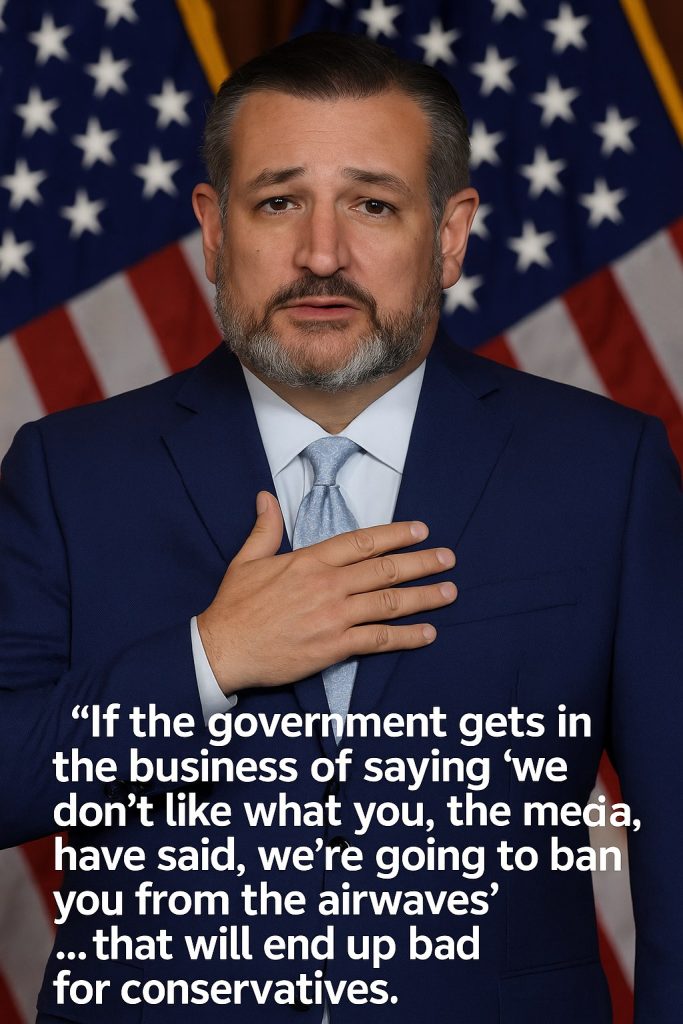
Cruz’s fiery statements come in response to calls from some quarters for the FCC to investigate media outlets that seem to disseminate biased content or engage in unfavorable portrayals of political figures. During an appearance on FOX News, he remarked, “If the government gets in the business of saying ‘we don’t like what you, the media, have said, we’re going to ban you from the airwaves’—this will lead down a path where every conservative in America will regret.”
The conversation ignited further debate on social media, with users split between those who support the idea of holding media outlets accountable and others who fear such actions could lead to unprecedented censorship. The image of Cruz’s quote circulated widely alongside the caption, “UNBELIEVABLY DANGEROUS,” creating a stir among his followers and sparking discussions about constitutional rights and freedom of speech.
Critics of Cruz argue that his position undermines accountability, suggesting that in an era where misinformation spreads like wildfire, it is essential for regulators to step in. Proponents of Cruz’s stance, however, assert that any move towards government regulation of media could result in a slippery slope where dissenting opinions are silenced. The implications of such actions resonate deeply within a polarized political climate.
The debate surrounding media bias and censorship is not new but has intensified in recent years as discussions about “fake news,” social media algorithms, and political correctness take center stage. The Kimmel controversy has reignited these moments of contention, reflecting broader societal tensions over who controls the narrative in contemporary media.
As media consumers, the implications of Cruz’s warning are significant. If the government begins to define acceptable speech and thought, it raises serious concerns about the potential for an oligarchic media system where only certain viewpoints can be publicly expressed. For many conservatives, the incidents surrounding Kimmel’s exit signal a larger effort to suppress voices that challenge mainstream narratives.
In response to Cruz’s comments, various media analysts suggest that this issue transcends party lines and needs a collaborative approach to find common ground on safeguarding free expression while ensuring accurate and responsible reporting in the media landscape. As the discourse continues, many are left pondering: How can society maintain a balance between accountability and freedom?
With tweets and discussions buzzing online, it’s clear that the fallout from Jimmy Kimmel’s removal and the potential FCC actions will remain hot topics as they bring forth broader questions about media control, bias, and the future of political discourse in America.