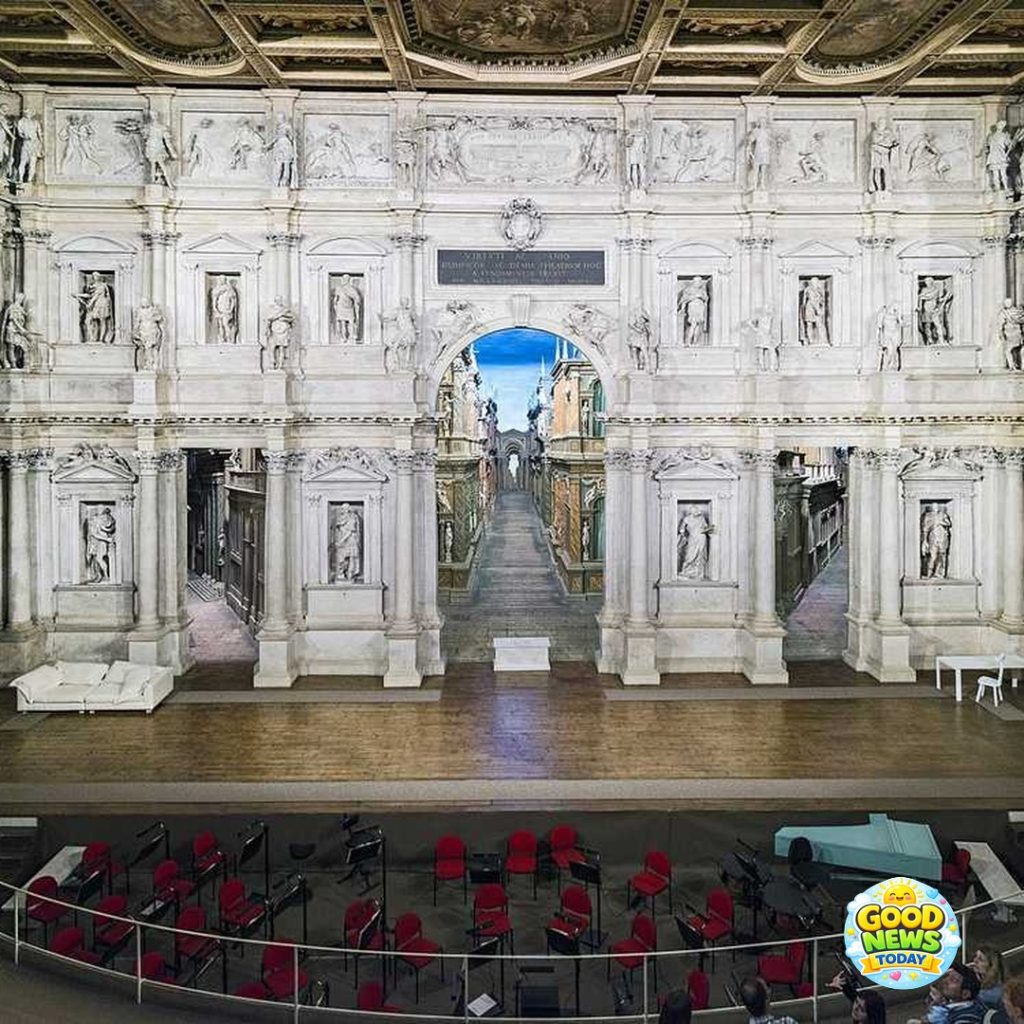
Today marks a remarkable milestone as the Teatro Olimpico celebrates its 441st anniversary in the charming city of Vicenza, northern Italy. Recognized as Europe’s very first modern covered theater, this architectural gem was inaugurated with a stunning production of Oedipus Rex. Crafted by the brilliant architect Andrea Palladio and completed by Vincenzo Scamozzi, the Teatro Olimpico is not only a UNESCO World Heritage Site but also one of only three remaining Renaissance theaters still in operation today.
The Teatro Olimpico stands as Palladio’s final masterpiece and is regarded as one of his finest achievements. Returning to Vicenza in 1579, Palladio brought with him a wealth of knowledge from his extensive studies of ancient Roman architecture. His dedication to this art form was evident in his illustrated Italian translation of Vitruvius’ De architectura, which featured floor plans for Roman theaters and designs for the scaenae frons of Vicenza’s ancient Teatro Berga.

Wikipedia aptly notes Palladio’s unparalleled understanding of Roman theater during his time. He was granted permission to create a new theater using a section of a disused castle in Vicenza, but sadly, he passed away the following year, leaving his vision only partially realized.

Vincenzo Scamozzi, a prominent architect known for his work in Venice and throughout the Veneto region, took over the project, imbuing it with his own creative flair. He designed an extraordinary wood and stucco backdrop that evokes the essence of Classical Athens, complete with angled streets that stretch into the distance. For the theater’s inaugural performance, Scamozzi introduced oil lamps to illuminate the imaginary streets, enhancing the enchanting atmosphere of the production.
Despite facing the challenges of time and the scars of war, the scaenae frons has remarkably endured through the ages. Scamozzi’s contributions extend beyond the stage, including the creation of the Odèo and Antiodèo rooms, along with an entrance archway that leads from the street through an ancient medieval wall into the courtyard of this historic fortress.

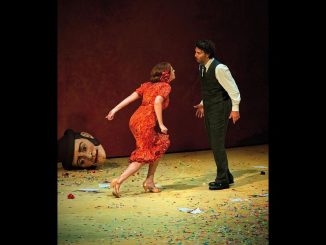
In addition to this celebration, we also remember another significant cultural event from history. Exactly 151 years ago, George Bizet’s Carmen premiered at the Opéra-Comique in Paris. This captivating opera tells the story of a love-stricken Spanish soldier who becomes enchanted by the spirited gypsy, Carmen. It has since become one of the most performed operas globally, with memorable arias like the Habanera and the Toreador Song that continue to resonate with audiences today. Notably, Carmen’s character departs from traditional female leads by being sung by a mezzo-soprano, adding a unique depth to her portrayal.

As we celebrate the legacy of the Teatro Olimpico and the enduring art of opera, we are reminded of the vibrant cultural history that enriches our world.