The entertainment industry is facing a seismic shift as the Screen Actors Guild-American Federation of Television and Radio Artists (SAG-AFTRA) raises concerns over the emergence of synthetic performers—characters created by artificial intelligence that utilize the likeness and work of human actors without their explicit consent.
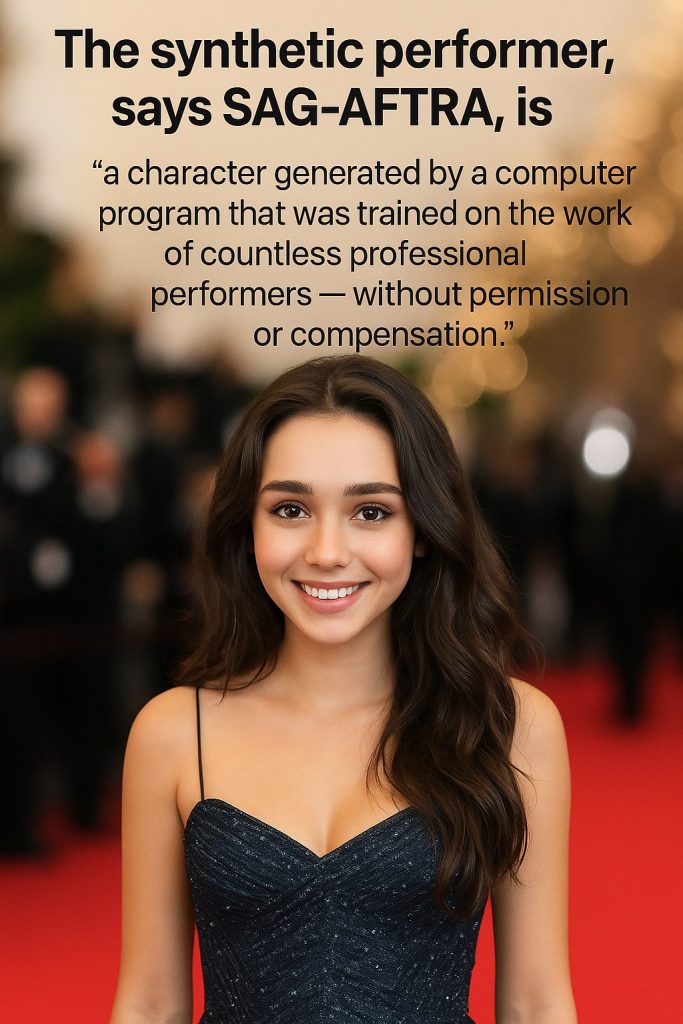
SAG-AFTRA has defined a synthetic performer as “a character generated by a computer program that was trained on the work of countless professional performers—without permission or compensation.” This alarm has reverberated through social media, sparking discussions on ethics, creativity, and the future of performance arts in the digital age.
As artificial intelligence technology rapidly advances, its applications in film, television, and advertising have expanded greatly. From creating lifelike visuals to generating script ideas, AI has begun to revolutionize how stories are told. However, the birth of synthetic performers raises significant ethical questions. Many industry professionals argue that this development undermines the value of human creativity and the rights of individual performers who have contributed their talents to the industry.
“It’s alarming to think that our likeness, our hard work, and our emotional investment can be aggregated and synthesized without our consent,” said SAG-AFTRA President Fran Drescher in a recent statement. “We are not just talking about actors—this affects everyone in the industry from background performers to voiceover artists.”
Critics of synthetic performers assert that their existence could devalue human actors, leading to job losses and a homogenization of entertainment as studios may opt for cost-effective AI-generated alternatives. Many fear this could pave the way for a future where storytelling revolves around generic characters devoid of the emotional depth and complexity that human performers uniquely provide.
Conversely, proponents of AI technology argue that synthetic performers can serve as invaluable tools for creativity, providing new avenues for storytelling and artistic expression. They contend that AI can complement human artistry rather than replace it—acting as a springboard for more innovative and imaginative projects.
As the conversation heats up, industry stakeholders are calling for clearer guidelines and ethical standards surrounding the use of synthetic performers. Many believe it is crucial to establish a framework that protects the rights of performers while encouraging technological advancements in a responsible manner.
Social media platforms have been flooded with opinions, viral memes, and heated debates on the issue. #SyntheticPerformers has gained traction, with users expressing both support for and opposition to the concept. Some artists are taking a stand by sharing personal anecdotes about their experiences and the potential consequences of AI encroaching on their territory.
As the landscape of the entertainment industry evolves, one thing remains clear: the future of performance arts is poised for change. Actors, directors, and advocates alike are engaging in a vital dialogue about the intersection of technology and artistry, pushing for a balanced approach that honors both innovation and the creative spirit that drives the industry forward.
Where to Learn More
- SAG-AFTRA Official Press Releases – SAG-AFTRA
- The Controversy Over Synthetic Performers and What It Means for Performers – The Verge
- BBC News: The Rise of AI in Performing Arts – BBC News
- SAG-AFTRA Responds to AI-Created Synthesizers – The Hollywood Reporter
- Wired: The Ethics of Synthetic Performers and the Future of AI in Entertainment – Wired