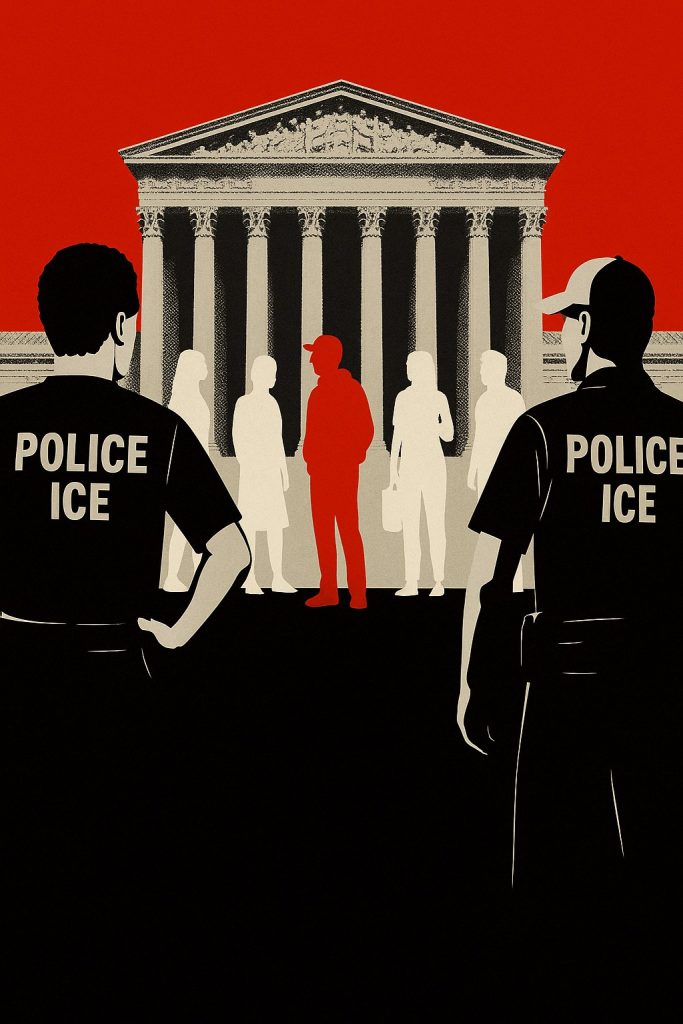
The recent ruling by the Supreme Court in the Perdomo case has ignited a firestorm of discussion about racial profiling and the judicial system’s perceived double standards regarding race. Experts argue that this ruling may not only justify racial profiling but also highlight a troubling inconsistency in how the legal system treats individuals based on their ethnicity.
At the center of the controversy is the Supreme Court’s interpretation of constitutional rights in the context of law enforcement practices. The ruling stems from an incident involving a police stop, where an officer cited racial characteristics in the profiling of picnickers at a community park. Activists and legal scholars say this landmark case has the potential to set a dangerous precedent for constitutional protections against racial discrimination.
Supporters of the ruling believe that police should have the latitude to consider demographic factors when making stops, citing public safety concerns. They argue that certain demographic indicators can help law enforcement combat crime in communities plagued by violence. Furthermore, they insist that when appropriately applied, racial profiling can be a valuable tool that law enforcement uses responsibly and sparingly.
However, critics vehemently oppose the decision, arguing that it undermines the principles of equality that are foundational to American democracy. They emphasize that racial profiling can lead to systemic discrimination and ignore the individual circumstances of those stopped by law enforcement. Furthermore, racial profiling disproportionately affects marginalized communities, perpetuating cycles of mistrust between these communities and law enforcement.
This case has also fueled discussions about a prevailing double standard within the judicial system itself. Observers have pointed out that cases involving minority defendants often receive harsher scrutiny compared to their white counterparts. This disparity raises concerns about whether justice is truly blind or if ingrained biases influence judicial outcomes.
“The Perdomo case could very well signal a regression in the fight for racial justice in America,” cautioned Dr. Angela Lewis, a civil rights attorney and commentator. “The implications of this ruling extend beyond just one case; they resonate with ongoing struggles for equality and protection under the law for all Americans.”
With social media buzzing with opinions on both sides, public awareness of this issue is increasing. Hashtags like #SupremeCourt and #RacialJustice are trending as activists rally for action, urging lawmakers to address the potential ramifications of the ruling. The controversy surrounding the Perdomo case is not just about the legality of police tactics—it’s about the broader cultural implications of how communities are policed based on their racial identities.
As the nation reflects on this ruling, one thing is certain: the discussions triggered by the Perdomo case will continue to reverberate through the legal system, potentially shaping the future of race relations and law enforcement practices in the U.S.
Where to Learn More
- Supreme Court’s Decision on Perdomo Case Raises Concerns Over Racial Profiling – The New York Times
- Perdomo Ruling Sows Doubt on Racial Justice Progress – The Guardian
- Racial Profiling and the Supreme Court: What the Perdomo Case Means for America – The Washington Post
- Reactions to the Perdomo Case and its Implications for Justice – CNN