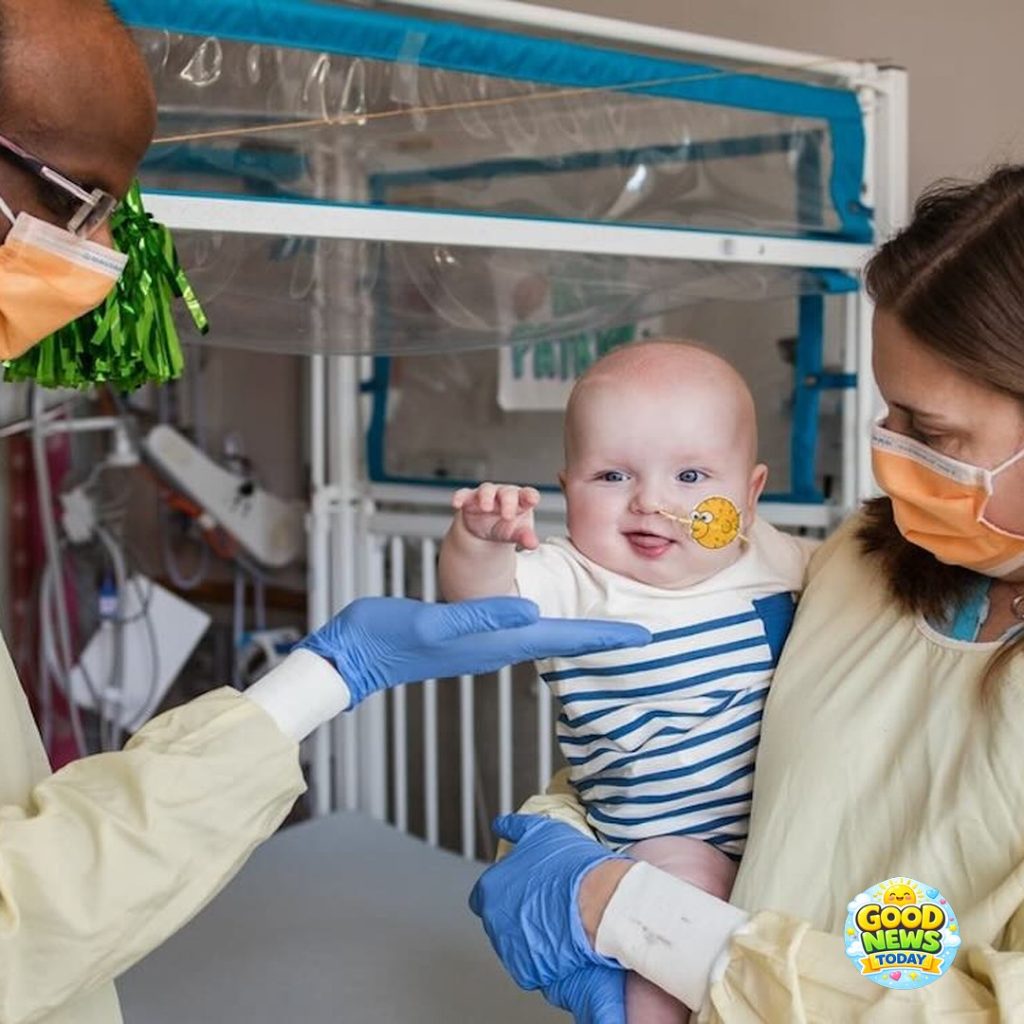
In an inspiring breakthrough, CRISPR technology has paved the way for a revolutionary genetic therapy for a young boy born in Pennsylvania, who was diagnosed with a rare metabolic disorder.
The infant, KJ, faced a serious health threat due to his inability to convert ammonia into urea, putting him at risk of significant brain and liver damage. To manage this condition, he required strict medications and a highly limited diet to avoid complications from protein metabolism.
Doctors at the Children’s Hospital of Philadelphia (CHOP) believed they could harness the power of CRISPR to develop a treatment aimed at correcting the faulty gene responsible for KJ’s condition, potentially providing him with a cure.
KJ’s dedicated parents, Nicole and Kyle Muldoon, placed their trust in the skilled hands of pioneering genetic therapists Dr. Rebecca Ahrens-Nicklas and Dr. Kiran Musunru. Together, they designed a personalized treatment plan that successfully addressed KJ’s genetic defect.
“This achievement is the result of years of advancements in gene editing and collaboration among researchers and clinicians. Although KJ is just one patient, we are hopeful that he will be the first of many to experience the benefits of a treatment tailored to individual needs,” expressed Dr. Ahrens-Nicklas, who leads the Gene Therapy for Inherited Metabolic Disorders Frontier Program at CHOP.
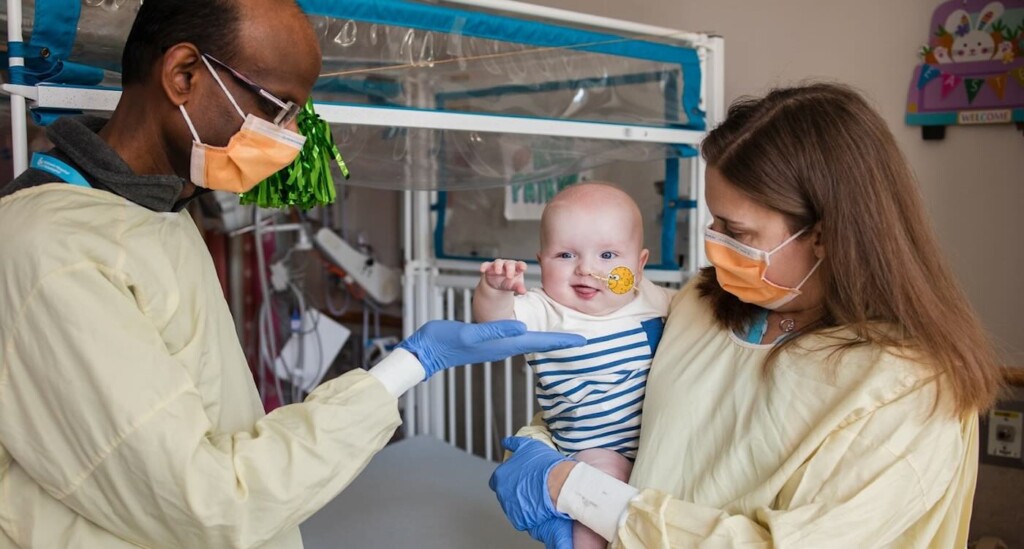
Dr. Ahrens-Nicklas and Dr. Musunru are part of the NIH-funded Somatic Cell Genome Editing Consortium, where they have dedicated years to refining CRISPR techniques to create customized treatments for some of the rarest genetic disorders.
Currently, FDA-approved CRISPR therapies are limited to targeting two diseases that affect larger patient populations. The complexity and cost associated with CRISPR technology have rendered it inaccessible for many who suffer from rare genetic conditions.
One such condition is severe carbamoyl phosphate synthetase 1 (CPS1) deficiency, which prevents the proper conversion of ammonia into urea, resulting from protein metabolism. The CPS1 enzyme, produced in the liver, plays a crucial role in this process, and without it, ammonia can accumulate to dangerous levels.
For KJ, this means that excess protein metabolism risks a potentially fatal buildup of ammonia. While nitrogen scavenging medications and a protein-restricted diet can sustain patients until a liver transplant is available, KJ, being just a few months old, isn’t yet suitable for such a procedure.
A recent announcement from CHOP detailed how Ahrens-Nicklas and Musunru meticulously targeted KJ’s specific variant of CPS1 after extensive research on similar genetic issues. Within six months, they successfully designed and produced a base editing therapy, delivered through lipid nanoparticles, to correct the faulty enzyme in KJ’s liver.
In late February 2025, KJ received his first infusion of this groundbreaking experimental therapy, followed by additional doses in March and April. This remarkable advancement marks a significant step toward hope and healing for patients with rare genetic disorders.