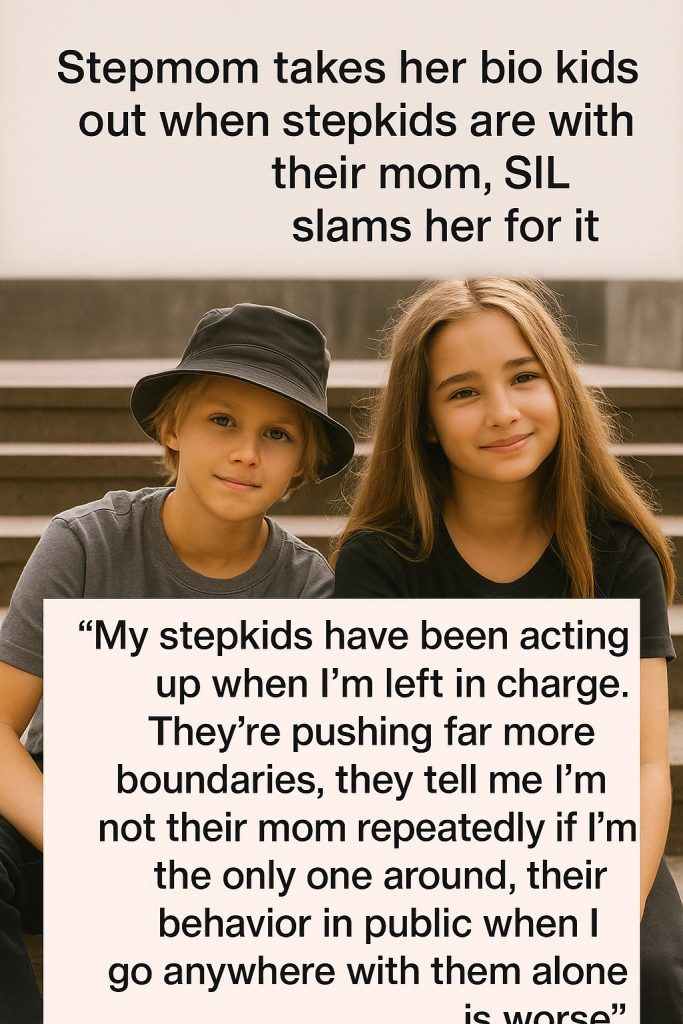
A family dispute is making waves on social media after a stepmother chose to take her biological children out when her stepchildren were staying with their biological mother. The decision, intended to ensure all children’s needs were being met, instead ignited criticism from her sister-in-law, who publicly condemned the move, citing concerns about child behavior and parental responsibility.
The controversy began when the stepmom shared in an online forum that her stepchildren have been “acting up” when left in her care. To manage the situation and maintain harmony, she took the initiative to spend time exclusively with her biological children during the periods when the stepchildren were with their mother. While this might seem like a straightforward arrangement to some, it sparked backlash from her sister-in-law (SIL), who accused her of neglecting the stepchildren and questioned her approach to blended family dynamics.
Complexities of Blended Families
Blended families face unique challenges balancing relationships, particularly around custody schedules and parenting responsibilities. In this case, the stepmother’s plan to separate activities based on custody time aimed to reduce friction among the children and allow her to focus individually on both sets of kids. She explained that her stepchildren’s behavioral issues made it difficult to provide the care and supervision they needed when all children were together.
“My stepkids have been acting up when I’m left in charge,” she posted. “To keep the environment peaceful and give each child adequate attention, I decided to take my biological kids out during the times the stepkids were with their mom.”
However, her sister-in-law disagreed strongly, accusing her of shirking responsibilities.
Criticism from Sister-in-Law
The SIL’s criticism reflects a broader tension often seen in extended families navigating new family structures. She argued that the stepmother’s decision created a divide between the children and could contribute to feelings of exclusion or resentment among the stepchildren. The SIL emphasized that being a step-parent requires a commitment regardless of custody schedules and that the children need consistent care and guidance to address behavioral issues effectively.
Commenting on the situation, the SIL expressed, “These kids need support as a whole family unit, not fragmented by convenience. Avoiding the stepchildren when they’re ‘acting up’ isn’t the answer.”
The Broader Debate
This family feud has ignited an important discussion on the difficulties stepparents face in balancing care between biological children and stepchildren — especially when separated by custody arrangements. Experts in family dynamics note that while step-parents do not legally share custody rights, their emotional involvement is crucial to the children’s well-being.
Counselors suggest that open communication among all parties, including the children’s biological parents, step-parents, and extended family members, is key to resolving conflicts and ensuring a supportive environment. Ongoing behavioral issues may also benefit from professional guidance to help all children adjust healthily to blended family life.
Family Impact
Though the dispute centers on logistics, it is clear the emotional stakes run high. The stepmom’s intention to avoid conflict has inadvertently sparked tension within her extended family. Meanwhile, the children involved — both biological and step — remain at the heart of the challenge, needing stability and care.
As blended families continue to be common in modern society, this case highlights the complexities and emotional nuances involved. It serves as a reminder that navigating stepfamily relationships requires understanding, patience, and sometimes outside support to bridge differences for the well-being of all children involved.