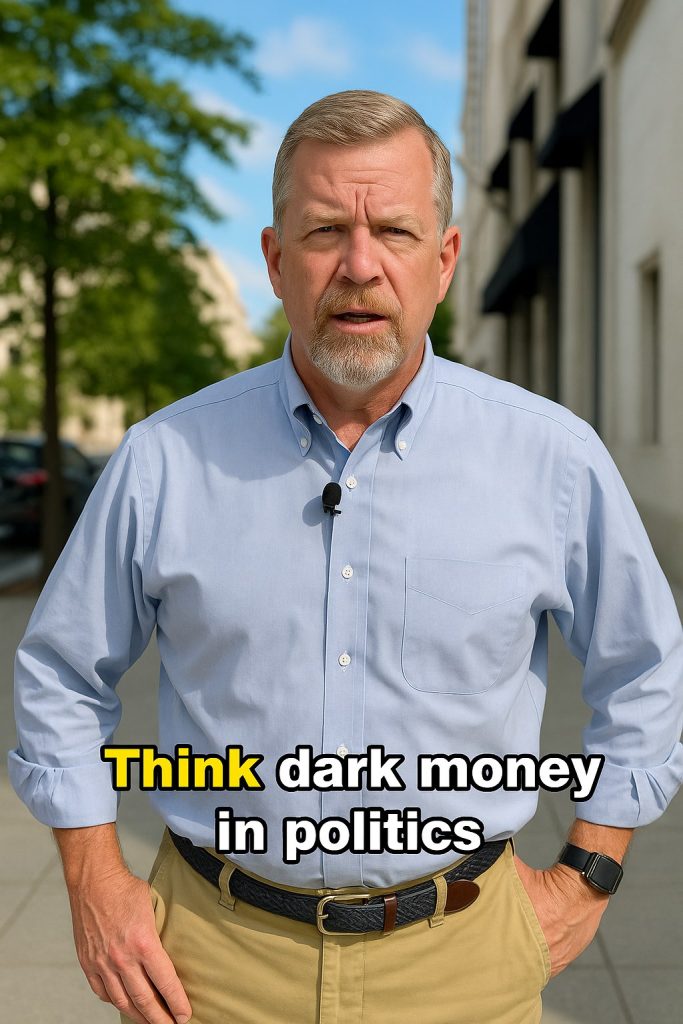
In a political landscape that often feels dominated by the influence of dark money, a new perspective is emerging on how to combat its pervasive power. Tom Moore, a senior fellow at the Center for American Progress (CAP), argues that states can play a pivotal role in making the infamous Citizens United ruling irrelevant. His insights have gained traction on social media, sparking discussions about the potential for grassroots movements to enact significant legislative change.
The Citizens United v. Federal Election Commission ruling in 2010 allowed corporations and unions to spend unlimited amounts on political campaigns, leading to an influx of what is often dubbed ‘dark money.’ This has raised concerns about transparency and accountability in elections, as donors can remain anonymous. However, according to Moore, states possess the tools necessary to curtail the impact of this ruling.
Moore highlights several strategies that states can adopt, including enhancing disclosure requirements for campaign financing, implementing public financing for elections, and pushing for reforms that limit the influence of corporate spending. “It’s crucial for states to act independently of the federal government,” Moore states. “While we navigate a complex federal landscape post-Citizens United, individual states can pursue reforms that fundamentally change the playing field for political campaigns.”
This state-level focus isn’t merely a theoretical proposition. Several states have already begun to implement successful measures aimed at reducing the grip of dark money. For instance, states like California and Washington have set stricter rules for political advertising that demand greater transparency about funding sources. These local initiatives demonstrate that while dark money may seem overwhelming, the power to change the landscape lies within state legislatures.
Moreover, grassroots movements are increasingly mobilizing citizens around these issues. Organizations advocating for campaign finance reform are gaining momentum and urging states to adopt strong measures against dark money. These efforts not only raise awareness but also build a base of support for future reforms.
Some critics argue that changes at the state level may only yield limited successes, especially given the systemic nature of dark money’s influence. However, advocates like Moore remain optimistic. “Every action starts at the local level,” he insists. “If we can create a ripple effect through states, we can eventually influence national discussions on campaign finance reform.”
There is a key opportunity in the upcoming 2024 elections for activists, lawmakers, and concerned citizens to advocate for policies aimed at counteracting dark money’s sway. By promoting state-level initiatives, the movement can gain a foothold that could lead to broader reforms at the national level.
As discussions around dark money continue to evolve, the idea of state-level reform is becoming an increasingly powerful narrative. While the effects of Citizens United are far from over, the message is clear: with concerted efforts at the state level, change is not only possible—it’s happening.
Where to Learn More
- The Corporate Power Reset That Makes Citizens United Irrelevant – Center for American Progress
- Dark Money in Politics: What Voters Should Know – OpenSecrets
- Dark Money: The $1 Billion Shadow Campaign – CNN