Over a century has passed since the Titanic tragically sank, yet the dream of creating unsinkable ships still fuels the imagination of engineers. A remarkable team at the University of Rochester has recently unveiled an innovative “superhydrophobic” design that may pave the way for more durable ships, floating platforms, and advancements in renewable energy.
This groundbreaking design stands out for its clever use of standard aluminum tubes, avoiding the need for costly alloys or exotic materials. Inspired by the diving bell spider, which cleverly traps air to breathe while hunting underwater, the design is rooted in a proven natural principle.
By etching tiny patterns along the insides of aluminum tubes, the researchers at the University’s Institute of Optics in New York have transformed the surface into a superhydrophobic layer that effectively repels water, keeping the tubes dry and buoyant.
Once these tubes are modified, they are expected to remain afloat regardless of how long they are submerged or how much damage they endure. Testing has confirmed this theory, revealing impressive results.
According to Chunlei Guo, the lead researcher on the project, “When the treated tube enters water, the superhydrophobic surface traps a stable bubble of air inside the tube, preventing it from becoming waterlogged and sinking.” He further explained that the addition of a divider inside the tube ensures that even when submerged vertically, the air bubble remains intact, allowing the tube to maintain its buoyancy.
While Guo and his team first showcased superhydrophobic floating devices in 2019, they believe this latest tube design offers significant enhancements and simplifications to the existing technology.
The previous disks developed by the researchers had a tendency to lose their buoyancy when tilted at sharp angles. In contrast, these tubes exhibit remarkable resilience in turbulent conditions, like those often encountered at sea. “We tested them in some really rough environments for weeks at a time and found no degradation to their buoyancy,” Guo noted. “You can poke big holes in them, and we demonstrated that even with substantial damage, they still float.”
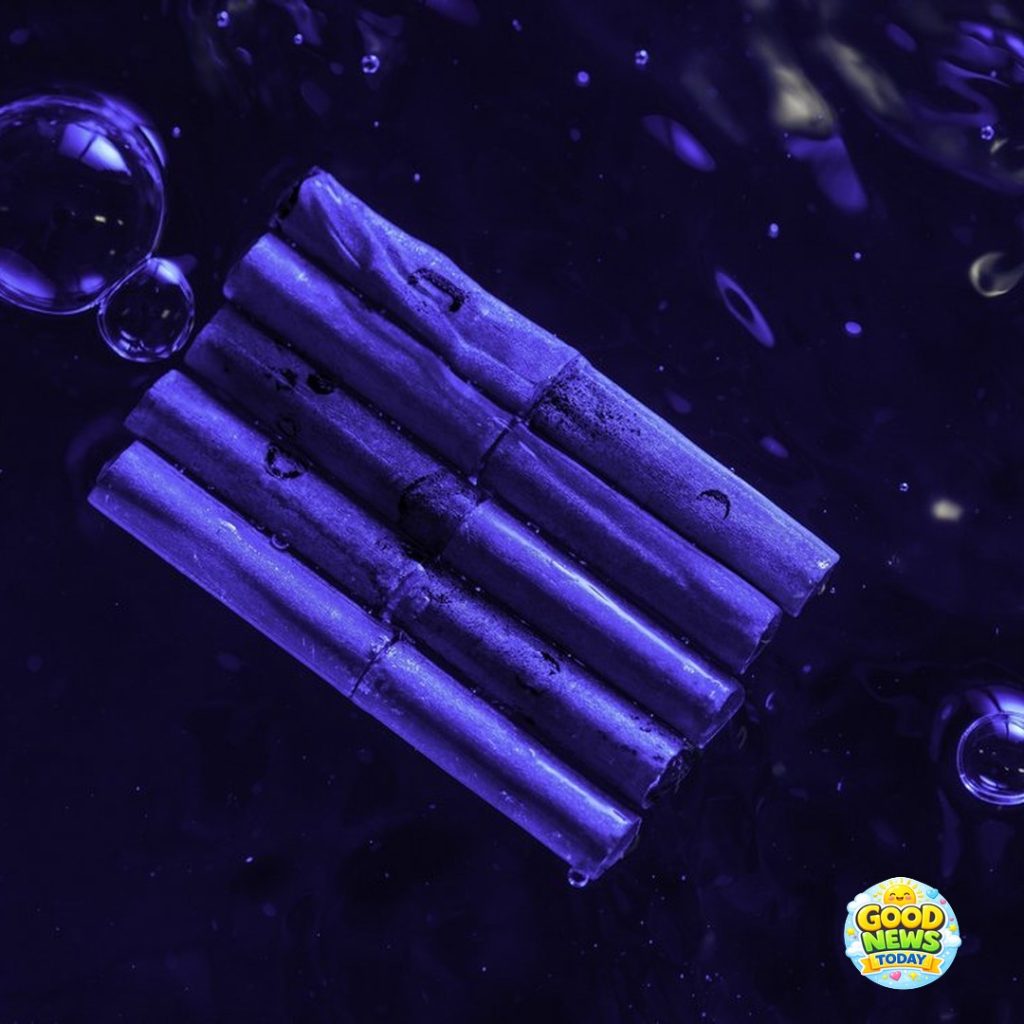
Additionally, these tubes can be connected to form rafts, laying the groundwork for ships, buoys, and floating platforms. This technology has the potential to scale up for larger applications, such as the moorings needed for offshore wind turbines.
The operational principle mirrors that of diving bell spiders, which trap air bubbles to remain buoyant underwater, and fire ants that create floating rafts with their hydrophobic bodies. This innovative design not only captures the beauty of nature but also holds promise for the future of maritime engineering.
Spread the word about this exciting, spider-inspired technology with your friends!