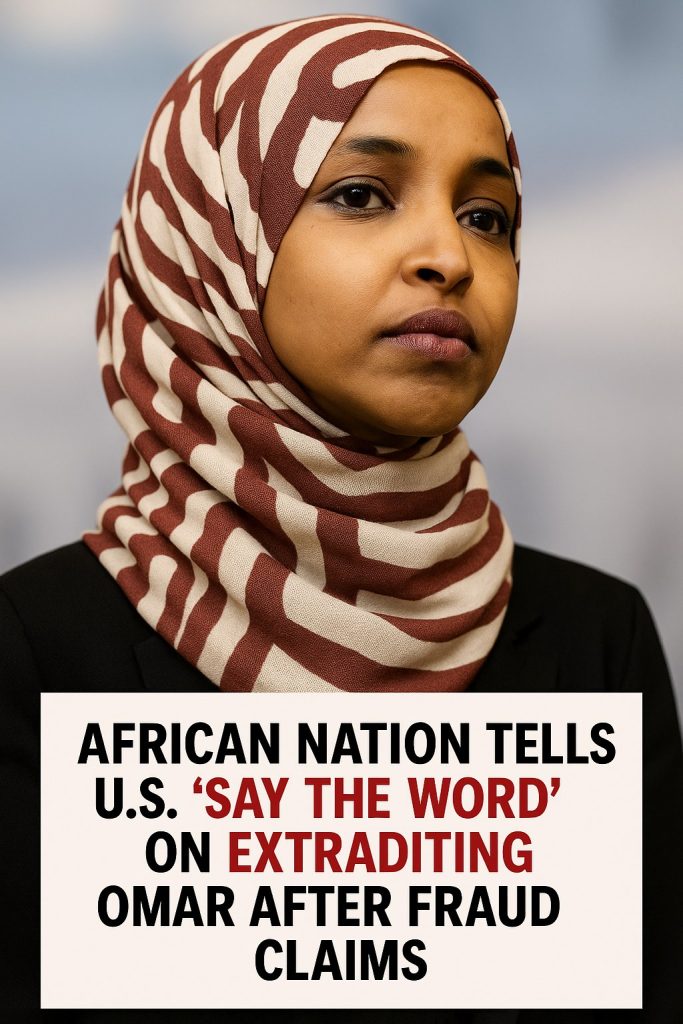
The Republic of Somaliland, a self-declared African state with limited international recognition, has stirred a firestorm on social media after responding defiantly to recent allegations of immigration fraud against U.S. Representative Ilhan Omar. The claims, made by Vice President Mike Vance during a contentious political exchange, allege that Omar—who was born in Somalia—committed immigration fraud when entering the United States.
Omar, a prominent figure in American politics and one of the first Muslim women elected to Congress, has often faced scrutiny over her background. However, Vance’s allegations took an unexpected twist after Somaliland’s official X (formerly Twitter) account issued a sharp rebuttal that quickly went viral:
“Deportation? Please you’re just sending the princess back to her kingdom. Extradition? Say the word…”
This bold statement implies a readiness—and even a challenge—from Somaliland to accept Omar back, pointing to her roots in the Somali region they claim to govern. The message has ignited intense discussion on social media platforms, with users debating the legal, political, and diplomatic implications of such an unusual call.
Understanding Somaliland’s Role
Somaliland declared independence from Somalia in 1991 but remains largely unrecognized by the international community except for a few informal partnerships. Despite this, it maintains a functioning government, armed forces, and regular diplomatic efforts to solidify its autonomy.
By invoking extradition, Somaliland is seemingly flexing its political muscle and taking advantage of the controversy to promote its status on the global stage. The tweet’s tone mixes humor and defiance but also raises questions about the legitimacy of such a demand under international law, especially since Omar’s birthplace is technically Somalia, not Somaliland, a distinction with significant consequences in legal terms.
The Legal Dimension
Extradition typically occurs between sovereign states with formal treaties. Since Somaliland is not internationally recognized as a sovereign entity, any extradition request would be legally complex and highly unlikely to be honored by the United States government. Immigration fraud allegations, if credible, are generally addressed through domestic legal channels rather than foreign extradition.
Rep. Omar has categorically denied all fraud allegations, describing them as baseless political attacks aimed at undermining her position and exploiting ethnic divisions. Meanwhile, legal experts emphasize that no valid public evidence has surfaced to substantiate the immigration fraud claims.
Political Fallout and Public Reaction
The sensational exchange has sparked viral memes, debates, and heated commentary online. Supporters of Omar condemn the accusations and praise Somaliland’s tongue-in-cheek defense. Critics argue that such allegations merit serious investigation regardless of origin.
Some political analysts view Somaliland’s response as a clever maneuver to raise its visibility amid ongoing efforts to gain formal recognition, capitalizing on a high-profile controversy to enter the international conversation.
As the debate unfolds, it highlights the complexities of identity, geopolitics, and narrative control in an era where social media breathes new life into old disputes.
What Comes Next?
At this juncture, no official extradition proceedings appear imminent, and the U.S. government has not responded directly to Somaliland’s comments. It remains to be seen whether Vance’s claims will prompt any formal investigations or legal action. For now, the controversy provides a vivid illustration of how global and local politics can collide in the digital age.
Where to Learn More
- Somaliland’s Quest for Recognition – Reuters
- The Story Behind Ilhan Omar’s Immigration Background – NPR
- The Complexities of Somaliland and Somalia – Brookings Institution
- Understanding Immigration Fraud Laws in the U.S. – U.S. Department of Justice
- VP Vance’s Allegations Against Ilhan Omar – Politico