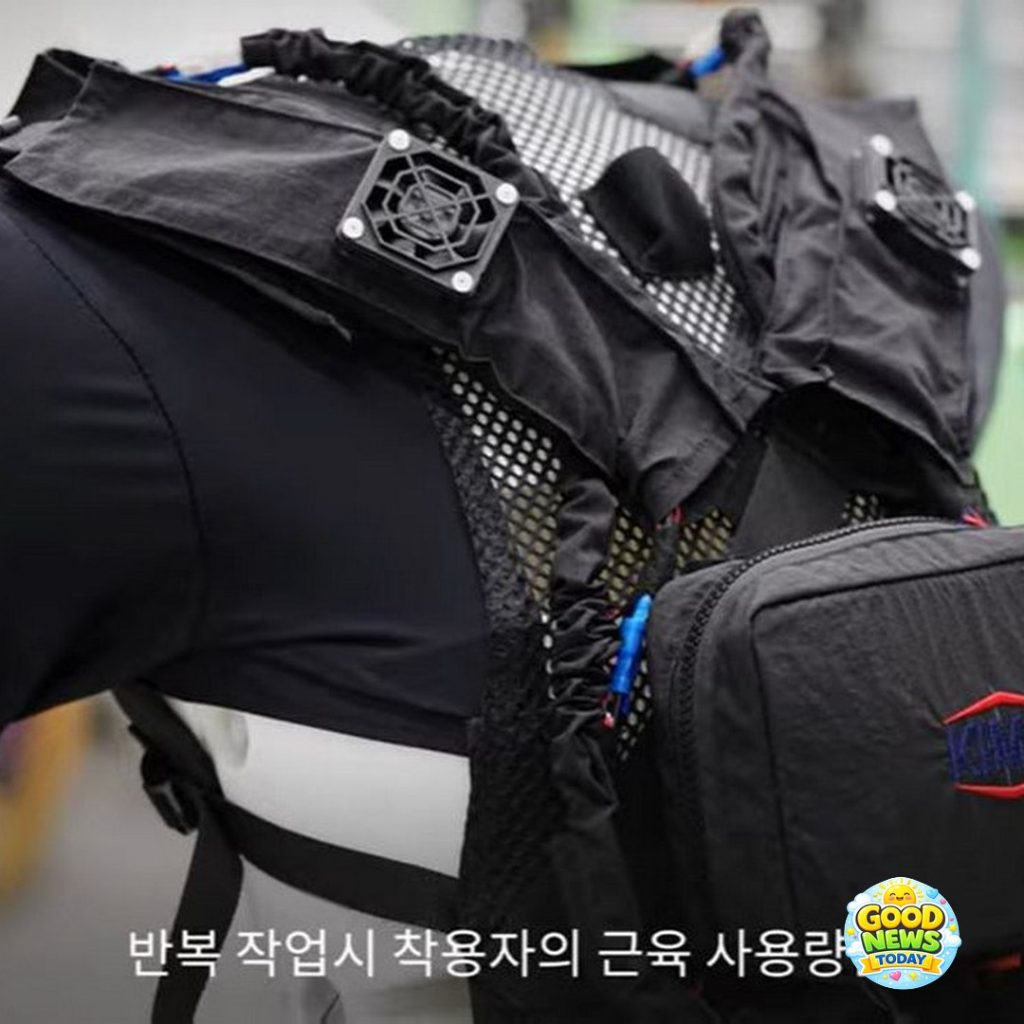
Innovative engineers from South Korea have introduced an exciting new soft exoskeleton that resembles a shirt, designed to enhance mobility and independence for individuals dealing with degenerative muscle conditions.
This remarkable invention, which is significantly more affordable than traditional hard, motor-driven exoskeletons, weighs in at less than 2 pounds, marking a transformative breakthrough in robotics.
Created by the Korea Institute of Machinery and Materials, this exoskeleton features a shirt that can be easily donned and doffed just like regular clothing, complemented by a simple nylon harness that houses the electrical components.
Envision it as a set of wearable muscles, crafted from fabric made with threads that are thinner than half the width of a human hair, utilizing a shape memory alloy. This unique alloy contracts to its pre-set shape, mimicking the lifting motion of an arm at the shoulder joint. Initial tests reveal that it can alleviate between 40% to 57% of the strain on the wearer’s muscles.
Myung Ha-yul, a 15-year-old student diagnosed with Duchenne muscular dystrophy since elementary school, has been a participant in trials at Seoul National University Hospital. Myung relies on a caregiver for daily tasks, and medical professionals have cautioned him and his family that basic activities like combing hair or brushing teeth could become increasingly challenging as he grows older.
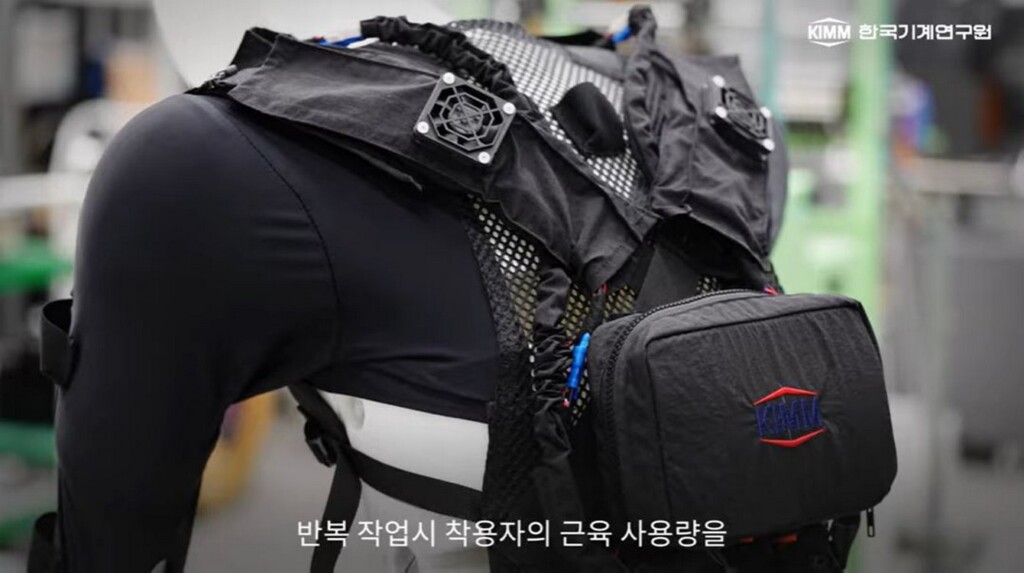
Myung shared his positive experience with the exoskeleton shirt, expressing, “It felt amazing because it was light and easy to wear, just like clothing. I could lift my arms with much less effort,” as reported by South Korea’s JoongAng Daily.
This innovative shirt is capable of lifting up to 34 pounds on its own, and when combined with the strength of a human arm, it can significantly restore the ability to perform various basic movements and activities.
Lee Woo-hyung, a professor of rehabilitation medicine at the hospital, emphasized the significance of this innovation: “The biggest achievement is that patients can put it on and take it off like clothing, while receiving active muscle support that leads to real functional improvement.”
This groundbreaking development has been made possible thanks to the Child Cancer and Rare Disease Project, which was launched in May 2021 with a generous 300 billion won ($204 million) donation from the family of the late Samsung chairman Lee Kun-hee, as reported by JoongAng Daily.
Share this incredible advancement in robotics with your friends and spread the word about the bright future it holds for enhancing lives!