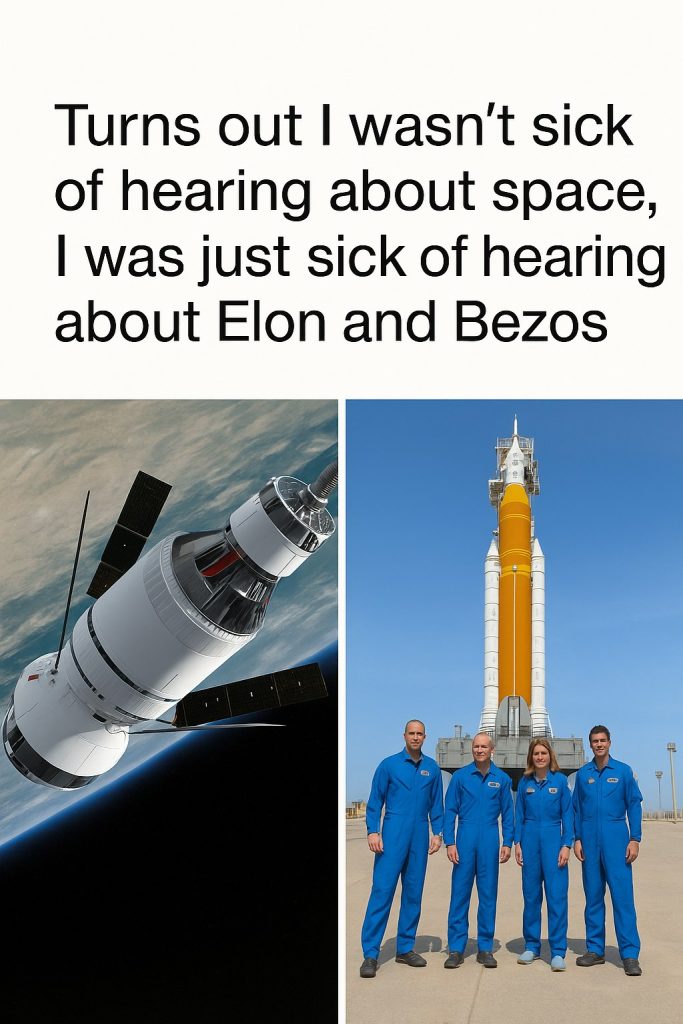
In a surprising twist, social media users are clarifying that their fatigue over space-related news isn’t about the cosmos itself, but rather the endless coverage of billionaires like Elon Musk and Jeff Bezos. A viral post that reads, “Turns out I wasn’t sick of hearing about space, was just sick of hearing about Elon and Bezos,” perfectly encapsulates a sentiment that’s spreading rapidly online.
For years, space exploration has fascinated people worldwide. From thrilling missions to Mars rovers and lunar landings to groundbreaking discoveries about exoplanets, space science has inspired awe and wonder. But in the age of social media, much of that excitement has been overshadowed by the personal brands and business ventures of a few ultra-wealthy entrepreneurs.
Elon Musk’s SpaceX and Jeff Bezos’ Blue Origin dominate headlines with their plans to colonize Mars or build space tourism industries, but these stories often turn into celebrity profiles or competitive sagas rather than celebrations of scientific progress. The public’s appetite for space news hasn’t diminished, but many feel that the delivery is too heavily focused on personality and profit rather than the exploration itself.
Users express that the constant overlap of space achievements with billionaire rivalries dilutes the magic of the universe. “I love hearing about new planets or space telescopes, but when the story turns into who’s launching another billionaire rocket, it loses me,” said one Twitter user.
This phenomenon isn’t just casual grumbling. Data from social media analytics show spikes in posts referencing “Elon Musk space fatigue” and “Bezos space news overload,” suggesting a genuine cultural fatigue with the repetitive narrative that frames space as a playground for the ultra-rich.
Meanwhile, space agencies like NASA and the European Space Agency continue to push forward with innovative projects that don’t always make front-page news but carry significant scientific importance. From the James Webb Space Telescope unveiling detailed images of the universe’s infancy to probes studying asteroids that might hold clues to the origins of life, these efforts offer rich and captivating stories that many feel deserve more attention.
Some experts believe that the public’s frustration reflects deeper conversations about wealth inequality and the direction of humanity’s future in space. “The fascination with billionaires in space is understandable, given their impact on technology and investment,” says Dr. Rachel Nguyen, a sociologist specializing in space culture. “But when it overshadows collaborative and scientific achievements, it risks alienating audiences who want to see space as a common human heritage rather than a VIP club.”
As discussions continue online, a clear message is emerging: people want to rekindle their wonder for the cosmos itself, unencumbered by the spectacle of a billionaire rivalry. This sentiment could encourage media outlets and space programs to shift focus, highlighting science, discovery, and the collective human adventure waiting beyond Earth’s atmosphere.
In the words of one viral commenter, “Let’s talk about stars, not CEOs.”
Where to Learn More
- NASA Official Website – NASA
- Space Exploration News and Updates – Space.com
- The Billionaire Space Race: Coverage & Analysis – The Verge
- The Space Race Is Not Just About Billionaires – Scientific American
- Beyond Billionaires: The Future of Space Exploration – BBC News