
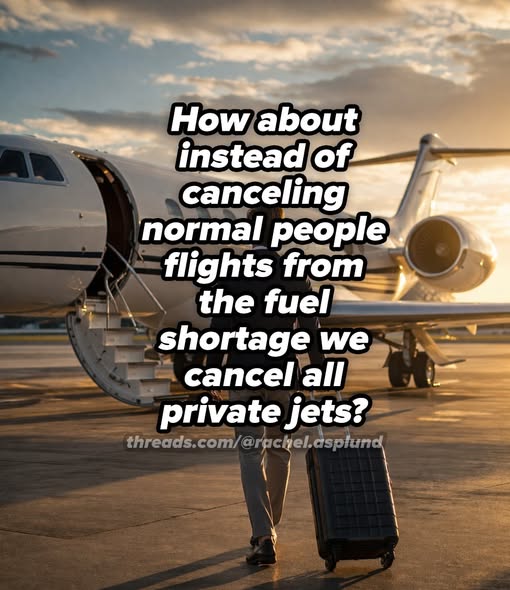
The latest social media whirlwind has ignited a fiery debate over how to address the ongoing fuel shortages impacting transportation across the globe. A viral post featuring an image of an aircraft accompanied by a provocative question—”How about instead of canceling normal people’s flights from the fuel shortage, we cancel all private jets?”—has quickly gained traction, prompting millions to reconsider the true culprits behind fuel consumption and environmental impact.
The image, shared widely across platforms like Twitter and Threads, highlights the stark contrast between commercial travelers and the super-rich who frequently charter private jets. The post suggests that, in times of crisis, perhaps the focus should be on reducing the most extravagant uses of fuel—namely, private jets—rather than inconveniencing everyday travelers. The message resonates with environmental advocates and climate-conscious citizens who argue that private aviation contributes disproportionally to carbon emissions.
According to data from the European Environment Agency, private jets emit about 2.5 times more CO2 per passenger than commercial flights. Critics contend that the luxury travel sector has largely remained insulated from the energy crises that have forced many commercial airlines to cut routes or increase ticket prices. This disparity has fueled calls for greater regulation and transparency concerning private jet usage.
While some users see the move as a practical step toward reducing the strain on fuel supplies, others raise concerns about fairness and economic impact. “Canceling all private jets isn’t just about environmental issues; it’s also about social equity,” said eco-activist Rachel Asp Tund, whose viral thread prompted the debate. “We need to ask ourselves who is really responsible for the current crisis.”
Governments and industry leaders are increasingly under pressure to address this issue. Some nations have begun exploring policies to restrict private jet flights in response to fuel shortages and climate commitments. For example, certain European countries are considering levying higher taxes on private aviation or imposing stricter flight restrictions during fuel crises.
However, opponents argue that such measures could have economic repercussions, including impacts on business travel, tourism, and the private aviation industry itself. They warn that punishing private jet owners without addressing the broader systemic issues—such as increased fuel prices and supply chain bottlenecks—may be an oversimplification of a complex problem.
This social media debate underscores a growing public desire for accountability and more sustainable practices. As the world grapples with energy shortages and climate change, conversations like these may shape future policies—pushing both private and commercial sectors toward more responsible fuel consumption.