
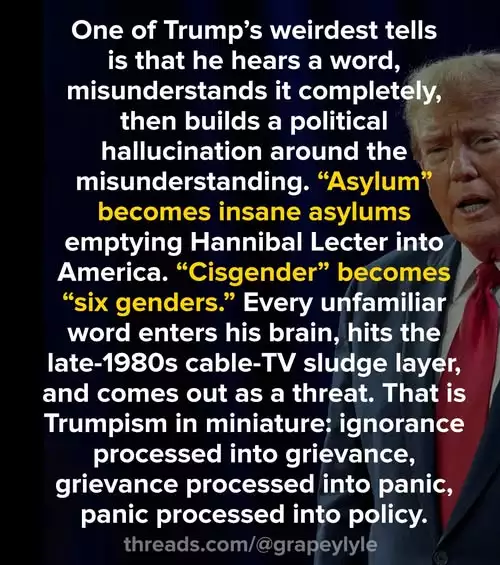
The latest viral social media post has shed light on a peculiar and often overlooked aspect of former President Donald Trump’s communication style. A graphic circulating online highlights a pattern where Trump apparently encounters a word, misunderstands its meaning, and then constructs a narrative or “hallucination” around that misinterpretation. The example cited in the meme focuses on the word “asylum,” which Trump reportedly interprets incorrectly, leading to a cascade of political speculation and decisions.
While critics have long scrutinized Trump’s rhetoric, this new social media commentary suggests that his approach to communication may involve a distinctive mental shortcut: hearing a word, misconstruing it, and then building a political storyline based on that misunderstanding. This tendency, the meme claims, is one of his “weirdest tells,” indicating a recurring pattern that influences his public statements and policy positions.
Many political analysts and linguists have engaged with this idea, debating whether such language patterns stem from genuine cognitive processes or serve as strategic communication methods. Supporters argue that Trump’s informal style and directness resonate deeply with his base, solidifying his populist appeal. Conversely, critics argue that these misunderstandings can lead to misinformation, policy missteps, and increased polarization.
This recent social media buzz has ignited conversations across platforms such as Twitter and Facebook, with users dissecting past speeches and public statements to identify examples of similar misunderstandings. Some point to moments where Trump’s references to immigration policies, foreign leaders, or legal terminology reflect instances of the kind of misinterpretations described in the viral meme.
Experts caution, however, against oversimplifying complex communication patterns. Language and cognition involve many nuanced factors, and attributing specific misunderstandings solely to cognitive quirks may overlook underlying motives or strategic choices. Nonetheless, the meme taps into a broader conversation about political communication, authenticity, and the role of perception versus reality in leadership.
As discussions continue, the meme underscores the importance of careful communication, especially for those in leadership positions. It also raises questions about how voters interpret and normalize such misunderstandings, shaping public opinion and policy. Whether viewed as a humorous quirk or a significant pattern, Trump’s unique speech style remains a focal point for observers and critics alike, fueling debates about the nature of effective leadership in the modern era.
Where to Learn More
- Analyzing Trump’s Communication Style: Patterns and Implications – Politico
- The Psychology Behind Trump’s Language and Misunderstandings – The Atlantic
- Fact Check: Do Trump’s Misunderstandings Shape His Political Narratives? – CNN
- The Communication Habit of Mishearing and Its Impact on Politics – The New York Times