
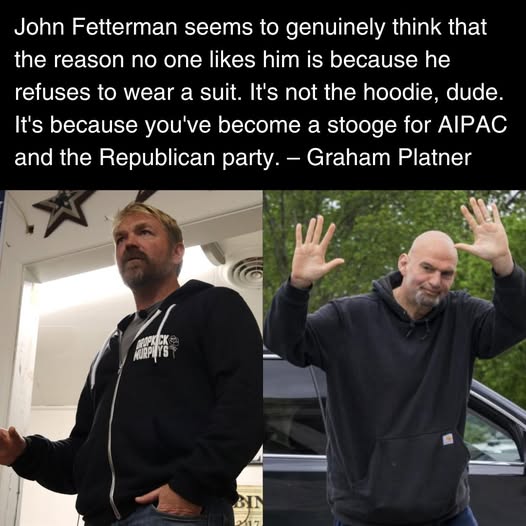
A recent social media post has ignited a lively debate about Senator John Fetterman’s image and whether his distinct style impacts public perception. The viral meme, featuring a stark image of text, suggests that Fetterman believes his strained popularity is due to his clothing choices, particularly his refusal to wear traditional suits.
The meme reads, “John Fetterman seems to genuinely think that the reason no one likes him is because he refuses to wear a suit. It’s not the hoodie, dude. It’s because you’ve become…”—implying that his communication style, political stance, or perhaps his approach to leadership may be more at the heart of the issue than his wardrobe.
Fetterman, known for his signature hoodie and casual attire, has been a polarizing figure in American politics. His supporters praise him for authenticity and relatability, often emphasizing his background as a former mayor of Braddock, Pennsylvania, and his advocacy for working-class Americans. Conversely, critics argue that his informal style may undermine his authority or seriousness in the political arena.
This social media outcry highlights a broader cultural conversation about the role of appearance and dress in politics. Historically, formal dress has been associated with professionalism and respectability, stemming from a time when politicians appeared in tailored suits to convey authority. However, in recent years, there’s been a shift toward more relaxed public personas, especially among younger voters who value authenticity over tradition.
Fetterman’s case exemplifies this changing landscape. While some see his hoodie as a symbol of down-to-earth sincerity, others view it as a barrier to institutional respect or serious policymaking. The meme’s implication—that Fetterman may be deluded about the impact of his attire—raises questions about whether superficial factors truly influence political fortunes or if voters are more concerned with substance.
Ultimately, the discussion reflects a deeper divide: Is style a reflection of substance, or does it distract from it? While attire alone isn’t a determinant of a politician’s effectiveness, image management plays a substantial role in public perception.
As Fetterman continues to serve in the Senate, the public and critics alike will keep debating whether the focus should be on appearance or on policy. Regardless of one’s stance, the viral meme underscores the power of social media in framing those discussions and shaping political narratives in the digital age.