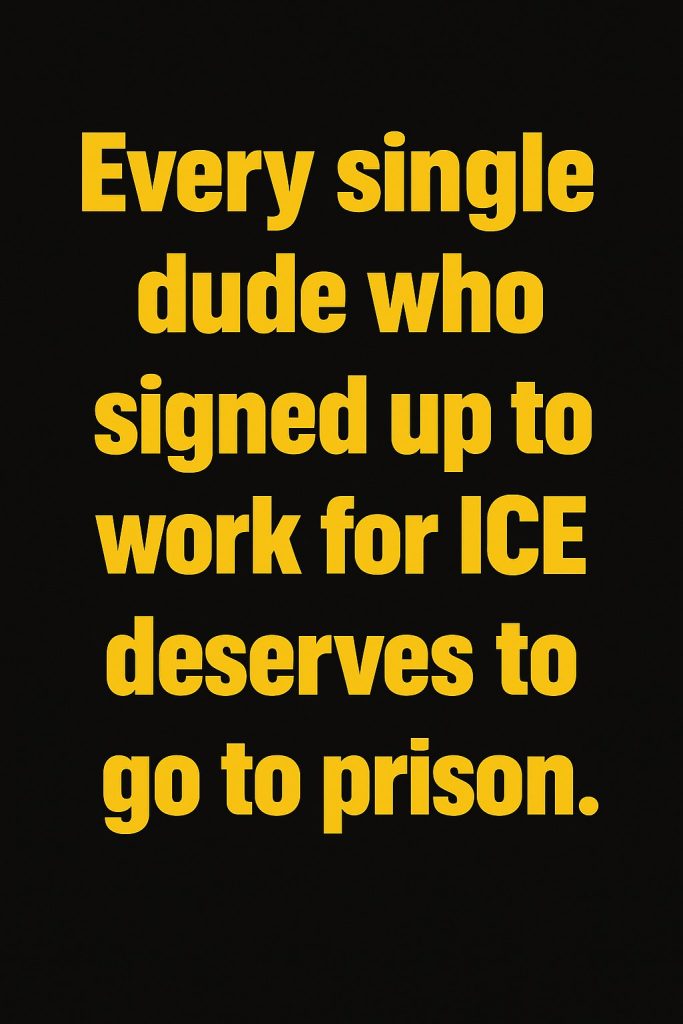
In a world where social media can swiftly elevate discussions into viral movements, a recent post has stirred significant controversy and debate. A provocative image bearing the text, “Every single dude who signed up to work for ICE deserves to go to prison,” has made its rounds on platforms like Twitter and Instagram, igniting a fierce conversation about the role of immigration enforcement in America.
The image, which surfaced on social media late last week, has drawn thousands of comments and shares, highlighting a divisive view regarding the U.S. Immigration and Customs Enforcement (ICE). Many social media users express outrage over the agency’s policies, particularly those related to family separations, detention conditions, and enforcement actions that they argue violate human rights.
Supporters of the message argue that ICE’s role in enforcing immigration laws has become increasingly associated with ethical violations and a lack of accountability. Critics say that the agency’s practices, especially after the controversial policies enacted by the Trump administration, have left lasting scars on families and communities. Activists have rallied behind this sentiment, viewing those who choose to work for the agency as complicit in human rights abuses.
Across social media platforms, hashtags like #AbolishICE and #JusticeForImmigrants have gained traction as users call for heightened transparency and accountability among ICE employees. The post that sparked this latest wave of anger not only emphasizes punitive views towards ICE employees but also raises questions about the broader implications of immigration enforcement in the U.S.
Many commenters argue that the public perception of law enforcement agencies is shifting, particularly around immigration officers. The hashtag #NotInMyName encapsulates the sentiment of many who believe that the actions of ICE do not reflect American values of compassion and justice. Others, however, defend ICE’s role, asserting that law enforcement is necessary for national security and public safety, creating a sharp divide in public opinion.
This discussion comes amid growing scrutiny of how immigration policies affect people of color and marginalized communities. Protests across the nation have called attention to the living conditions in ICE detention centers, which have been described by some advocacy groups as inhumane. This scrutiny has prompted lawmakers to examine potential reforms within the immigration system.
The viral image and subsequent responses highlight a critical moment in America’s discourse on immigration. As discussions continue online, the consequences of these sentiments may lead to increased political mobilization against ICE, potentially influencing upcoming elections and policymaking. For many advocates, the message behind the viral post represents a demand for justice and systemic change in how the U.S. handles immigration enforcement.
While the debate on social platforms grows more intense, it underscores a fundamental truth about the intersection of social media and public policy: what begins as a meme or a provocative statement can swiftly galvanize public opinion, challenge the status quo, and bring issues to the forefront of national discourse.