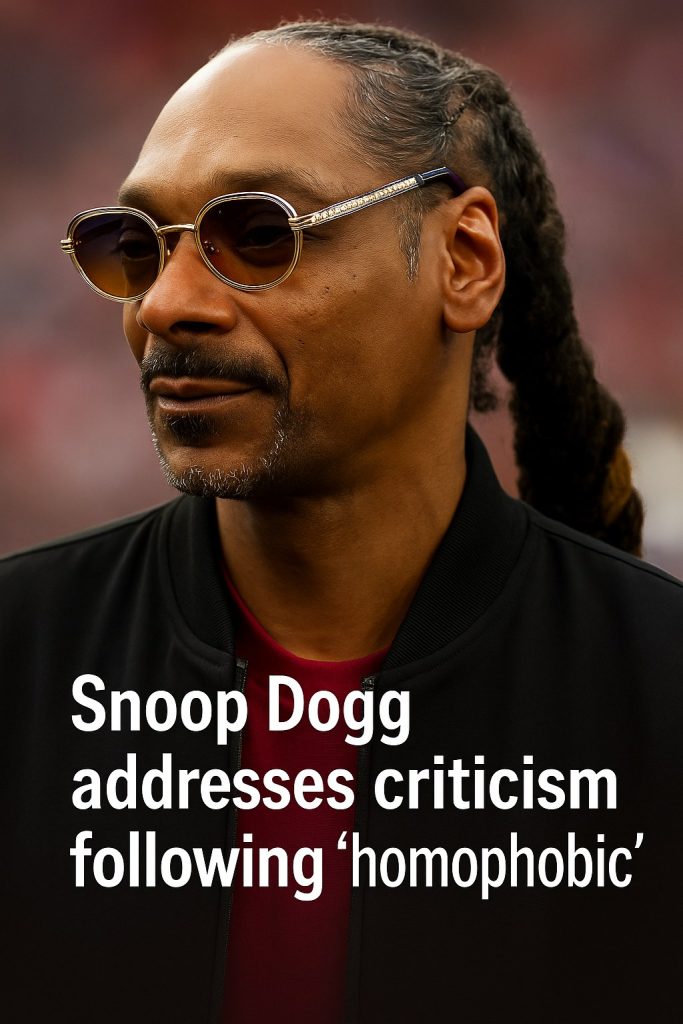
Hip-hop icon Snoop Dogg recently found himself at the center of controversy after making a homophobic remark regarding a popular children’s film. The rapper’s comment sparked immediate criticism across social media, prompting a swift response from the star to address the backlash.
The incident occurred after Snoop Dogg shared his reaction to watching an animated movie aimed at young audiences, stating the experience “f****d me up.” The phrase, coupled with additional comments that many interpreted as dismissive and offensive, was widely condemned for containing homophobic undertones.
Fans and advocacy groups voiced their disappointment, emphasizing the importance of respectful dialogue, especially when discussing media created for children. The criticism highlighted concerns about perpetuating negative stereotypes and the impact such language could have on impressionable audiences.
In response to the uproar, Snoop Dogg issued a public apology through his social media channels. He acknowledged that his choice of words was insensitive and expressed regret for any offense caused. The artist stressed that his intent was not to hurt anyone and that he valued inclusivity and respect.
“I realize now that my comment was inappropriate, and I truly apologize to anyone I may have hurt,” Snoop Dogg wrote. “Watching that movie brought up some feelings for me, but I see how my words didn’t come across the right way. I’m committed to learning and doing better.”
The rapper’s explanation pointed out that the movie’s themes were challenging to him personally, which led to his raw emotional response. However, critics maintain that public figures must be mindful of their language, given their significant influence.
This controversy adds to broader conversations in the entertainment industry regarding how LGBTQ+ topics and representation in children’s media are addressed and perceived. In recent years, there has been increasing support and inclusion of diverse identities and stories aimed at young viewers, which some individuals struggle to accept.
The topic remains sensitive but important as families and youth seek affirming content that reflects the world’s diversity. Many advocates argue that respectful dialogue and education about such media can foster understanding rather than division.
While Snoop Dogg’s apology has somewhat mitigated the backlash, the episode serves as a reminder of the responsibility celebrities hold in shaping public conversation. Fans and commentators alike are watching closely to see how the artist moves forward from this episode.
As the debate continues, many hope that this moment will lead to more thoughtful discussions about language, representation, and respect in and outside of the entertainment world.