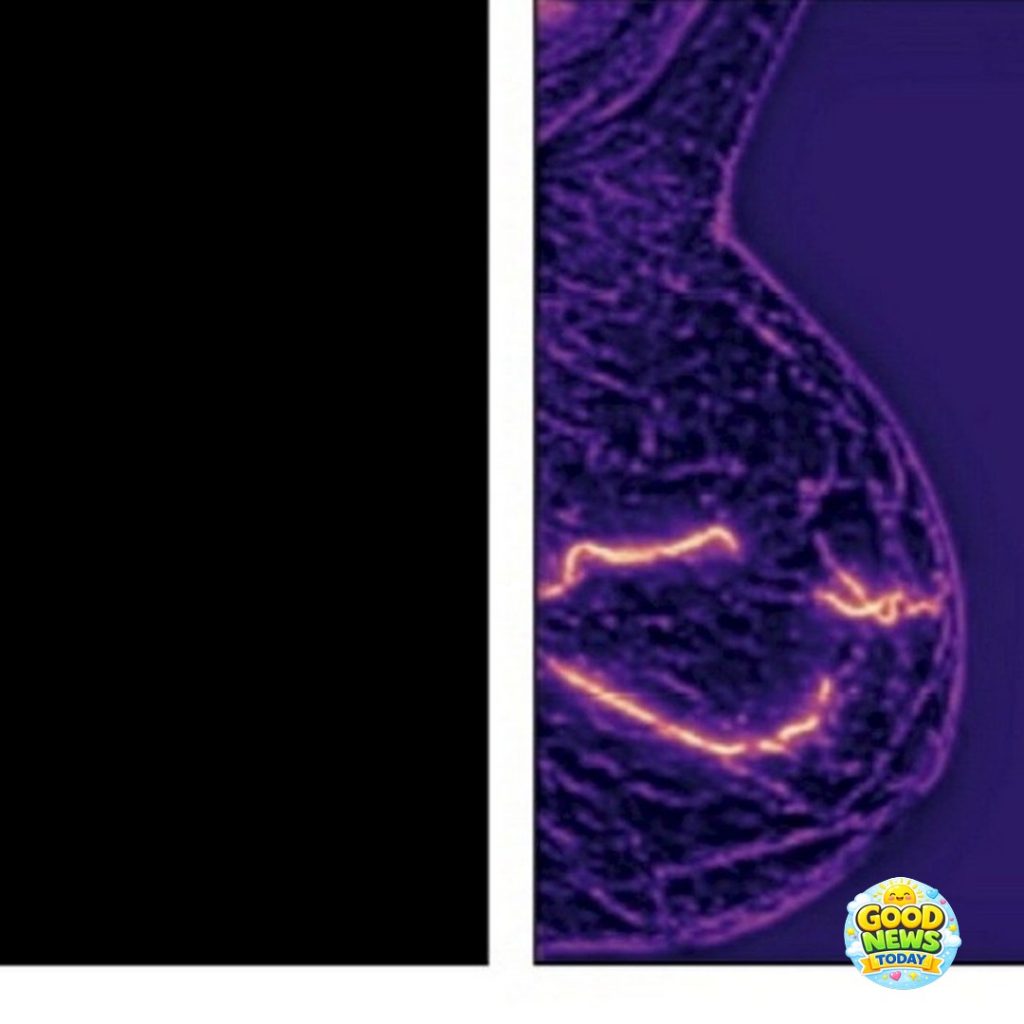
Exciting new research reveals that the risk of serious heart disease can be identified through routine mammograms, thanks to innovative AI technology. This study offers a promising approach to enhance women’s health screening.
By examining calcium deposits in the breast arteries using standard X-ray mammography, which is typically employed for breast cancer screening, AI can estimate the risk of heart disease in women both now and in the future. This breakthrough is particularly significant given that heart disease is the leading cause of death among women globally, yet they are often underdiagnosed and undertreated compared to men.
Dr. Hari Trivedi, the study’s lead researcher from Emory University, highlighted, “Mammograms can also uncover calcium deposits in breast arteries, which are linked to heart disease. We aimed to see if AI could leverage this information to identify women at risk of cardiovascular issues without any additional costs or inconvenience.”
Published in the European Heart Journal, the study involved 123,762 women who participated in breast screenings and had no prior cardiovascular conditions. Researchers utilized AI to assess the level of calcium deposits in the breast tissue, known as “arterial calcification.” This condition indicates that arteries may be hardening, pointing to an increased risk of heart attacks, strokes, heart failure, and mortality.
The researchers classified the degree of arterial calcification into four categories: severe, moderate, mild, or absent. They then analyzed how these classifications correlated with the development of serious cardiovascular diseases, including heart attacks and strokes.
The findings were striking. Women with mild calcification had a 30% greater likelihood of experiencing serious cardiovascular issues compared to those with no calcification. For women with moderate calcification, the risk surged by 70%. Those with severe calcification faced a risk 2 to 3 times higher.
Remarkably, these results held true even for younger women under 50, a group typically deemed low-risk, and remained consistent even after considering other risk factors like diabetes and smoking. Dr. Trivedi emphasized the study’s significance, noting it is the largest of its kind and includes diverse ethnicities across the US healthcare system.
This discovery means that the mammograms women are already receiving could also provide crucial insights into their heart health, sparking important discussions with healthcare providers about preventative measures such as cholesterol testing or necessary medications. It also presents clinicians with a practical tool to identify women at cardiovascular risk who might otherwise go unnoticed.
Looking ahead, Dr. Trivedi mentioned the next steps involve integrating this AI tool into existing imaging workflows and developing clear guidelines for informing patients and doctors. Plans are in motion for a clinical trial to test these steps.
Professor Lori Daniels from the University of California San Diego, who was not part of the study, expressed her enthusiasm for the findings, indicating a positive shift in women’s health screening and preventive care.