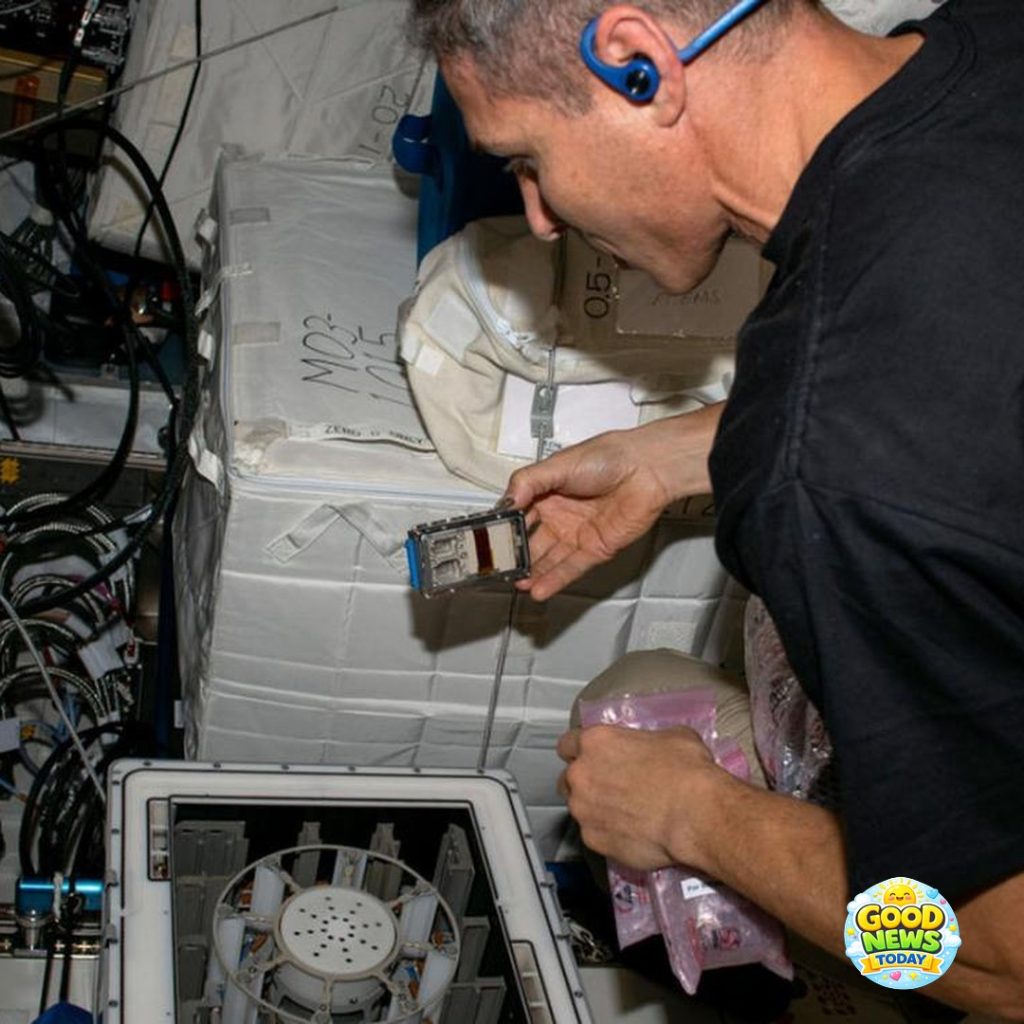
Exciting developments are happening in space exploration as scientists aboard the International Space Station (ISS) have successfully tapped into the potential of meteorites for valuable metals, specifically platinum and palladium, through innovative techniques known as “microbe mining.” This groundbreaking research is led by NASA astronaut Michael Scott Hopkins, who conducted tests on L-chondrite meteorite samples, which are believed to be rich in various minerals.
All elements we encounter are formed in the hearts of stars and are scattered across planets when they explode. This cosmic process also applies to asteroids, and as humanity’s presence in space increases, scientists are eager to discover ways to harvest materials from both meteorites and lunar dust. This approach could significantly reduce costs compared to transporting these materials from Earth.
A collaborative study from researchers at Cornell and Edinburgh universities has shed light on this exciting frontier. The teams worked in tandem with Hopkins, utilizing both a bacterium and a fungus to effectively extract the precious metals from asteroids. These organisms produce carboxylic acids that cling to the minerals within the meteorites. When introduced into a liquid solution, the acids release the minerals, making them accessible for collection.
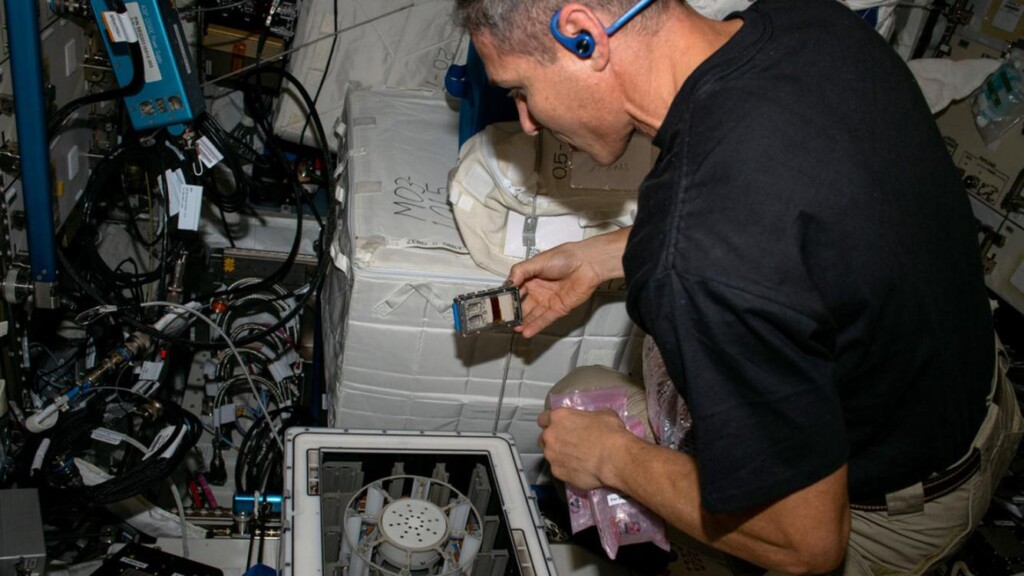
Interestingly, the ISS experiment revealed that the microgravity environment enhanced the abilities of the fungus Penicillium simplicissimum to uptake and release palladium and platinum, indicating that “bioleaching,” the process behind microbe mining, may be more efficient in space than on Earth. In contrast, traditional nonbiological leaching methods proved less effective in microgravity conditions.
Rosa Santomartino, a professor at Cornell and the lead author of the study, noted the intriguing variability in extraction rates based on the specific metal, the type of microbe used, and the gravitational conditions: “Another complex but very interesting result is the fact that the extraction rate changes a lot depending on the metal that you are considering, and also depending on the microbe and the gravity condition.”
As the quest for asteroid mining accelerates, several companies are rising to the challenge. One such company, TransAstra, is pioneering technologies for mining asteroids. Initially focusing on autonomous mining probes, they have shifted their attention to innovative solutions, such as systems that reflect sunlight to melt and recover valuable elements from asteroids, as well as capture bags designed to collect micrometeorites or space debris for processing.
This remarkable research not only holds promise for future space missions but also exemplifies the incredible potential of combining biology with space technology to unlock the treasures of our solar system.