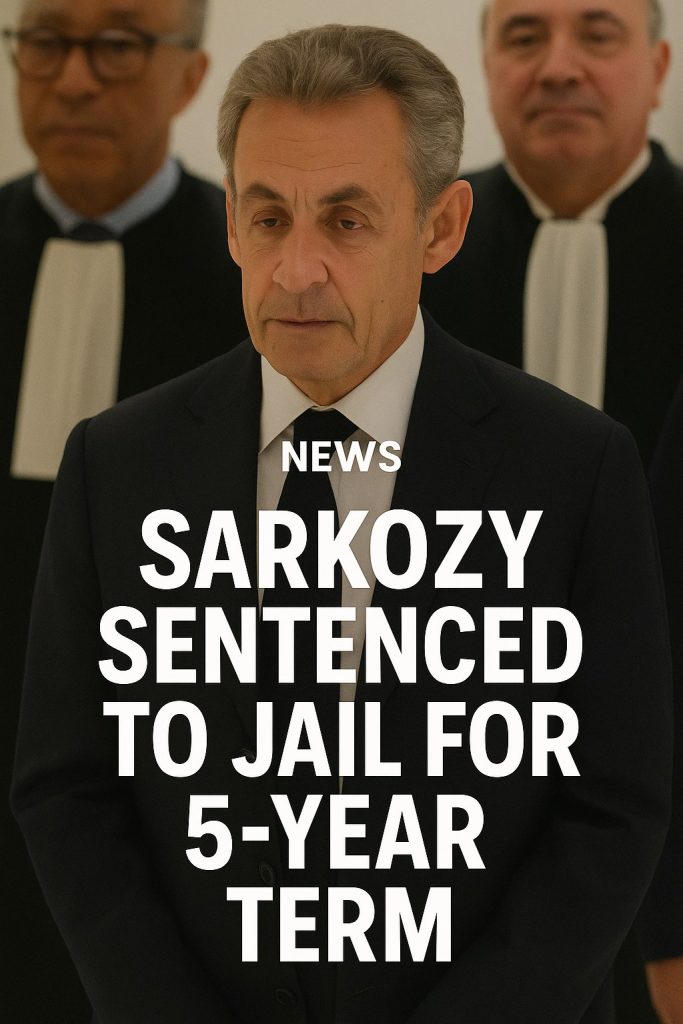
Paris, France – In a historic ruling that reverberates across the political landscape, former French President Nicolas Sarkozy has been sentenced to five years in prison for his involvement in a criminal conspiracy aimed at securing illicit funds from Libya. The verdict was handed down by a Paris court on Monday, marking a significant chapter in France’s ongoing battle against political corruption.
The charges stem from Sarkozy’s alleged dealings with former Libyan leader Muammar Gaddafi, who reportedly funneled millions into Sarkozy’s 2007 presidential campaign. During his trial, which began in November 2020, evidence presented suggested that Sarkozy and his aides sought to exploit relationships within Libya’s government to gain access to untraceable cash, undermining electoral integrity principles.
The court found Sarkozy guilty of “passive corruption”, “misappropriation of public funds,” and “illegal campaign financing.” He is the first former French president to be convicted of criminal conduct since the establishment of the Fifth Republic. The sentence includes three years of incarceration, two of which may be served under probation, raising questions about the future of Sarkozy’s political career and his enduring influence in French politics.
The scandal has caused widespread outrage among the French public and political analysts alike. Many are viewing the verdict as a crucial step towards restoring faith in the political system after years of scandals involving high-ranking officials. Commentators have suggested that the sentence could serve as a warning to other politicians against engaging in corrupt practices.
Sarkozy, who served as France’s president from 2007 to 2012, has consistently denied any wrongdoing, maintaining that his relationship with Libya was entirely legitimate and formal. Following the court’s decision, Sarkozy announced that he plans to appeal the conviction. He described the trial as a “political vendetta,” a claim that many view as an attempt to deflect responsibility.
As the ramifications of this case spread, the verdict also raises awareness of the Financial Action Task Force’s (FATF) measures regarding the transparency of campaign financing. This is particularly timely as France prepares for upcoming elections, underscoring the need for stricter regulations to prevent such abuses of power.
Political experts assert that this ruling could resonate beyond French borders, as many countries grapple with similar issues of corruption and public distrust. The international community is watching closely, especially as Sarkozy had been a prominent figure on the global stage during his presidency, advocating for strong international ties among Western nations.
In an era where political integrity is paramount, Sarkozy’s conviction serves as a stark reminder of the potential pitfalls that accompany power and ambition. With a potential appeal on the horizon, the saga surrounding Sarkozy is far from over.