The future of entertainment is at a crossroads as the Screen Actors Guild-American Federation of Television and Radio Artists (SAG-AFTRA) has sounded the alarm over the rise of synthetic performers. These computer-generated characters, driven by artificial intelligence, reportedly use the likeness and performances of countless professional actors without their consent or compensation—a practice that is stirring controversy in the creative industries.
The Controversy Unveiled
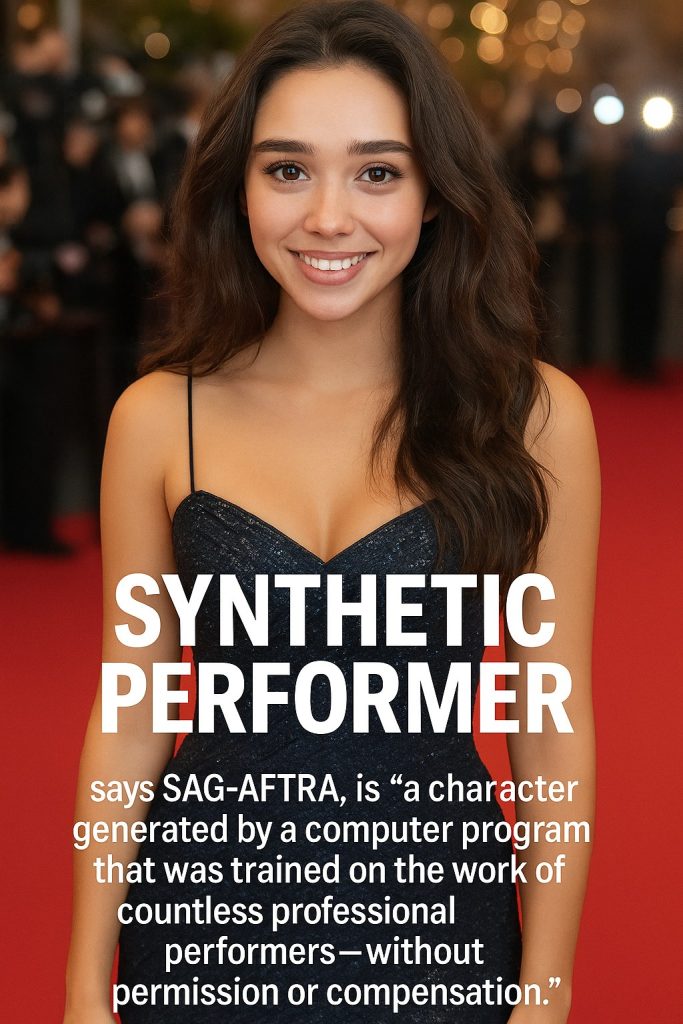
SAG-AFTRA describes synthetic performers as “a character generated by a computer program that was trained on the work of countless professional performers—without permission or compensation.” As technology continues to advance, AI-generated characters are becoming increasingly sophisticated, leading to questions surrounding their legality and ethical implications.
The guild’s statement highlights growing concerns in an industry already grappling with the ramifications of digital technology. Actors, whose craft has often depended on nuanced human emotion, risk being overshadowed by AI creations that can replicate their performances based on historical data.
The Impact on Creative Professionals
As viewers increasingly gravitate towards streaming services and digital content, the demand for fresh and engaging characters is surging. This shift has led to studios experimenting with synthetic performers as cost-effective alternatives to traditional actors. However, critics argue that such practices undermine the foundational rights and livelihoods of artists.
For many professionals in the industry, the prospect of synthetic performers raises questions not just about job security but also about the very essence of creativity. “Art comes from human experience, and to take that away strips our stories of authenticity,” said veteran actor Mia Johnson in a recent discussion on the topic. The consensus among many in the industry is that while innovation is necessary, it should not come at the expense of artistic integrity.
Legal and Ethical Considersations
The ethical implications of creating synthetic performers are still being explored, and as of now, there are no solid legal frameworks regulating their use. Many experts in the field of entertainment law are calling for legislation that would protect the rights of performers whose work is being used in the training of AI models.
As the boundaries blur between creator and creation, the issue calls into question a core principle of intellectual property rights. Should actors be compensated for their likeness being used by machines? And if so, how will these systems be implemented and enforced?
A Call to Action from SAG-AFTRA
In light of these developments, SAG-AFTRA is advocating for policies that protect the rights of performers and ensure fair compensation in the era of digital innovation. The guild is urging both creators and consumers to consider the far-reaching implications that synthetic performers can have on the industry, emphasizing that safeguarding artists’ rights is essential for a thriving creative ecosystem.
As this debate unfolds, the question lingers: can we strike a balance that allows technology to thrive while still honoring the irreplaceable contributions of human performers? Only time will tell, but one thing is clear: the conversation surrounding synthetic performers is just beginning, and it’s one that the industry can no longer afford to ignore.
Where to Learn More
- SAG-AFTRA Sounds the Alarm on Synthetic Performers – Variety
- What SAG-AFTRA Is Saying About AI and Synthetic Performers – The Hollywood Reporter
- The Rise of Synthetic Performers: A Double-Edged Sword – IndieWire