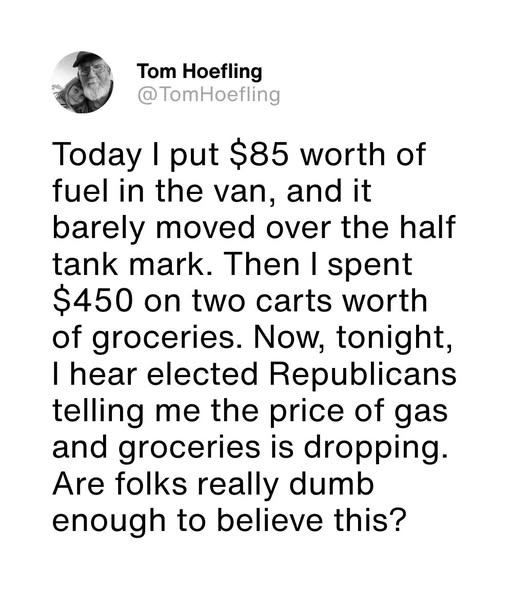
In a recent social media post that quickly went viral, Tom Hoefling shared a stark reality faced by many Americans amid ongoing economic pressures. Hoefling detailed how a single visit to fill his van’s tank and buy groceries highlighted the soaring costs that are stretching household budgets to the breaking point.
“Today I put $85 worth of fuel in the van, and it barely moved over the half tank mark,” Hoefling wrote, capturing the frustration felt by countless consumers battling fuel price surges. “Then I spent $450 on two carts worth of groceries.” These figures serve as a sobering reminder of the inflationary pressures impacting everyday life.
The rising cost of fuel is an issue that has garnered widespread concern, especially as global oil markets fluctuate due to geopolitical tensions and supply chain disruptions. According to the U.S. Energy Information Administration, gas prices have seen steady increases in recent months, contributing to higher transportation expenses for consumers and businesses alike.
Meanwhile, grocery prices have also escalated sharply, driven by factors such as inflation, supply chain bottlenecks, and adverse weather conditions affecting agriculture. The U.S. Bureau of Labor Statistics reports that food prices recently experienced one of the steepest increases in decades, forcing families to make difficult choices at the checkout line.
Hoefling’s post strikes a chord with many who feel the pinch firsthand. Social media users responded with a mix of empathy and shared frustration. Some noted that these costs are beyond individual control and reflect broader economic issues, while others expressed concern over the sustainability of current spending practices amid stagnant wages.
Experts warn that such spending patterns could be indicative of deeper economic challenges, including inflation and recovery hurdles post-pandemic. Economists suggest that without strategic policy interventions, many households could face ongoing financial stress, risking a potential slowdown in consumer spending, which is a critical driver of economic growth.
The story highlights a pressing economic reality: many Americans are now prioritizing basic needs over discretionary spending, leading to shifts in consumption behaviors. Policymakers are under increasing pressure to address these inflationary trends, which threaten to erode purchasing power and widen socio-economic divides.
As Hoefling’s shared experiences demonstrate, the rising costs are not merely numbers but represent tangible impacts on daily life, forcing families to adapt, reduce consumption, or seek alternative solutions. The broader economic narrative continues to unfold, emphasizing the urgent need for sustainable policies to stabilize prices and support households during these challenging times.