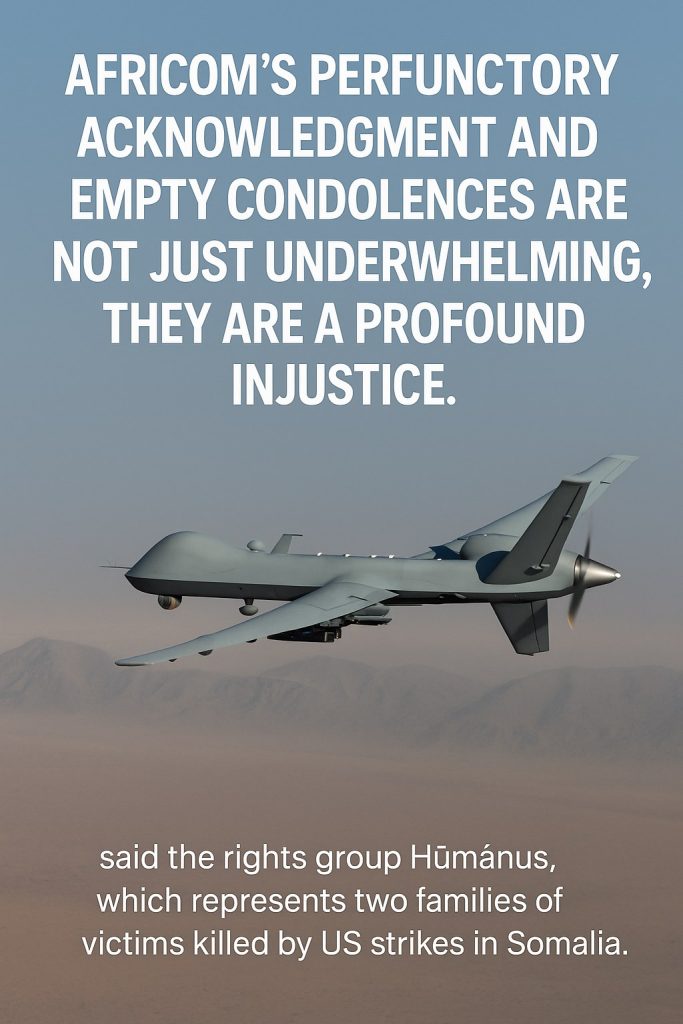
In a powerful condemnation, humanitarian organization Hūmānus has accused the U.S. Africa Command (AFRICOM) of failing to adequately acknowledge and address the fallout from its military strikes in Somalia. The group represents the families of victims who were killed in recent U.S. airstrikes, which have intensified debates over the legality and morality of American military operations on the African continent.
“AFRICOM’s perfunctory acknowledgment and empty condolences are not just underwhelming; they are a profound injustice,” said a spokesperson for Hūmānus during a press conference earlier this week. The statement underlined the growing frustration among human rights advocates regarding the U.S. military’s lack of accountability and transparency in its overseas operations.
This criticism follows a series of airstrikes launched by AFRICOM aimed at quelling the presence of militant groups in the region, particularly Al-Shabaab. While the U.S. government asserts that these operations are essential for maintaining regional security, they often result in significant civilian casualties and have raised ethical questions about the use of drone warfare.
Incidents involving civilian deaths have been met with official responses that many say lack sincerity and substance. Hūmānus has documented multiple cases where victims’ families received little to no acknowledgment of their loss, sparking outrage and calls for policy reform. The group argues that these responses signal a disregard for the lives lost and the suffering of bereaved families in conflict zones.
The notion that military effectiveness can be prioritized over the sanctity of human life is increasingly coming under scrutiny. Advocates assert that a more humane approach is essential and that the U.S. government must take responsibility for the consequences of its military actions. “These strikes don’t just target militants; they devastate families and entire communities,” stated a representative from Hūmānus. “Acknowledgment is not enough; the U.S. must take active steps to ensure justice and support for those affected.”
The criticism from Hūmānus comes amidst a broader context of increasing concern around the expansion of U.S. military presence in Africa. Reports indicate that the Pentagon is keen on enhancing its military foothold on the continent, raising alarms about the potential for greater civilian suffering.
The families of the victims represented by Hūmānus are now seeking recognition not only for their loved ones but also for meaningful changes in U.S. military policy. They demand that the U.S. government establish clearer protocols for preventing civilian casualties and provide reparations to affected families.
As calls for accountability grow louder, it remains to be seen how the Pentagon might respond to these humanitarian concerns. The controversy encapsulates a vital discourse around the moral obligations of powerful nations in conflict scenarios, emphasizing the importance of safeguarding human rights amidst military strategies.
Where to Learn More
- AFRICOM Strikes: The Human Cost – Human Rights Watch
- The Impact of U.S. Airstrikes on Somali Civilians – The Guardian
- Questions Raised about U.S. Military Operations in Africa – BBC News
- Justice for Somali Victims of U.S. Airstrikes – Al Jazeera